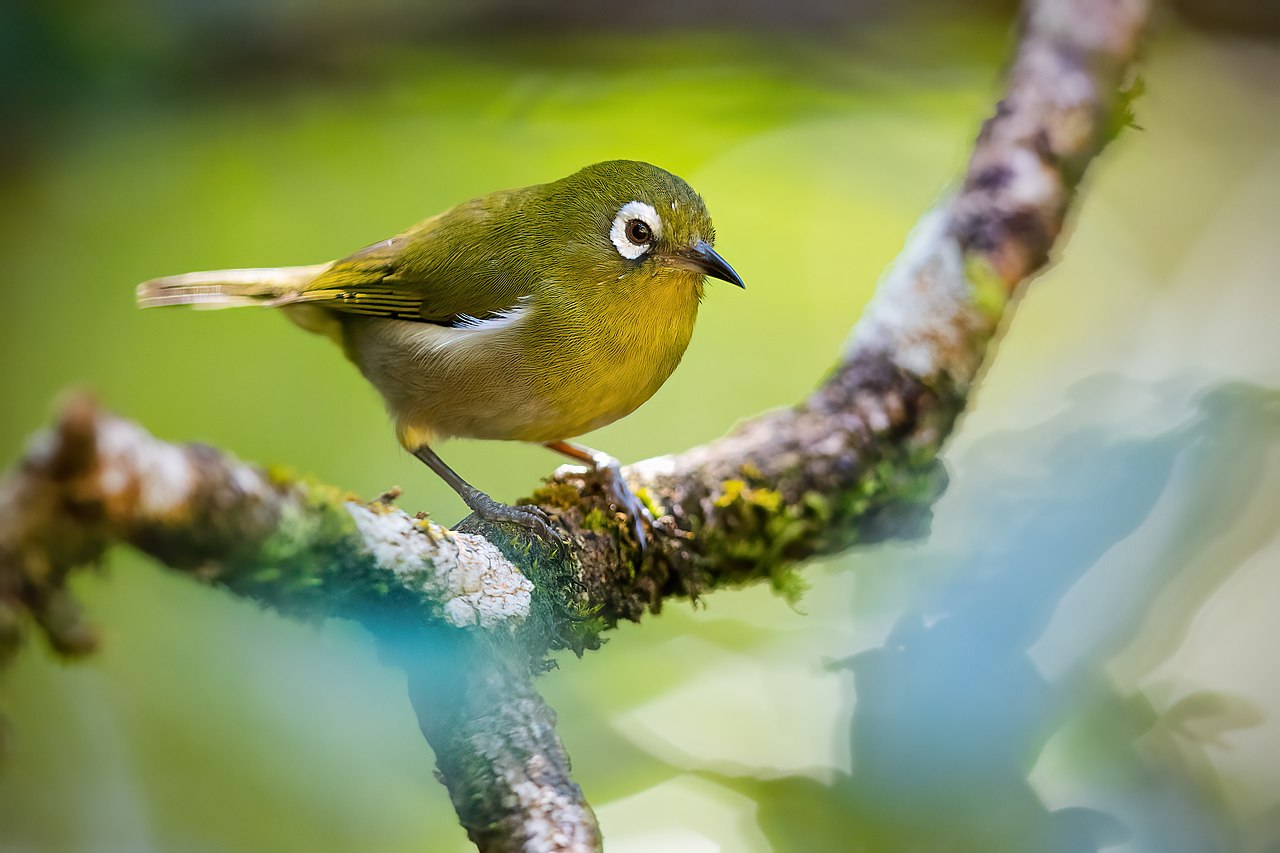
The green-backed tit is a species of bird in the family Paridae.
Region
Himalayas and East Asia
Typical Environment
Occurs from the western and central Himalayas through northern India, Nepal, Bhutan, and northern Myanmar into southwest and central China, and on Taiwan. It favors montane broadleaf, mixed, and coniferous forests, often along forest edges, clearings, and secondary growth. The species also visits wooded parks and orchards at mid to high elevations. Outside the breeding season it may descend to lower elevations, especially in winter, following food availability.
Altitude Range
800–3600 m
Climate Zone
Highland
Ease of Keeping
Beginner friendly: 2/5
The green-backed tit is a small, lively tit found in montane forests from the Himalayas across southern China to Taiwan. It often joins mixed-species foraging flocks and readily approaches forest edges and wooded gardens. Long treated as closely related to the great tit, it is distinguished by its brighter green mantle and high-elevation preferences. Its varied, whistled songs can sound similar to the great tit but are typically faster and more tinkling.

Temperament
social and active
Flight Pattern
short rapid wingbeats with bounding undulations
Social Behavior
Typically seen in pairs or small family groups during the breeding season, becoming more gregarious afterward. Frequently joins mixed-species flocks with other tits, warblers, and nuthatches while foraging through the canopy and mid-story. Nests in natural cavities or old woodpecker holes; readily uses nest boxes where available. Generally monogamous, with both parents provisioning the young.
Migratory Pattern
Partial migrant
Song Description
A lively series of clear, high-pitched whistles and tinkling notes, delivered in rapid phrases. Scolding calls are sharp ‘tsee-tsee’ and ‘chit’ notes, often given in foraging flocks.
Plumage
Compact tit with a glossy black head and throat, prominent white cheek patches, a bright green back and mantle, and yellow underparts crossed by a narrow black ventral stripe. Wings are bluish-grey with pale edging and a subtle wing bar; tail is dark with pale fringes. Overall, cleaner white cheeks and brighter green mantle than similar great tit.
Diet
Primarily consumes insects and other arthropods such as caterpillars, beetles, and spiders, especially during the breeding season. In cooler months it supplements its diet with seeds, buds, and small berries. It may glean from leaves and twigs, probe bark, and occasionally hawk short distances for flying insects. Opportunistically visits feeders for nuts and suet in settled areas within its range.
Preferred Environment
Forages in the mid to upper canopy of montane forests, along edges, and in secondary growth. Often works methodically through branches in mixed-species flocks, using agile hanging and gleaning maneuvers. Will also feed in wooded gardens and orchards near forests.