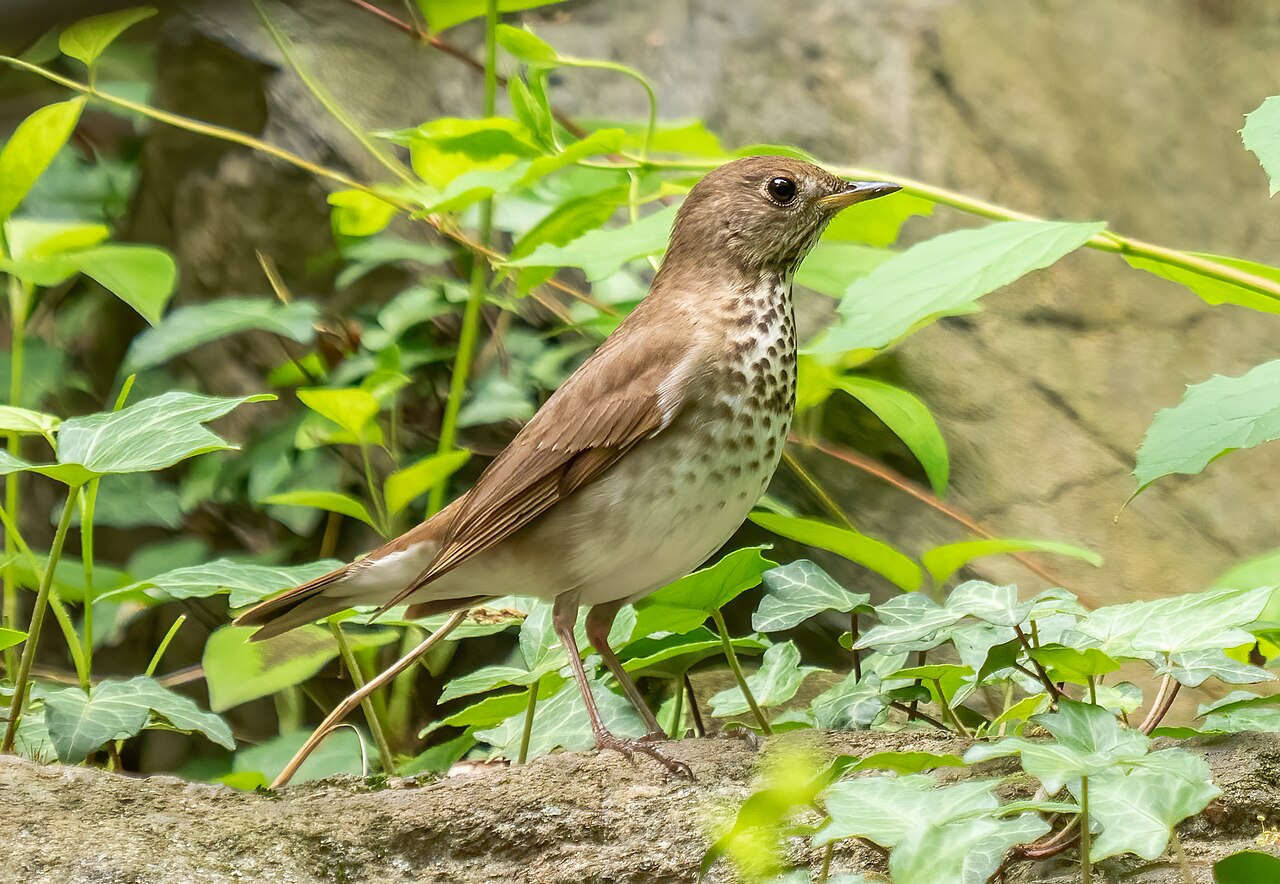
The gray catbird, also spelled grey catbird, is a medium-sized North American and Central American perching bird of the mimid family. It is the only member of the "catbird" genus Dumetella. Like the black catbird, it is among the basal lineages of the Mimidae, probably a closer relative of the Caribbean thrasher and trembler assemblage than of the mockingbirds and Toxostoma thrashers. In some areas it is known as the slate-colored mockingbird.
Region
North and Central America
Typical Environment
Breeds widely across southern Canada and much of the eastern and central United States, favoring brushy habitats and forest edges. Winters in the southeastern United States, Mexico, Central America, and the Caribbean. Occupies dense thickets, riparian corridors, overgrown fields, suburban hedgerows, and second-growth woodlands. In winter it frequents fruiting shrubs and coastal scrub, including mangroves in parts of the tropics. Generally avoids deep forest interiors and very open habitats.
Altitude Range
0–2500 m
Climate Zone
Temperate
Ease of Keeping
Beginner friendly: 1/5
Gray catbirds are accomplished mimics that weave snippets of other birds’ songs and sounds into their own varied repertoire, punctuated by a distinctive cat-like “mew.” They favor dense shrubs and tangles, often remaining hidden while foraging low. The species shows rusty undertail coverts that contrast with its otherwise slate-gray body. They readily visit fruiting shrubs and sometimes take suet or cut fruit at backyard feeders.


A Gray catbird stands in the grass

Composite image of a juvenile catbird chasing and eating a moth


Temperament
secretive and territorial
Flight Pattern
short rapid wingbeats with low, direct flights
Social Behavior
Typically monogamous during the breeding season and strongly territorial, often scolding intruders with harsh calls. Nests are placed low in dense shrubs or tangles; the female builds the nest and incubates, while both parents feed the young. They may mob predators and are frequent targets of brood parasitism by Brown-headed Cowbirds.
Migratory Pattern
Seasonal migrant
Song Description
A long, variable series of phrases and mimicry interspersed with buzzy notes, delivered from concealed perches. The characteristic nasal “mew” call is often given when agitated. Songs tend to repeat phrases fewer times than mockingbirds and have a more fluid, scratchy quality.
Plumage
Smooth, uniform slate-gray plumage with a darker charcoal cap and blackish tail; rich rusty undertail coverts stand out when the tail is lifted.
Diet
Eats a mix of insects and other arthropods (beetles, ants, caterpillars, spiders) and a wide variety of fruits and berries (dogwood, viburnum, elderberry, serviceberry, and others). Insects dominate in spring and summer, while fruits become more important in fall and winter. They glean from foliage, probe leaf litter, and pluck fruits directly from shrubs. Occasionally visit feeders for suet, raisins, or sliced fruit.
Preferred Environment
Forages low in dense shrubs, hedgerows, and along woodland edges and riparian thickets. In winter, concentrates in fruit-rich scrub and coastal vegetation, including gardens with berry-bearing plants. Often stays near cover, moving deliberately through tangles.