
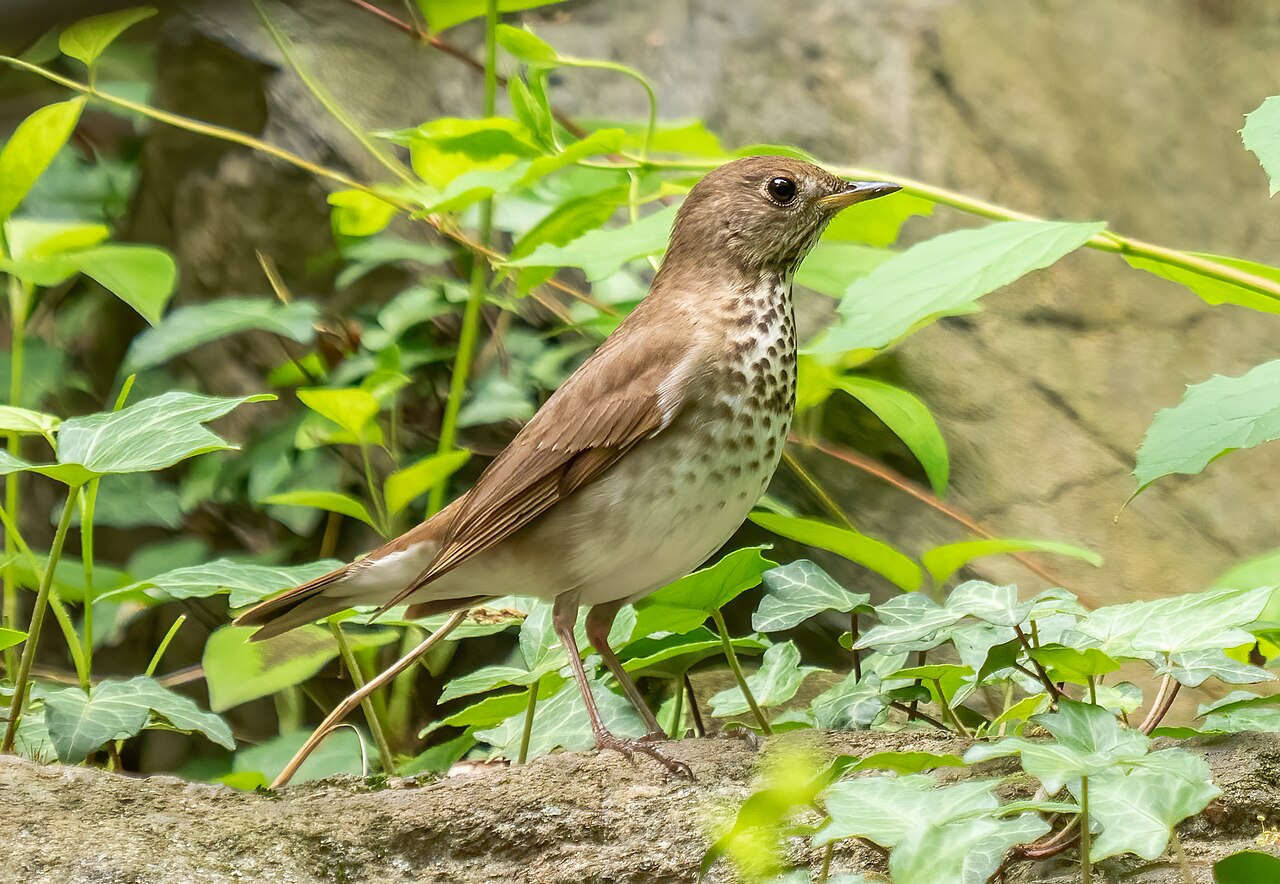
The gray-cheeked thrush is a medium-sized thrush. This species is 15–17 cm (5.9–6.7 in) in length, and has the white-dark-white underwing pattern characteristic of Catharus thrushes. It is a member of a close-knit group of migrant species together with the veery and Bicknell's thrush; it forms a cryptic species pair with the latter. The gray-cheeked thrush is all but indistinguishable from Bicknell's thrush except by its slightly larger size and different song. The two were formerly considered conspecific. Of all the American spotted thrushes, the gray-cheeked has the most northern breeding range.
Region
Boreal North America to northern South America
Typical Environment
Breeds in the taiga from Alaska across northern Canada to Newfoundland, favoring dense thickets in spruce–fir, willow, and alder near bogs and riparian corridors. During migration it passes through eastern and central North America and the Caribbean, using woodlots, coastal scrub, and parks. In winter it occurs in northern South America, using shaded lowland and foothill forests and forest edges. It tends to stay close to dense understory and tangles where it forages on or near the ground.
Altitude Range
Sea level to 2000 m
Climate Zone
Other
Ease of Keeping
Beginner friendly: 1/5
A long-distance, largely nocturnal migrant, it breeds across the North American boreal zone and winters in northern South America. It is notoriously hard to distinguish from Bicknell's thrush in the field, differing subtly in size and song. Like other Catharus thrushes, it shows a white–dark–white underwing pattern and often forages quietly in dense understory. During migration and winter it consumes many fruits, helping disperse seeds.


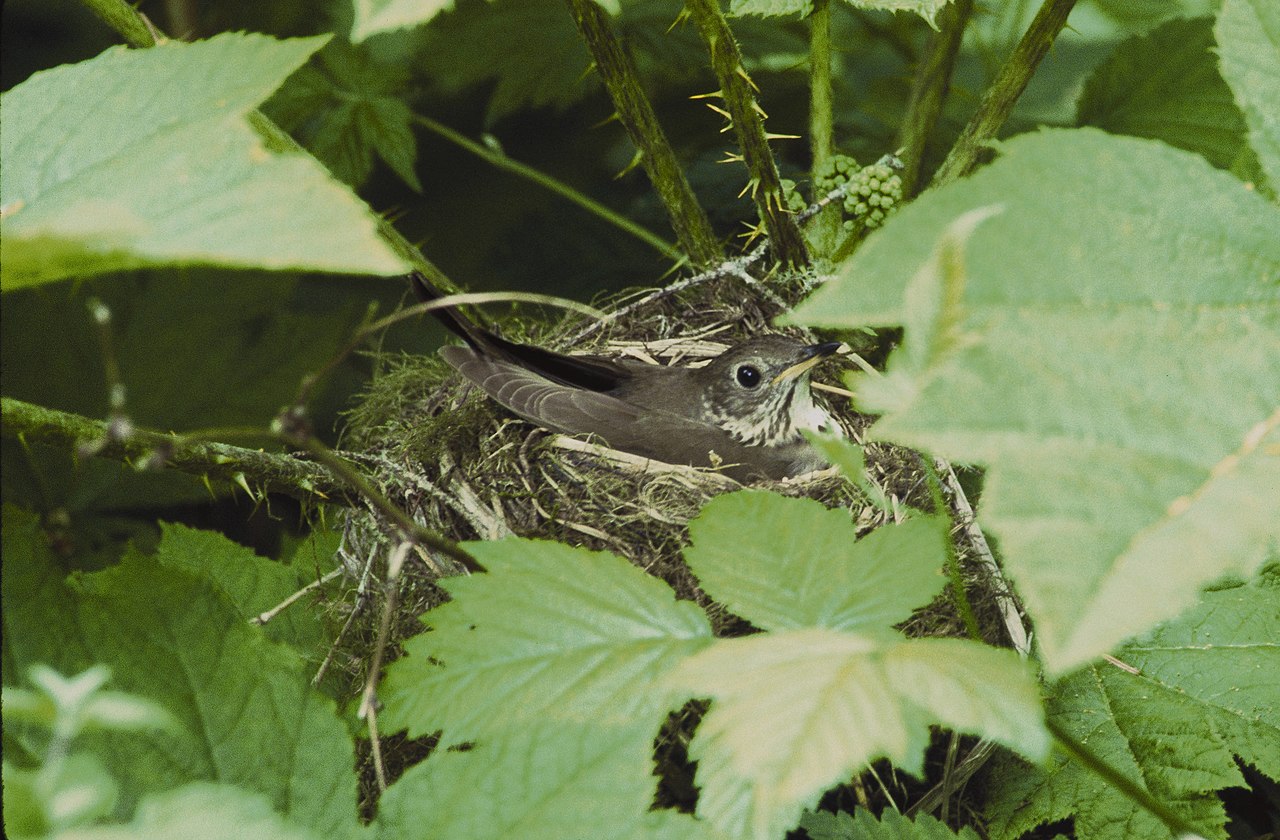
Gray-cheeked thrush in a nest

South Padre Island - Texas
Temperament
skulking and wary
Flight Pattern
strong, direct flier
Social Behavior
Generally solitary or in loose associations outside the breeding season. Pairs form on breeding grounds; the nest is a cup placed on or near the ground in dense cover. The female typically incubates while the male helps provision.
Migratory Pattern
Seasonal migrant
Song Description
Song is a thin, high, slightly burry series of rising and falling phrases, less musical and harsher than Bicknell’s thrush. Calls include a sharp, high 'peek' or 'seep' given during migration, often at night.
Plumage
Olive-brown upperparts with a grayish face and cheeks, whitish underparts with bold dark spots on the breast that fade toward the belly. Subtle, thin eye ring and gray-washed flanks. Shows the characteristic white–dark–white underwing pattern of Catharus thrushes.
Diet
On breeding grounds it eats insects and other arthropods gleaned from leaf litter, low foliage, and the ground. During migration and winter it adds a substantial amount of small fruits and berries, which can dominate the diet when abundant. It occasionally takes small snails and other invertebrates.
Preferred Environment
Feeds in dense understory, along forest edges, and in shrubby bog margins, often on or near the ground. During migration it forages in hedgerows, woodlots, and fruiting trees and shrubs in parks and coastal thickets.


