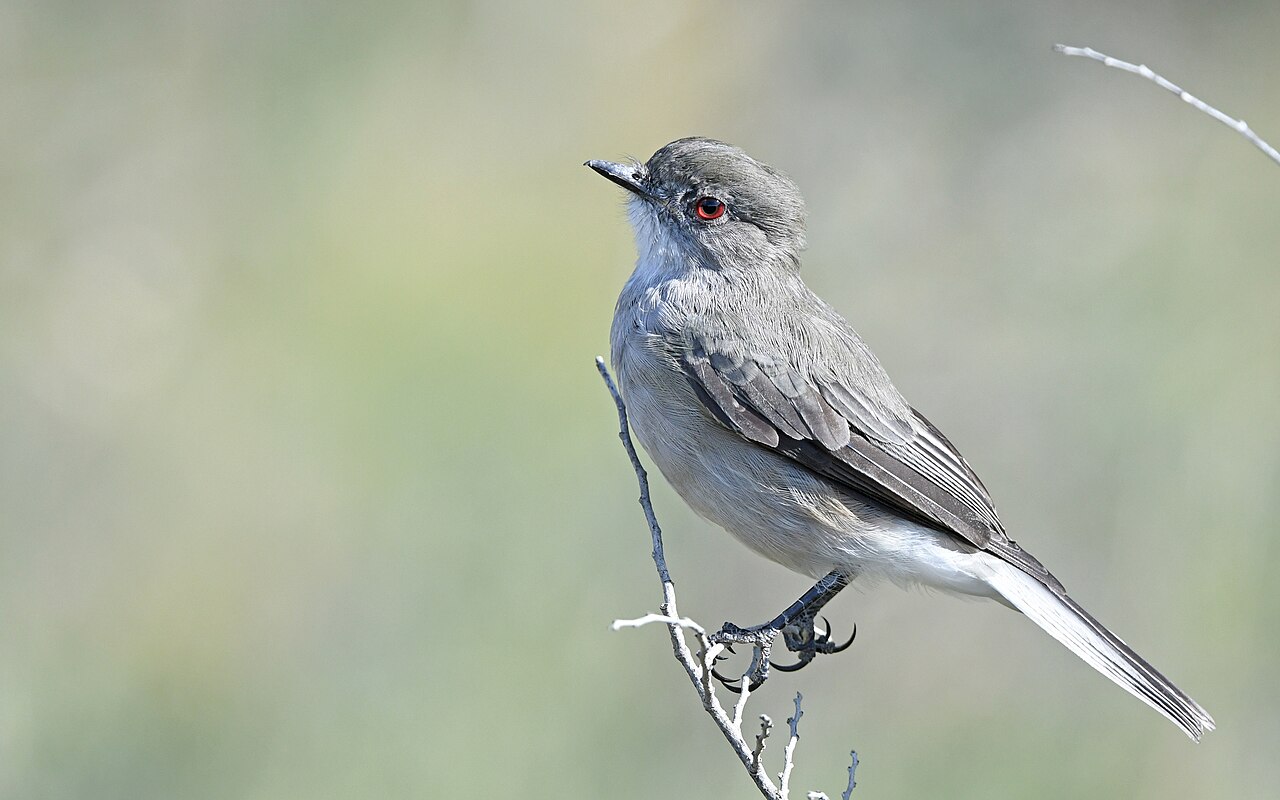
Finsch's wheatear is a wheatear, a small insectivorous passerine that was formerly classed as a member of the thrush family, Turdidae, but is now more generally considered to be an Old World flycatcher of the family Muscicapidae.
Region
Middle East and Western Asia
Typical Environment
Breeds from southeastern Europe and Anatolia through the Caucasus and the Iranian Plateau, occupying open, stony slopes, steppe, and semi-desert with scattered shrubs. Prefers rugged terrain with rocks, field margins, and low vegetation where it can perch and scan for insects. During nonbreeding it disperses southward into the Levant, Mesopotamia, Arabian Peninsula, and parts of Northeast Africa. It favors sparsely vegetated habitats and avoids dense woodland.
Altitude Range
0–3000 m
Climate Zone
Arid
Ease of Keeping
Beginner friendly: 1/5
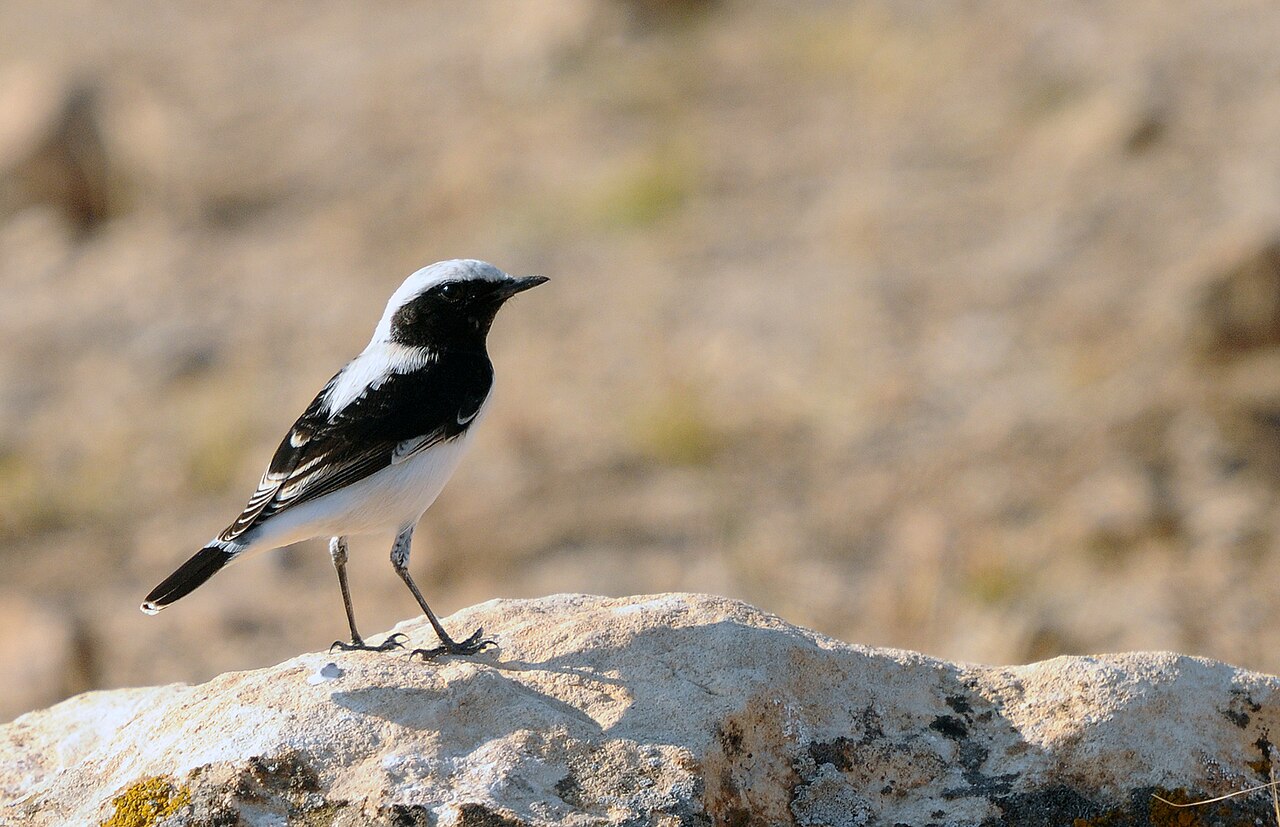
Finsch's wheatear is a small insectivorous passerine formerly placed in Turdidae but now in Muscicapidae. Males show striking black-and-white contrast and a classic wheatear tail pattern with a white base and black terminal band. It is named after the German naturalist Otto Finsch. The species often perches on rocks, flicking its tail while scanning for prey.

Temperament
alert and territorial
Flight Pattern
short rapid wingbeats with low, undulating flights
Social Behavior
Typically seen singly or in pairs on breeding territories. Nests in cavities, rock crevices, walls, or burrows lined with plant fibers and hair. Males sing from prominent perches and perform display flights; both parents feed the nestlings.
Migratory Pattern
Seasonal migrant
Song Description
A varied, scratchy warble interspersed with clear whistles and chatters. Gives a sharp 'tchak' call note, especially when alarmed, and may include mimicry of other species in its song.
Plumage
Male shows sharp black-and-white contrast with a white crown and mantle, black face and throat, black wings, and largely white underparts. Female is sandy-brown to gray-brown above with paler underparts and less contrast, showing the typical wheatear tail pattern. Both sexes display a white rump and an inverted 'T' tail pattern with a black terminal band.
Diet
Feeds mainly on insects such as beetles, ants, grasshoppers, and caterpillars, as well as spiders and other small arthropods. Captures prey by ground-gleaning and short sallies from low perches. Occasionally takes small berries or seeds in lean seasons.
Preferred Environment
Open rocky ground, steppe, and semi-desert with scattered shrubs and perches. Often forages along paths, field edges, and barren hillsides with ample bare ground.