
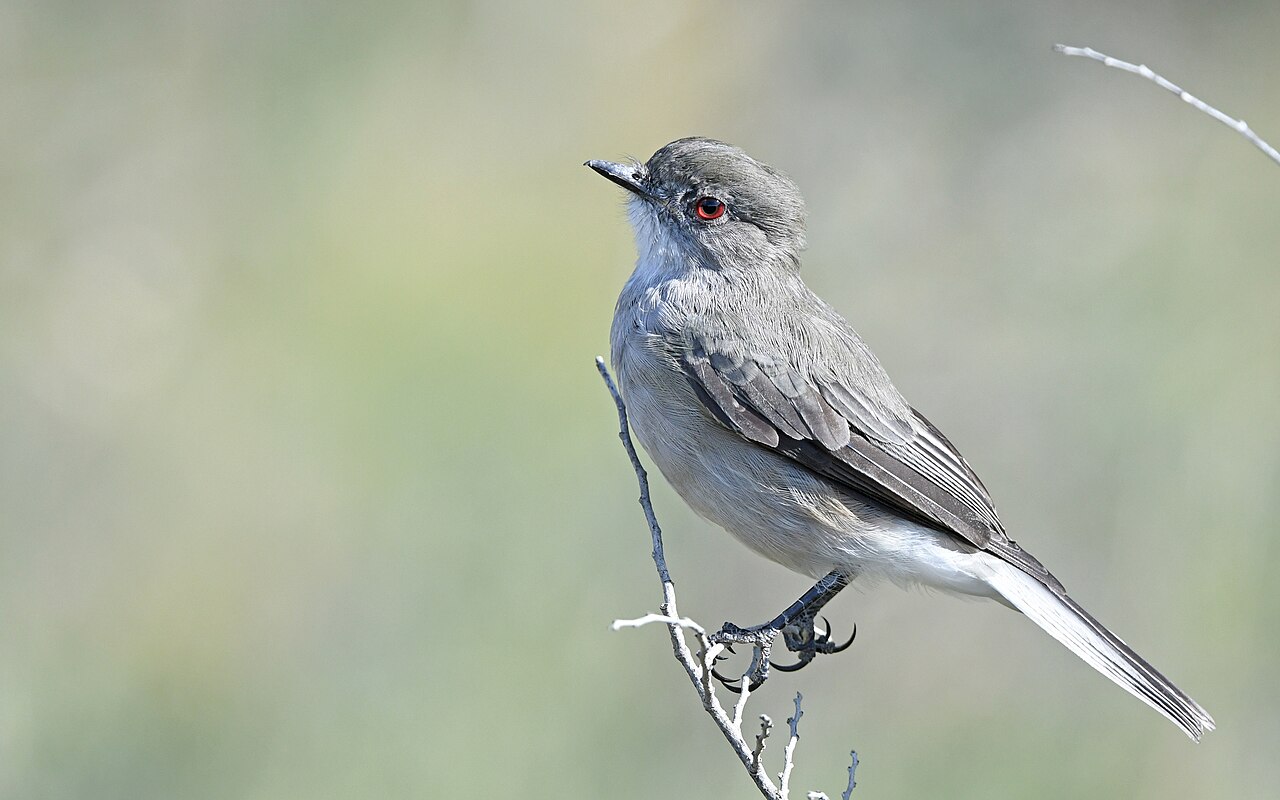
The fire-eyed diucon is a passerine bird of South America belonging to the tyrant flycatcher family Tyrannidae. It is found in Argentina and Chile and as a vagrant to the Falkland Islands.
Region
Southern Andes and Patagonian regions
Typical Environment
Occurs from central to southern Chile and adjacent western and southern Argentina, including Patagonia and Tierra del Fuego. Prefers open forest edges, scrubby hillsides, Nothofagus woodlands, ranchlands, and semi-open country with scattered trees. Frequently uses anthropogenic perches such as fence posts and utility wires. Recorded as a vagrant in the Falkland Islands.
Altitude Range
Sea level to 2000 m
Climate Zone
Temperate
Ease of Keeping
Beginner friendly: 1/5
Named for its striking red iris, the fire-eyed diucon often perches conspicuously on fence posts and treetops, sallying out to catch flying insects. It inhabits open woodlands, forest edges, scrub, and ranchlands across southern Chile and Argentina, and appears as a rare vagrant in the Falkland Islands. Pairs defend territories in the breeding season and frequently flick or fan the tail, flashing white outer tail feathers.


At Zapallar, Chile

Temperament
alert, conspicuous, and perch-oriented
Flight Pattern
short rapid wingbeats with frequent sallying from exposed perches
Social Behavior
Usually solitary or in pairs; forms breeding pairs that defend territories. Builds a cup nest in shrubs or trees; both parents tend the young. Displays frequent tail-flicking and perch changes while foraging.
Migratory Pattern
Partial migrant
Song Description
Song is a simple, mellow series of whistles delivered from an exposed perch. Calls include sharp, dry chips and scolding chatters, especially when alarmed.
Plumage
Mostly gray above with a darker head and mantle, paler gray breast, and whitish belly and undertail. Tail is dark with conspicuous white outer feathers; wings show subtle pale edging rather than bold wingbars. Texture is smooth with a neat, tidy appearance.
Diet
Primarily eats flying insects such as flies, beetles, and wasps, taken during aerial sallies. Also gleans from foliage and occasionally drops to the ground to pick prey. May supplement diet with small berries in cooler months when insects are scarce.
Preferred Environment
Feeds along forest edges, open scrub, pastures, and clearings where perches are abundant. Often hunts from fence posts, wires, and low branches with good visibility.


