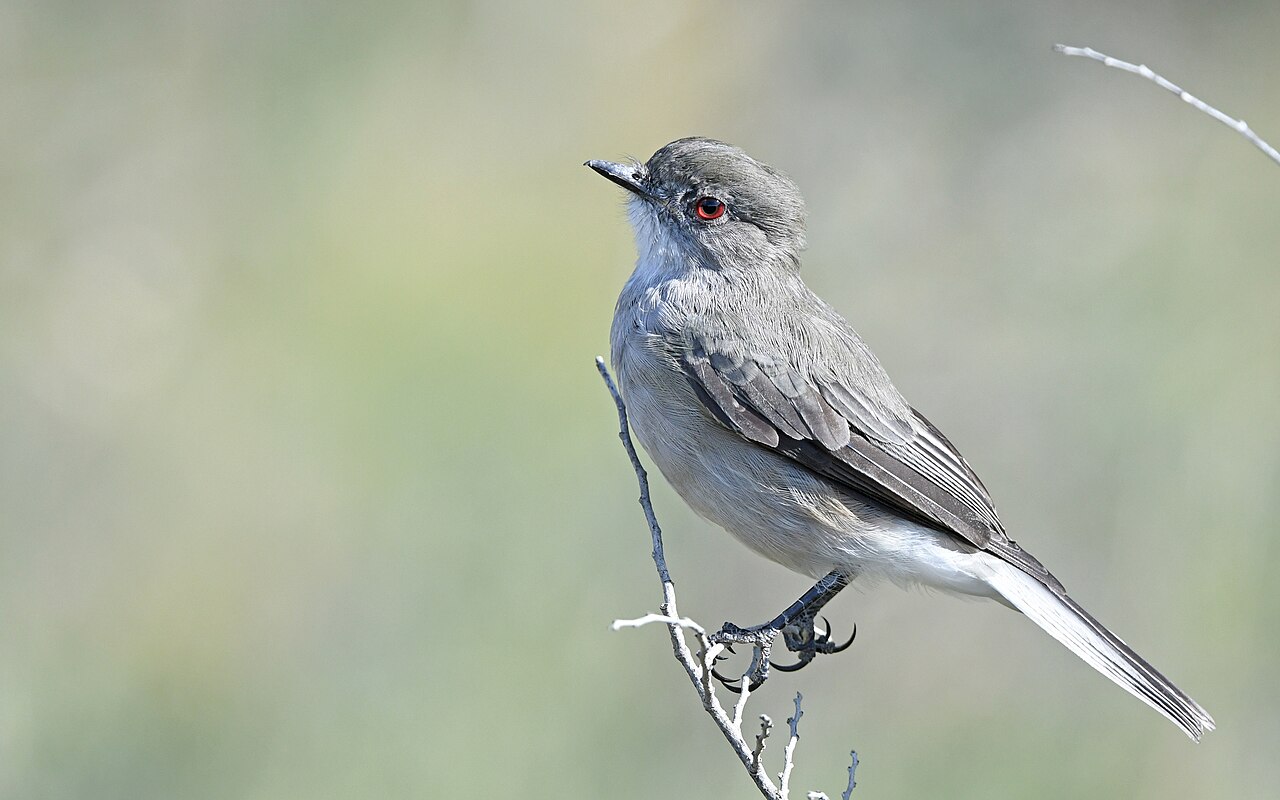
The fire-breasted flowerpecker is a species of bird in the family Dicaeidae found in the Indian Subcontinent and Southeast Asia. Like other flowerpeckers, this tiny bird feeds on fruits and plays an important role in the dispersal of fruiting plants. Unlike many other species in the genus, this species has marked sexual dimorphism with the male having contrasting upper and lower parts with a distinctive bright orange breast patch. The female is dull coloured.
Region
South and Southeast Asia
Typical Environment
Occurs from the Himalayan foothills (Nepal, Bhutan, and northern India) through northeastern India and Myanmar into southern China, and across mainland Southeast Asia to Taiwan. It favors hill and montane broadleaf forests, forest edges, secondary growth, and well-vegetated gardens with fruiting shrubs. The species is typically most common where mistletoes and other small-berried plants are abundant. Local movements follow fruiting cycles and seasonal changes in elevation.
Altitude Range
300–2800 m
Climate Zone
Highland
Ease of Keeping
Beginner friendly: 1/5
A tiny member of the flowerpecker family, it is an important disperser of mistletoe and other small-berried plants, passing viable seeds through its droppings. Males are striking with a bright fire-orange breast patch, while females are dull olive and gray, a clear example of sexual dimorphism. It often joins mixed-species flocks and forages restlessly high in the canopy. Its presence can indicate healthy montane and hill forest edges with abundant fruiting shrubs.


Temperament
social and active
Flight Pattern
short rapid wingbeats
Social Behavior
Often forages in pairs or small groups and frequently associates with mixed-species flocks in the canopy. Breeding pairs build a small, purse-like hanging nest from plant fibers and spider silk, usually placed in foliage. Clutches are small, and both parents tend to the young.
Migratory Pattern
Partial migrant
Song Description
Gives high, thin, sibilant calls and short tinkling notes that carry through the canopy. Song is a series of soft, rapid chips and tsit notes delivered from cover, more frequent at dawn and during the breeding season.
Plumage
Male with glossy dark bluish-black upperparts and pale grayish underparts marked by a vivid fire-orange to red central breast patch; often a whitish throat and flanks. Female is olive-green above with dull grayish to buff underparts, lacking the bright patch. Both sexes have short, thick bills and compact, rounded bodies.
Diet
Primarily consumes small fruits and berries, especially mistletoes, which it swallows whole and later disperses via sticky seeds. Also takes nectar from tubular flowers and supplements its diet with small insects and spiders. Its feeding behavior makes it an effective pollinator and seed disperser in montane ecosystems.
Preferred Environment
Feeds high in the canopy and at forest edges where mistletoes and berry-laden shrubs are common. Also visits flowering and fruiting trees in secondary growth, orchards, and gardens near forest.