

The Eurasian chaffinch, common chaffinch, or simply the chaffinch is a common and widespread small passerine bird in the finch family. The male is brightly coloured with a blue-grey cap and rust-red underparts. The female is more subdued in colouring, but both sexes have two contrasting white wing bars and white sides to the tail. The male bird has a strong voice and sings from exposed perches to attract a mate.
Region
Europe, North Africa, and Western Asia
Typical Environment
Occurs widely from the British Isles across continental Europe into western Siberia, and south into North Africa and the Middle East. It inhabits deciduous and mixed woodlands, forest edges, hedgerows, orchards, and urban parks and gardens. Often found along wooded field margins and in scrubby habitats with scattered trees. In winter, it can move into more open farmland and coastal areas where seeds are abundant.
Altitude Range
Sea level to 2000 m
Climate Zone
Temperate
Ease of Keeping
Beginner friendly: 2/5
A familiar finch across Europe, it shows strong sexual dimorphism: males are colorful with a blue‑grey cap and rufous underparts, while females are more subdued. Many northern birds migrate south in winter, while others remain resident. It readily visits garden feeders and learns local ‘dialects’ in its song. Introduced populations exist in New Zealand and South Africa.
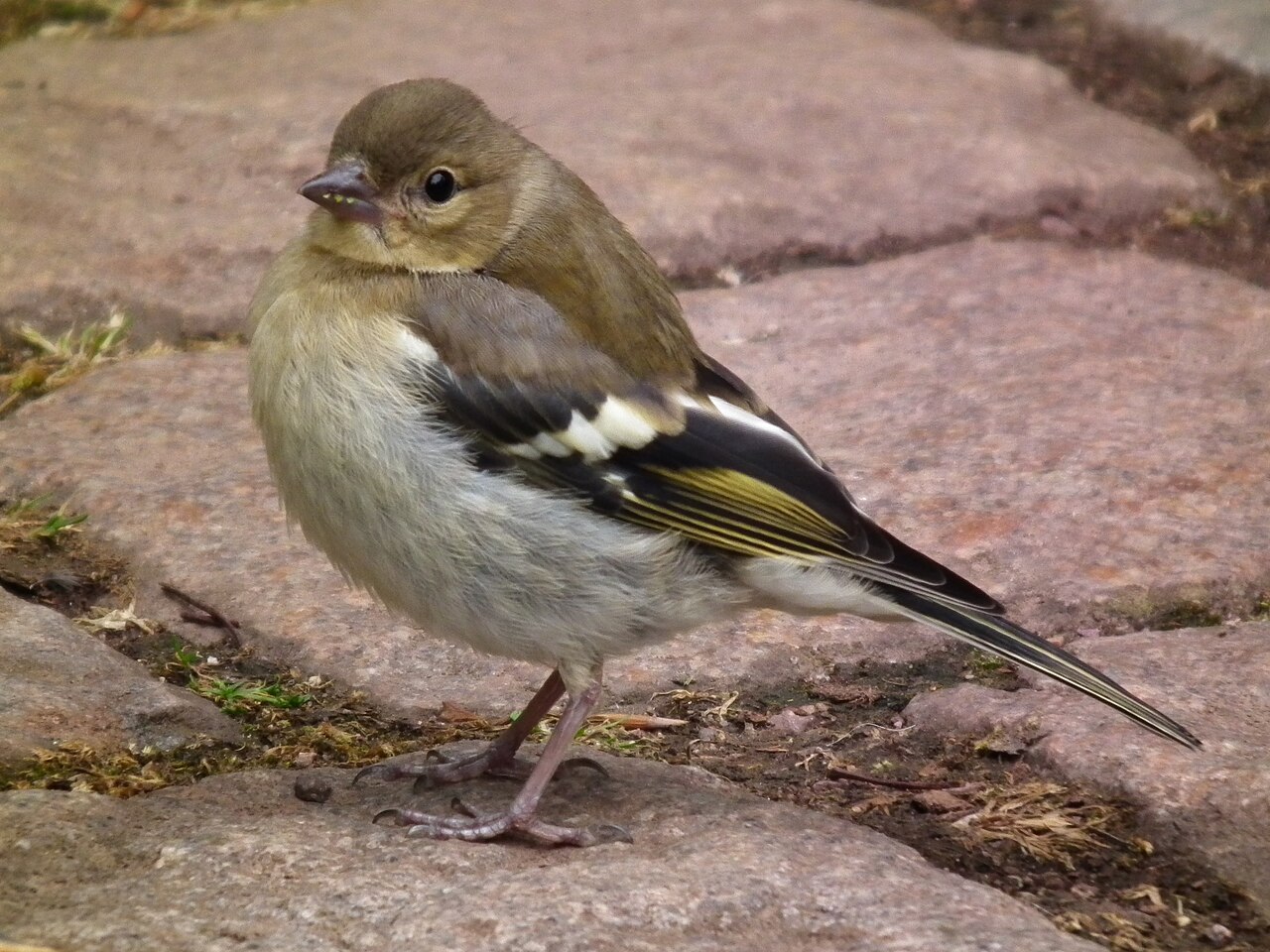


A captive male chaffinch
Temperament
social and active
Flight Pattern
undulating flight with rapid wingbeats
Social Behavior
Outside the breeding season it forms loose flocks, often mixing with other finches. During breeding, males defend territories and sing from exposed perches, while females build a neat cup nest in trees or tall shrubs. Usually monogamous within a season and attentive to nestlings.
Migratory Pattern
Partial migrant
Song Description
A loud, bright, and varied song of cascading phrases ending in a flourish, delivered persistently from treetops. Calls include a sharp metallic ‘pink’ and soft contact notes used in flocks.
Plumage
Male with blue‑grey cap and nape, chestnut to rust-red face and underparts, brown back, greenish rump, and blackish wings with two bold white wing bars; female is grey-brown with the same wing bars. Both sexes show white outer tail feathers visible in flight.
Diet
Feeds mainly on seeds, buds, and plant material outside the breeding season. In spring and summer, it takes many insects and other invertebrates, especially to feed chicks. It also consumes fallen seeds on the ground and will visit bird feeders for sunflower seeds and mixed grains. Forages by hopping and gleaning from the ground and low vegetation.
Preferred Environment
Edges of woodlands, hedgerows, and gardens where seed sources and cover are available. Frequently uses park lawns, leaf litter under trees, and field margins.


