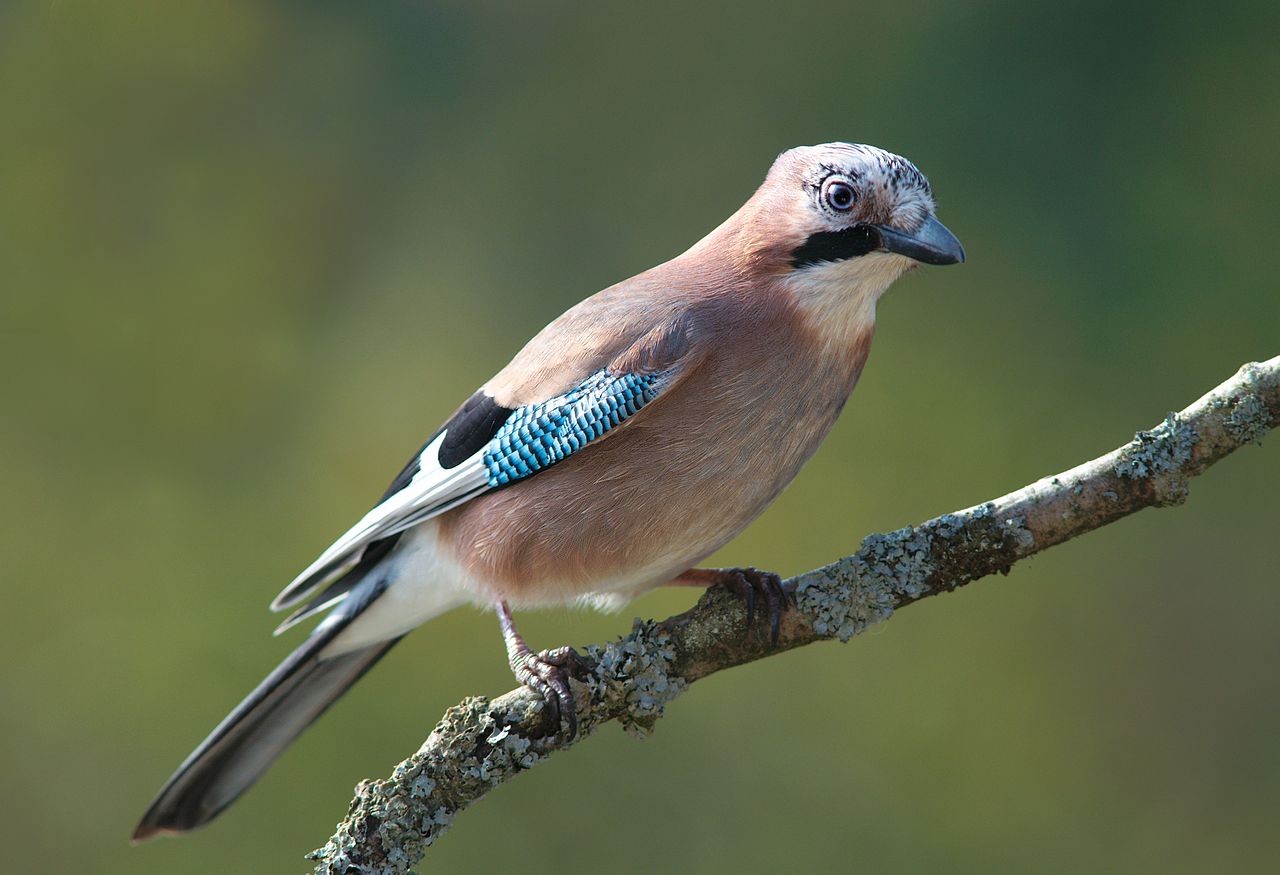
The Eurasian eagle-owl is a species of eagle-owl, a type of bird that resides in much of Eurasia. It is often just called the eagle-owl in Europe and Asia.
Region
Eurasia
Typical Environment
Occupies a vast range across Europe and Asia, from Iberia and Scandinavia through Russia to parts of the Middle East and East Asia. It favors rugged landscapes with cliffs, rocky outcrops, and forest edges, but also uses open country with scattered trees. It occurs in taiga, temperate forests, steppe margins, semi-deserts, and mountainous terrain. It adapts to human-altered mosaics where there are quiet nesting sites and abundant prey.
Altitude Range
Sea level to 4000 m
Climate Zone
Temperate
Ease of Keeping
Beginner friendly: 1/5
One of the world’s largest owls, the Eurasian eagle-owl has striking orange eyes and prominent ear tufts that are not used for hearing. Its deep, resonant hoots can carry for kilometers on calm nights. A powerful apex predator, it helps control populations of rodents and other small mammals. It often nests on cliffs or rocky ledges and has recolonized many areas following protection from persecution.


Note the orange eyes and vertical stripes on the chest

Eurasian eagle-owl in captivity
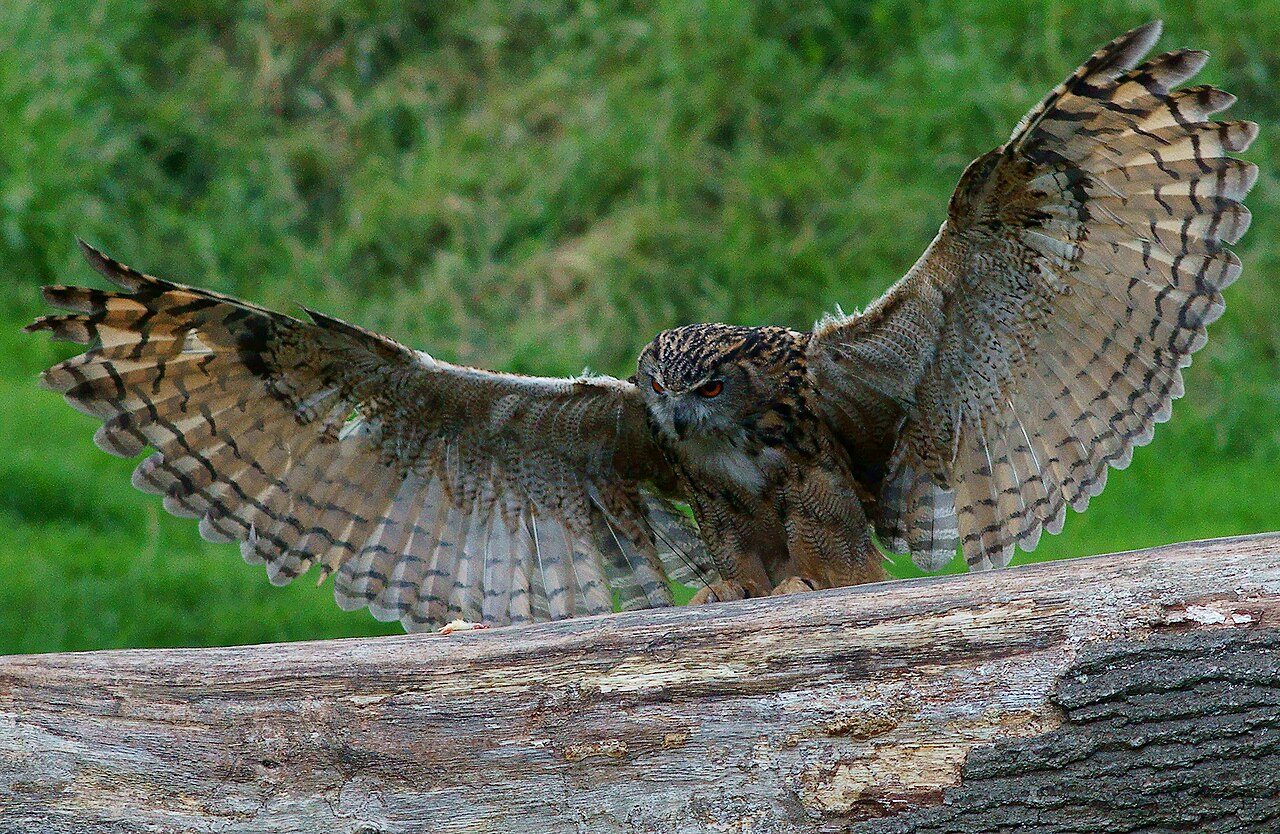
The wings have a wide spread

Bubo bubo skull
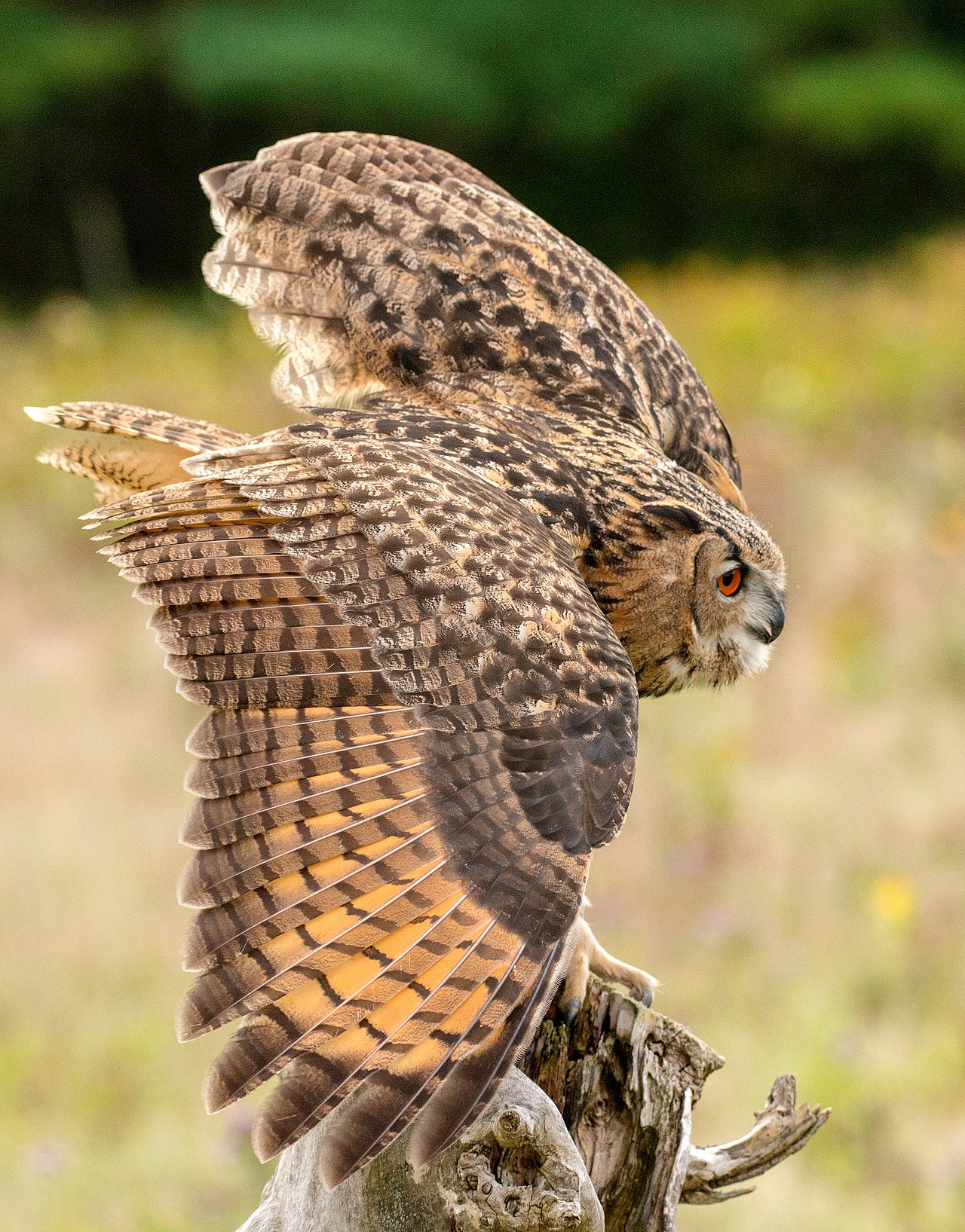
Unique camouflage pattern

A captive adult eagle-owl, although identified as part of the subspecies B. b. sibiricus, its appearance is more consistent with B. b. ruthenus

A captive adult eagle-owl with a pale appearance, likely part of B. b. sibiricus
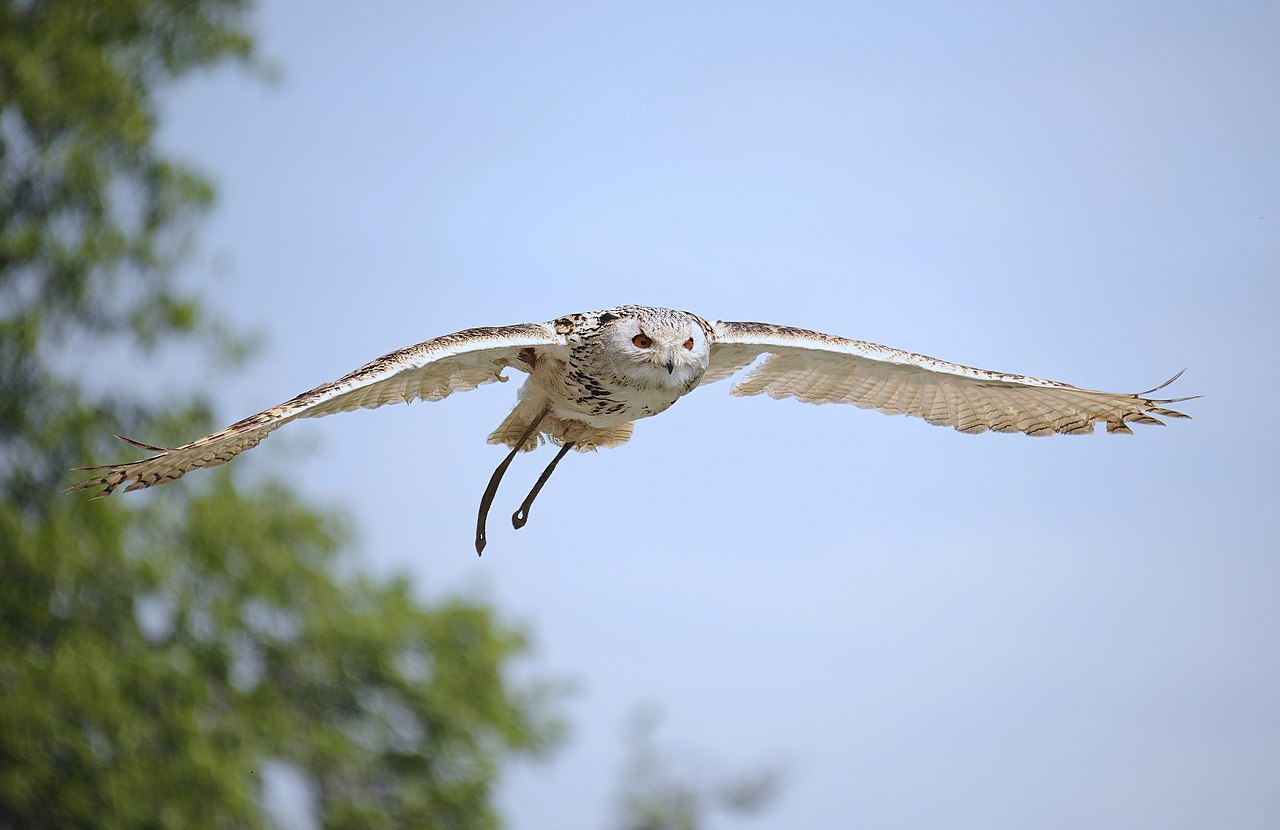
Captive western Siberian eagle-owl (B. b. sibiricus) in flight, Wildpark Poing, Germany

An eagle-owl in the wild in Kazakhstan, B. b. turcomanus

B. b. omissus at Tierpark Berlin, Germany

A wild eagle-owl in Pakistan, B. b. hemachalana

Captive eagle-owl in Korea, possibly part of the race B. b. kiatschensis
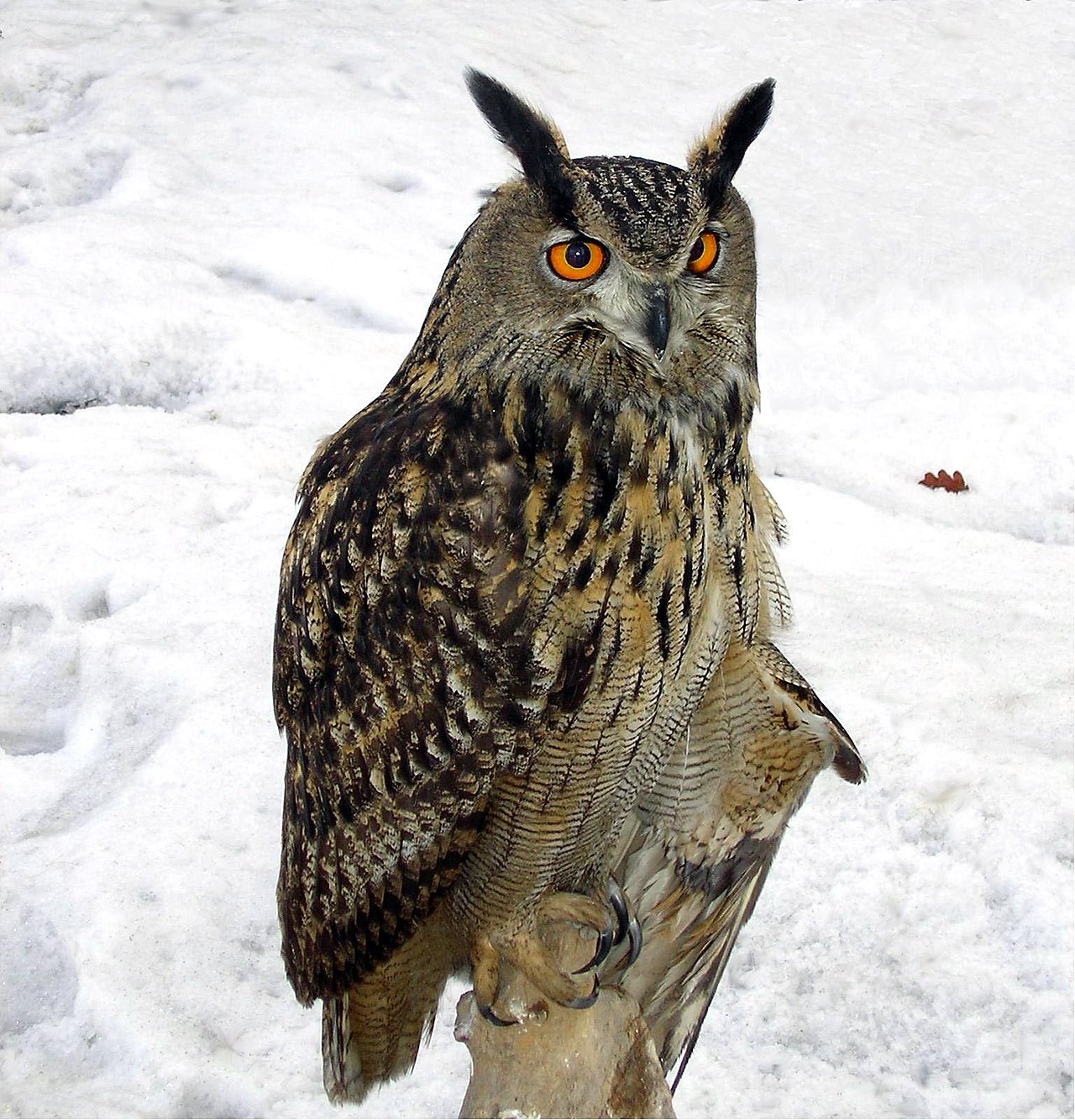
Eurasian eagle-owls are frequently at home in harsh wintry areas.

Eagle-owls often prefer areas with dense conifers for seclusion.

A wild eagle-owl in flight at the Olympic Stadium, Helsinki

Bubo bubo

Threat posture

Eurasian eagle-owls are subject to frequent mobbing by crows – the owl in this photograph is being pursued by a group of carrion crows (Corvus corone).

A female incubating on a nest fairly well obscured behind wild flowers.

A brooding female on nest

Egg, Museum Wiesbaden

Bubo bubo eggs

Like many large owls, Eurasian eagle-owls leave the nest while still in a functionally flightless state and with large amounts of second down still present, but will fly shortly thereafter.

Europe's highest density of Eurasian eagle-owl is reportedly in the Svolvær district of Norway.

Siberian eagle-owl chicks in captivity
Temperament
solitary and territorial
Flight Pattern
powerful, silent wingbeats with sweeping glides
Social Behavior
Typically monogamous and maintains large territories. Nests on cliffs, ledges, quarry faces, or on the ground; occasionally uses old stick nests of other raptors. Lays a small clutch, and both adults defend the nest vigorously while the female broods and the male provides food.
Migratory Pattern
Resident
Song Description
The male gives deep, resonant hoots spaced at regular intervals, often in long sequences at night. The female’s hoot is higher-pitched. Both sexes may snap bills and bark-like calls when agitated.
Plumage
Heavily mottled and barred plumage with coarse dark streaks over warm buff to brown ground color; dense feathering on legs and feet.
Diet
Takes a wide range of prey, primarily small to medium mammals such as voles, rats, rabbits, and hares. Also hunts birds up to the size of ducks and grouse, and occasionally reptiles, amphibians, fish, and large insects. Hunts from elevated perches or by low, silent flight over edges and clearings, swallowing smaller prey whole and dismembering larger items.
Preferred Environment
Prefers mosaic habitats where open foraging areas meet cover, such as forest edges, rocky ravines, river valleys, and farmland with hedgerows. Often hunts along cliff faces, forest rides, and open steppe margins.