
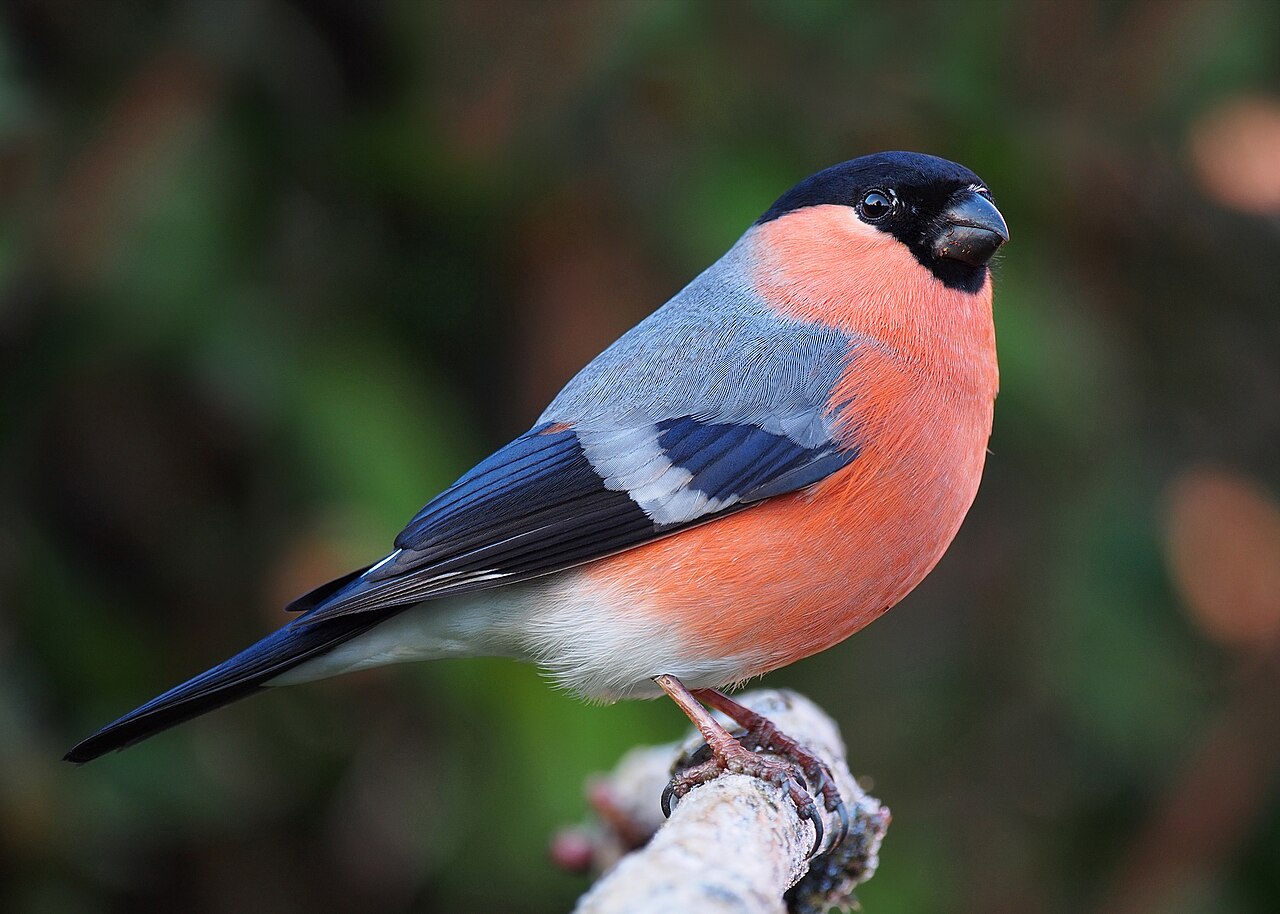
The Eurasian bullfinch, common bullfinch or bullfinch is a small passerine bird in the finch family, Fringillidae. In Anglophone Europe it is known simply as the bullfinch, as it is the original bird to bear the name bullfinch.
Region
Palearctic (Europe to temperate Asia)
Typical Environment
Occurs widely across Europe, extending through Scandinavia and Russia into temperate Asia and parts of Japan. Prefers mixed and coniferous woodland, forest edges, hedgerows, and well-vegetated parks and gardens. Often associated with dense shrubs and thickets that provide cover and nesting sites. Readily visits orchards and allotments, especially in winter and early spring. Absent from the most arid zones and the high Arctic.
Altitude Range
Sea level to 2000 m
Climate Zone
Temperate
Ease of Keeping
Beginner friendly: 2/5
Eurasian bullfinches are famed for their soft, melancholy whistles and their striking male plumage. They frequently feed on buds in late winter and spring, which can impact orchard trees but also helps prune and shape growth. They are generally shy, keeping to dense cover, and often travel in pairs or small family groups.


A male of the subspecies griseiventris on Mount Haku, Japan, showing considerably more grey in its plumage compared to the nominate subspecies

Eggs of P. pyrrhula europoea MHNT

Male with young bird in Austria

Young male in England
Temperament
shy and unobtrusive
Flight Pattern
short rapid wingbeats with bounding flight
Social Behavior
Typically seen in pairs during the breeding season and in small family parties or loose flocks in autumn and winter. Monogamous; nests are built low in dense shrubs or conifers. Both parents feed the nestlings, and family groups often remain together for some time after fledging.
Migratory Pattern
Partial migrant
Song Description
Song is a series of soft, fluted notes and simple phrases delivered quietly from cover. The call is a mellow, melancholy whistle, often rendered as a plaintive 'peu' or 'peeu'.
Plumage
Male with vivid rosy-red underparts, black cap and face, grey mantle, white rump, and black wings with a pale wing bar; female is more subdued with warm brownish-buff underparts and similar black cap and white rump. Both sexes have a short, thick bill and a neat, compact appearance. Juveniles are duller and lack the full black head.
Diet
Primarily consumes seeds, buds, and soft fruits; well known for taking flower and fruit buds in late winter and spring. In the breeding season, supplements diet with small invertebrates to feed growing chicks. Also eats berries and weed seeds in hedgerows and woodland edges.
Preferred Environment
Feeds within dense shrubs, at woodland margins, and in hedgerows where cover is close at hand. Frequently visits orchards, gardens, and allotments, especially in colder months.


