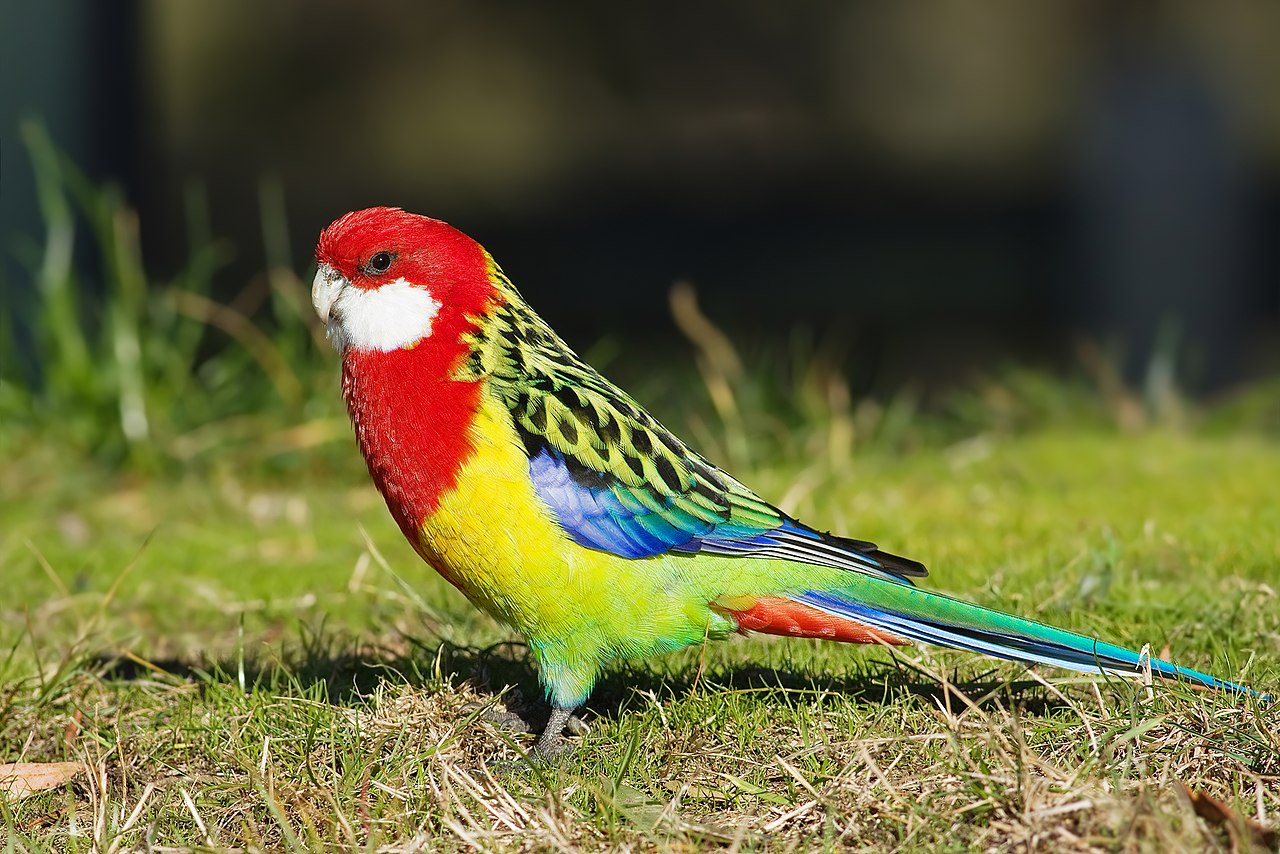
The eastern rosella is a parrot native and endemic to south-eastern Australia. It was first introduced to New Zealand in cages, which then both intentionally released and accidentally escaped into the wild and has been found establishing mainly in the North Island and in the hills around Dunedin in the South Island since the early 20th century.
Region
Southeast Australia and Tasmania; introduced to New Zealand
Typical Environment
Found across open woodlands, forest edges, and lightly timbered farmland, particularly in eucalypt country. It readily uses suburban parks, gardens, orchards, and golf courses, often perching on fence lines and foraging on lawns. The species avoids dense rainforest and arid treeless interiors. In New Zealand it occupies urban greenspaces, shelterbelts, and pine plantations, especially in the North Island and parts of Otago.
Altitude Range
Sea level to 1200 m
Climate Zone
Temperate
Ease of Keeping
Beginner friendly: 3/5
The eastern rosella is a vividly colored parrot native to south-eastern Australia and Tasmania, and has established feral populations in New Zealand after cage birds escaped or were released. It often feeds on the ground in open grassy areas, making it a familiar sight in parks and farmland. Pairs nest in tree hollows and may maintain long-term bonds. Where ranges meet, it can hybridize with closely related rosella species.


Temperament
social and wary in the open; territorial in breeding season
Flight Pattern
strong, direct flight with rapid wingbeats and brief undulations
Social Behavior
Outside the breeding season it forms small flocks or loose feeding parties, often mixing at roost sites. Pairs are typically monogamous and nest in tree hollows, lining them with wood dust. Both parents attend the young, with the female incubating and the male provisioning. Family groups may stay together for some weeks after fledging.
Migratory Pattern
Resident
Song Description
A bright, ringing series of whistles and tinkling notes, often delivered from exposed perches. Contact calls include sharp metallic 'chink' or 'ping' sounds and chattering when in groups.
Plumage
Bright red head with white cheeks; mantle black scalloped with yellow; underparts yellow shading to green on the lower belly; wings and rump with vivid blues and greens; tail long and greenish-blue.
Diet
Consumes grass and herb seeds, fallen grain, and a variety of fruits and berries. It also takes buds, blossoms, and nectar from eucalypts and other flowering plants. Occasionally eats insects and their larvae, especially during the breeding season for added protein.
Preferred Environment
Usually feeds on the ground in open grassy areas, along roadsides, and in pastures. Will also forage in trees and shrubs for flowers and fruit, and readily visits orchards and gardens.