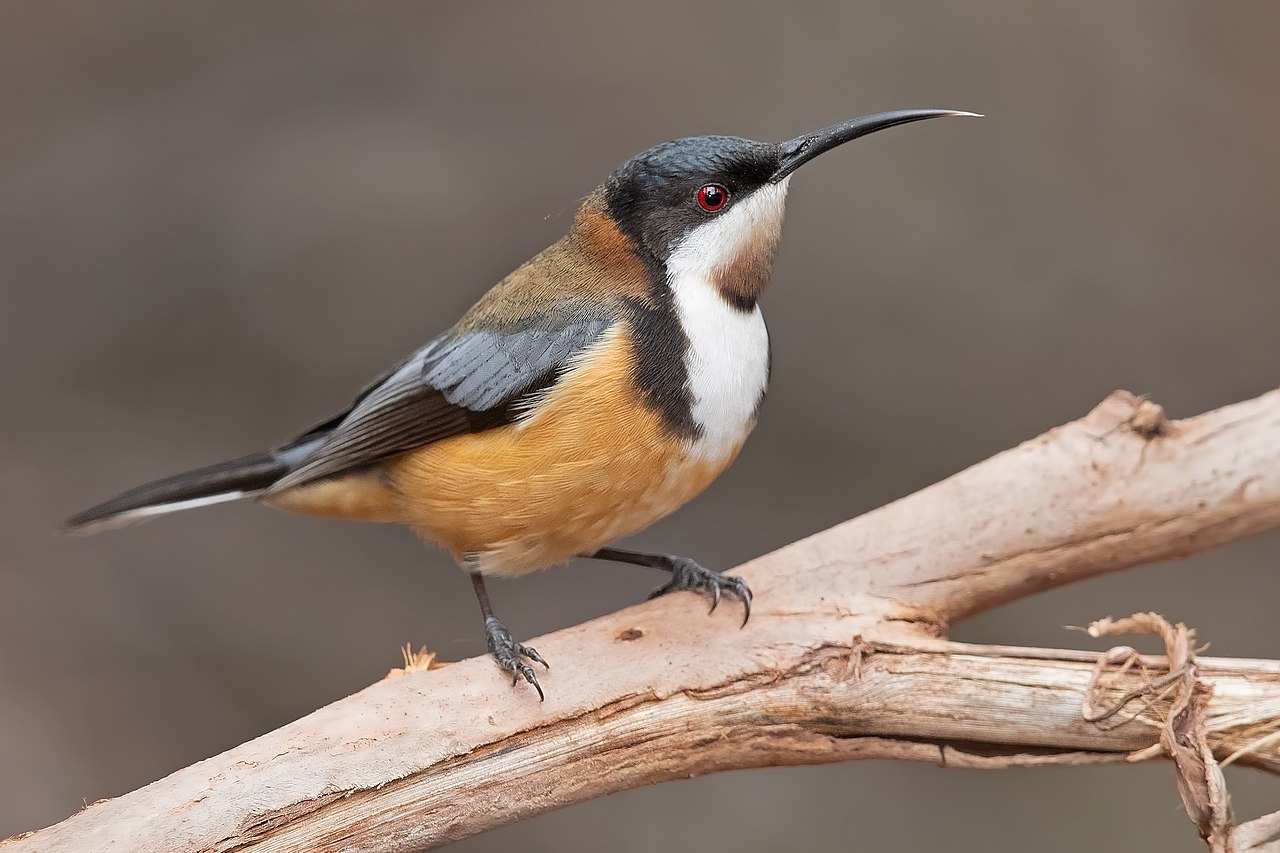
The eastern shriketit is a species of passerine bird in the family Falcunculidae. It is also known as bark tit, crested tit or yellow-bellied tit.
Region
Eastern and Southeastern Australia
Typical Environment
Occurs from southeastern Queensland through New South Wales and Victoria into southeastern South Australia and Tasmania. Favors mature eucalypt forests and open woodlands with rough-barked trees, as well as riparian corridors and forest edges. It can also be found in box–ironbark country and wooded farmland with remnant trees. Typically sedentary, with local movements following food availability.
Altitude Range
Sea level to 1500 m
Climate Zone
Temperate
Ease of Keeping
Beginner friendly: 2/5
Also called bark tit or crested shriketit, this species uses a powerful, parrot-like bill to lever and strip bark from eucalypts to reach hidden insects. It is often detected by the sound of falling bark chips and its clear, ringing whistles. Pairs are sedentary and defend territories year-round.


Temperament
secretive and territorial
Flight Pattern
short rapid wingbeats with brief glides between trunks and canopy
Social Behavior
Usually seen singly or in pairs that maintain territories year-round; occasionally joins mixed-species foraging flocks. Pairs build a neat cup nest high in the outer canopy and share feeding duties. Breeding occurs in spring to early summer, with both adults provisioning the young.
Migratory Pattern
Resident
Song Description
Clear, ringing whistles and fluty phrases, often delivered from the canopy. Also gives sharp clucks and metallic notes. Songs carry well through open woodland, aiding detection despite the bird’s cryptic behavior.
Plumage
Olive-green upperparts with a small crest, contrasting white face panels and yellow underparts; males show a bold black throat and breast band. Wings and tail are dusky with pale edging. Females are duller with a reduced or mottled throat band.
Diet
Primarily takes insects and other arthropods, especially beetle larvae, caterpillars, and spiders prised from under bark. Uses its powerful bill to chip, lever, and strip bark to expose hidden prey. Will occasionally eat seeds, nectar, or small fruits when insects are scarce.
Preferred Environment
Forages mostly on trunks and larger limbs of rough-barked eucalypts in open forest and woodland. Frequently works the mid to upper canopy but will descend to lower branches and occasionally the ground. Often follows edges, riparian trees, and remnant roadside gums.