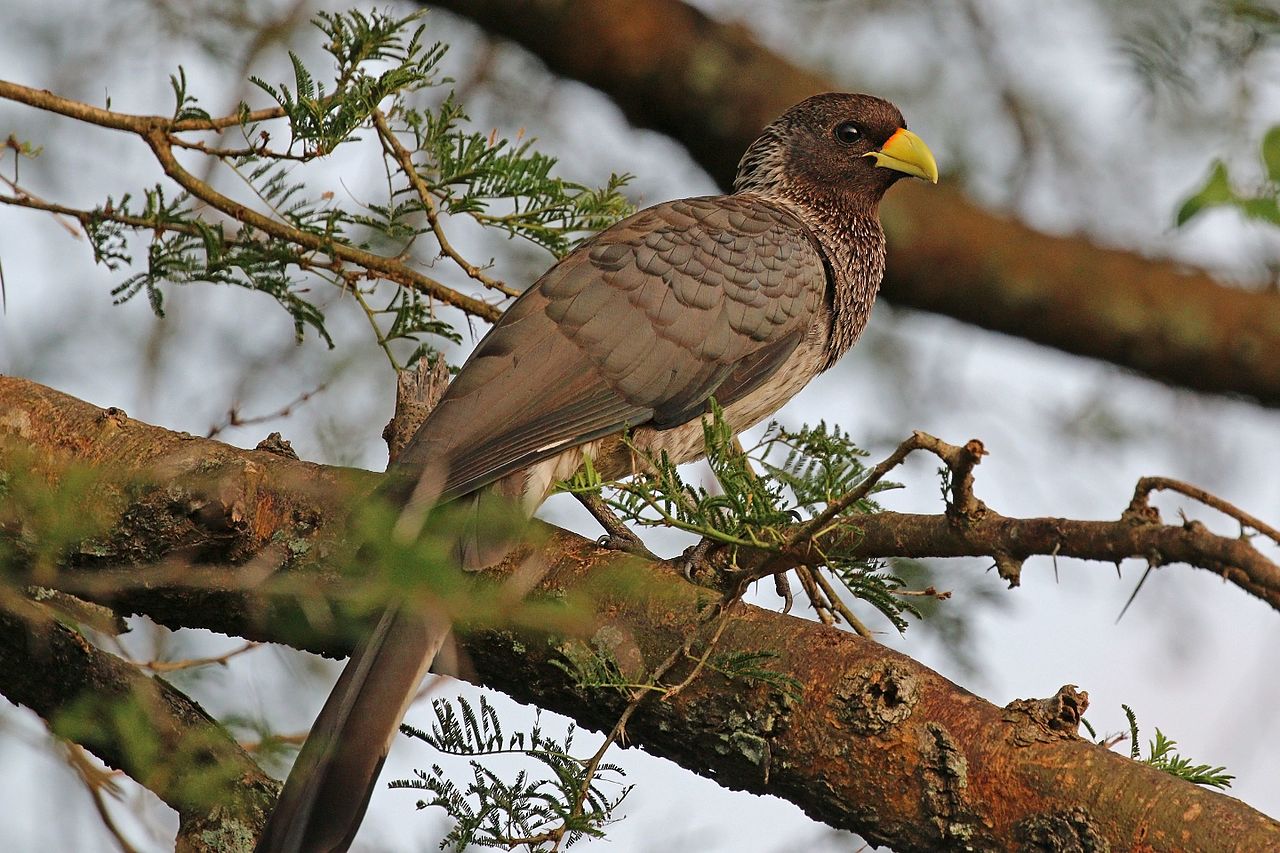
The eastern miombo sunbird or miombo double-collared sunbird is a species of bird in the family Nectariniidae. It is found in central and eastern Africa.
Region
South-central and East Africa
Typical Environment
Occurs from southern Tanzania through Malawi and Mozambique into Zambia and Zimbabwe, following the belt of miombo woodland. It favors open to moderately dense woodland with abundant flowering trees and shrubs. The species also uses woodland edges, clearings, riparian thickets, and sometimes gardens near natural habitat. It avoids dense evergreen forest and very arid open savanna. Local abundance peaks where seasonal blooms are prolific.
Altitude Range
Sea level to 2000 m
Climate Zone
Tropical
Ease of Keeping
Beginner friendly: 1/5
Also known as the miombo double-collared sunbird, it is closely tied to miombo woodlands dominated by Brachystegia and Julbernardia trees. Males show striking iridescent colors and a characteristic double-collar across the chest, while females are much plainer. They hover like hummingbirds at flowers but more often perch to feed. Movements are largely local, tracking flowering events.

Temperament
active and territorial
Flight Pattern
short rapid wingbeats with brief hovering at flowers
Social Behavior
Typically seen singly or in pairs, with males defending rich nectar sources. During breeding, pairs build a suspended, purse-like nest of plant fibers and spider webs with a side entrance. Outside the breeding season they may join loose mixed flocks tracking flowering trees.
Migratory Pattern
Partial migrant
Song Description
A fast, high-pitched series of twitters and warbles interspersed with sharp tsip notes. Males vocalize frequently from exposed perches near flowering trees.
Plumage
Male with glossy, iridescent green head and throat, a narrow metallic blue-violet band and a bright scarlet chest band over darker underparts; female is brownish-olive above with greyish to buff underparts and faint streaking. Feathers are sleek with a slight sheen in males, more matte in females.
Diet
Primarily nectar from flowering trees and shrubs such as aloes, Erythrina, and miombo species, taken by probing while perched or briefly hovering. It supplements nectar with small insects and spiders, especially during breeding to feed nestlings. Also gleans insects from foliage and occasionally hawks tiny aerial prey.
Preferred Environment
Feeds in miombo woodland canopies, along edges, and in clearings where blossoms are abundant. Will visit gardens and parks near natural woodland when ornamental plants are flowering.