The eastern plantain-eater also known as the eastern grey plantain-eater, is a large member of the turaco family, a group of large arboreal near-passerine birds restricted to Africa.
Region
East Africa and the Horn of Africa
Typical Environment
Occurs from southern Ethiopia and Somalia through Kenya, Uganda, and northern Tanzania, favoring open woodland, savanna, and riparian forest edges. It frequents cultivated areas, orchards, and gardens where fruit is abundant. Avoids dense rainforest and true desert but thrives in mosaic landscapes with scattered trees. Often found near human settlements and along watercourses.
Altitude Range
0–2500 m
Climate Zone
Tropical
Ease of Keeping
Beginner friendly: 2/5
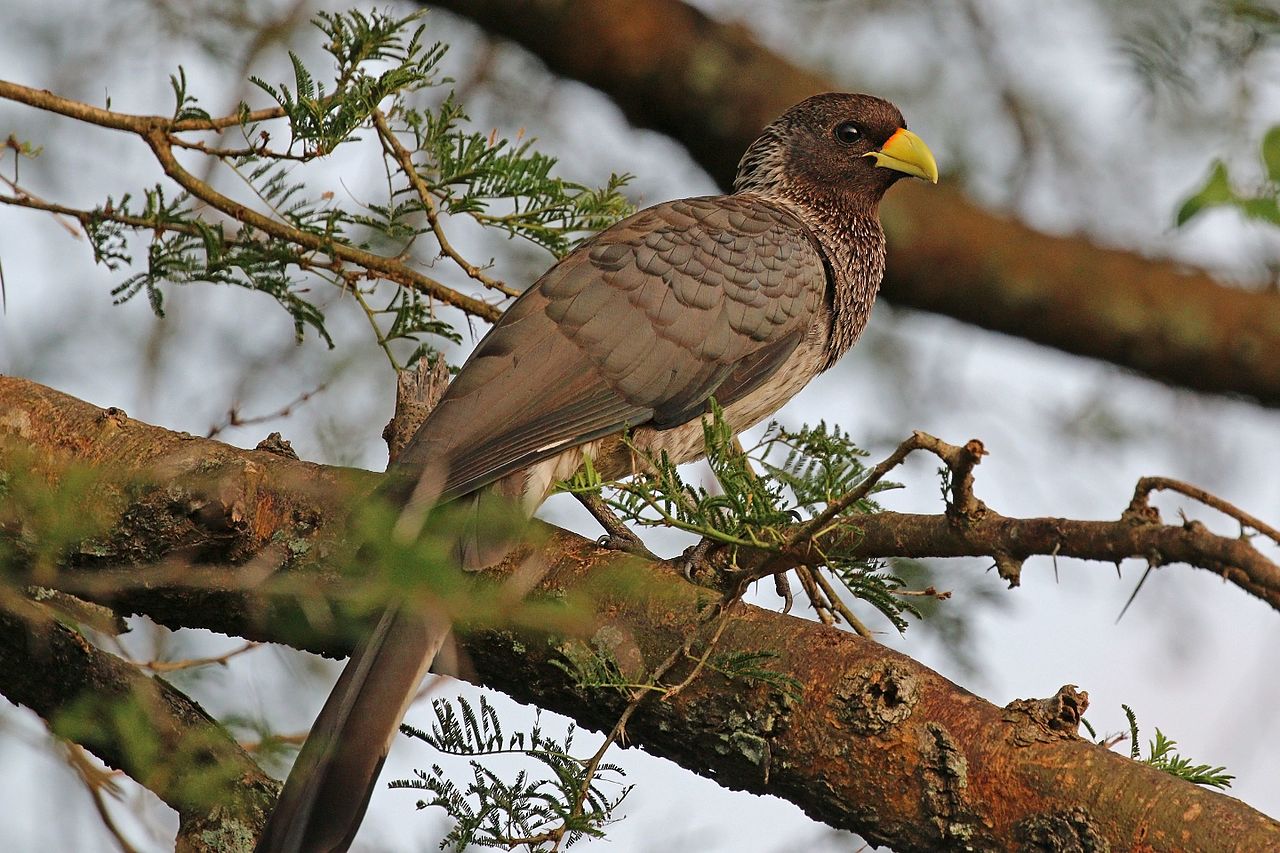
A member of the turaco family, the eastern plantain-eater is a large, arboreal bird native to East Africa, often seen in pairs or small groups around fruiting trees. Unlike many brightly colored turacos, it is mostly grey-brown and relies on camouflage. It is an important seed disperser for figs and other native trees and readily adapts to gardens and farms. Its loud, rasping calls are a familiar sound around villages and savannas.


Photographed at Nyabyeya College, Uganda
Temperament
alert yet relatively confiding near human habitation
Flight Pattern
short rapid wingbeats interspersed with glides
Social Behavior
Usually seen in pairs or small family parties that move deliberately through the canopy. Forms loose groups at fruiting trees. Builds a flimsy stick platform high in a tree; both sexes share incubation and care of the young. Clutch typically consists of 2–3 eggs.
Migratory Pattern
Resident
Song Description
Vocal and loud, giving harsh, rasping cackles and chattering sequences that carry far. Calls often delivered from exposed perches at dawn and late afternoon, sometimes in duets between pair members.
Plumage
Overall grey-brown with pale edging to the feathers giving a scaly, vermiculated look; paler underparts with dark barring; long rounded tail with a distinct pale terminal band and a prominent, shaggy crest.
Diet
Primarily eats fruit such as figs, plantains, and cultivated fruits, swallowing items whole and later dispersing seeds. Also takes flowers, buds, and young leaves, and occasionally supplements with small invertebrates. Foraging is methodical, moving along branches and making short hops to pluck fruit.
Preferred Environment
Feeds in the canopy and mid-levels of woodland edges, riverine trees, and scattered trees in savanna. Readily visits orchards, gardens, and farms with fruiting trees.