
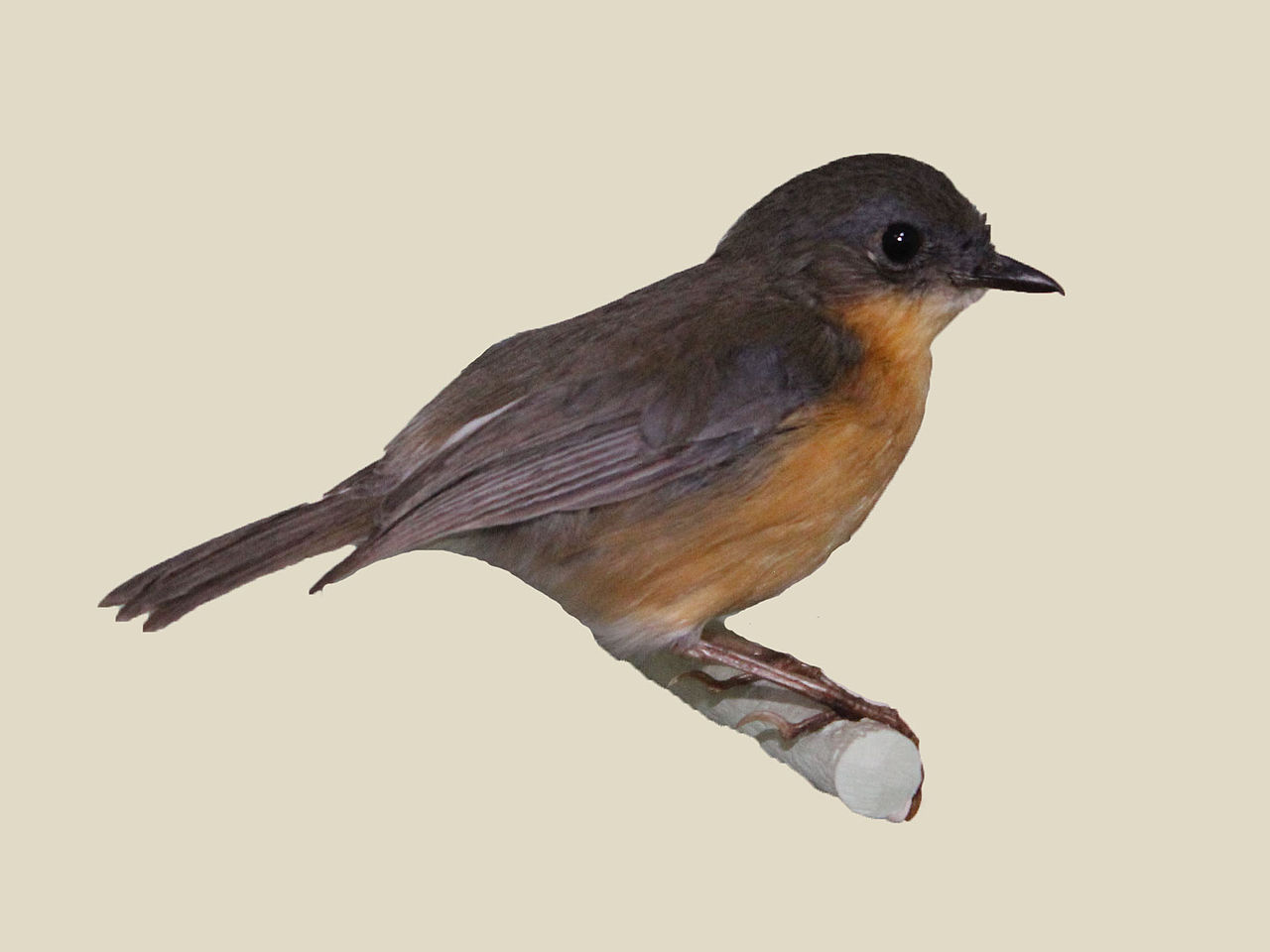
The east coast akalat or Gunning's robin is a small passerine bird which can be found in the east of Africa from Kenya to Mozambique, and is named after J. W. B. Gunning.
Region
East African Coastal Forests
Typical Environment
Occurs patchily along the coastal forests and thickets of southeastern Kenya, eastern Tanzania, and northern Mozambique. Prefers shaded, humid evergreen and semi-deciduous forest with a dense, tangled understory. Often found in leaf-littered gullies, along forest edges, and in riverine strips inside larger forest blocks. It avoids open habitats and heavily disturbed areas, though may use secondary forest if understory is dense.
Altitude Range
Sea level to 1200 m
Climate Zone
Tropical
Ease of Keeping
Beginner friendly: 1/5
Also known as Gunning's robin, the east coast akalat is a shy forest robin of the East African coastal belt from Kenya to Mozambique, named after J. W. B. Gunning. It skulkily forages in dense understory and leaf litter, often remaining unseen despite a rich, melodious song. This species is sensitive to forest degradation and fragmentation, persisting best in intact coastal evergreen forests.

Temperament
solitary and skittish
Flight Pattern
short rapid wingbeats, low darting flights through understory
Social Behavior
Usually solitary or in pairs within well-defended territories. Nests low in dense shrubs or tangles, constructing a cup nest from leaves and fibers. Both parents are thought to participate in provisioning the young. Outside breeding, it remains secretive and rarely forms flocks.
Migratory Pattern
Resident
Song Description
A rich, melodious series of clear whistles and short phrases, often delivered from concealed perches. Phrases are repeated with pauses and may accelerate during dawn chorus. Calls include soft ticks and churrs given when alarmed.
Plumage
Olive-brown upperparts with a slate-grey head and upper breast, clean white throat, and warm rufous tail. Underparts are greyish with buffy to cinnamon flanks; wings are darker brown with subtle edging. Feathers appear soft and smooth, aiding its secretive look in shadowed understory.
Diet
Primarily hunts insects and other small invertebrates such as beetles, ants, spiders, and larvae, gleaned from leaf litter and low vegetation. It occasionally takes small caterpillars from twigs or probes among roots and fallen logs. Small amounts of fruit or berries may be taken opportunistically.
Preferred Environment
Forages on or near the ground in dark, humid understory with abundant leaf litter. Often works along edges of paths, root tangles, and fallen branches where prey is concentrated. Prefers quiet microhabitats with minimal disturbance.


