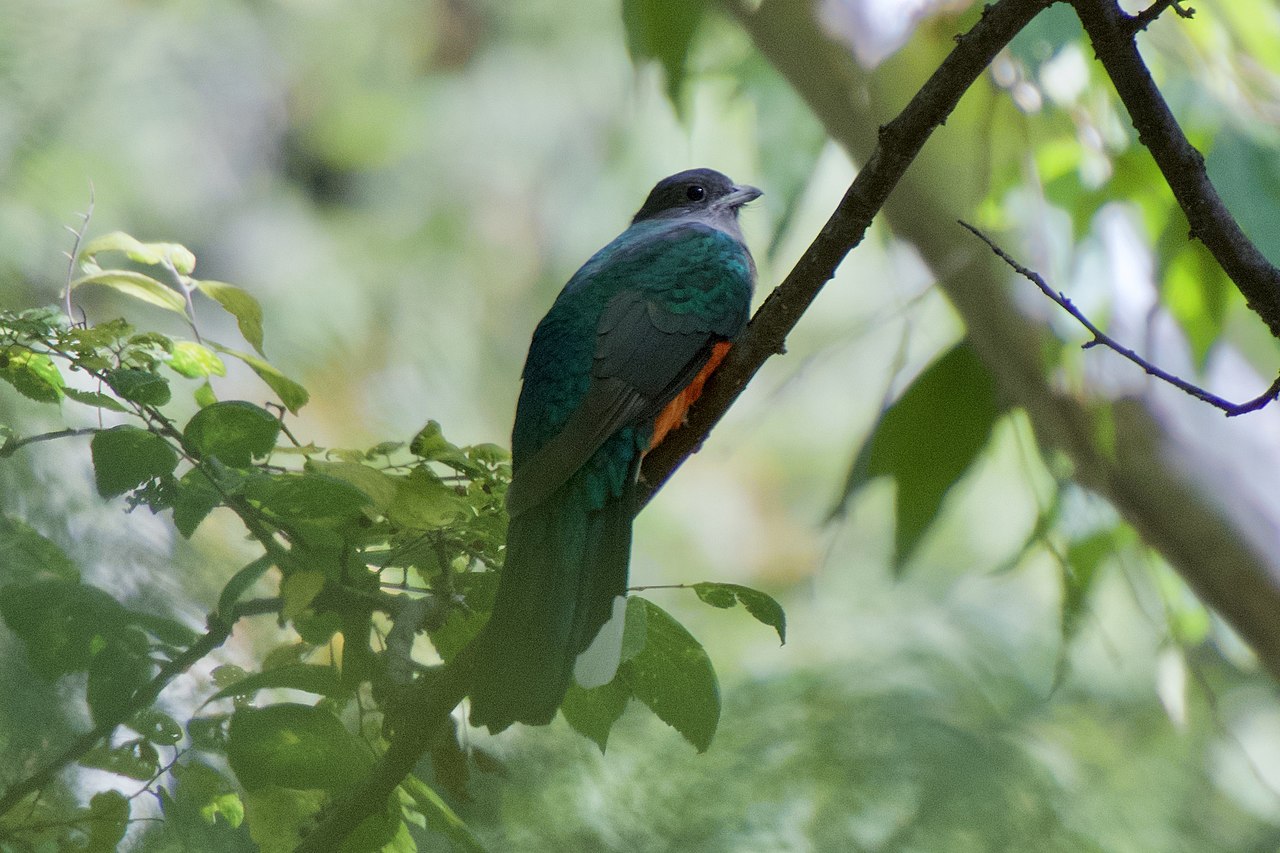
The dwarf tyrant-manakin or dwarf tyranneutes is a species of bird in the family Pipridae, the manakins. It is found in Bolivia, Brazil, Colombia, Ecuador, Peru, and Venezuela.
Region
Western and central Amazon Basin
Typical Environment
Occurs in lowland tropical rainforest across Bolivia, Brazil (western Amazonia), Colombia, Ecuador, Peru, and Venezuela. Prefers the shaded understory of terra firme and seasonally flooded (várzea) forests, as well as river edges and older second-growth. Common in vine tangles, along stream margins, and near forest gaps where small insects concentrate. Typically keeps within a few meters of the ground to mid-levels, using dense cover to move unobtrusively.
Altitude Range
Sea level to 1200 m
Climate Zone
Tropical
Ease of Keeping
Beginner friendly: 1/5
One of the smallest manakins, the dwarf tyrant-manakin is a diminutive, quiet understory bird that can be hard to spot despite being fairly common. Males give high, insect-like notes and subtle wing sounds during simple display routines, unlike the flamboyant leks of many other manakins. It often forages low in dense vegetation, making quick sallies for tiny prey. Both sexes look similar and are uniformly plain, which aids camouflage on the forest floor and edges.


Temperament
secretive and active
Flight Pattern
short rapid wingbeats
Social Behavior
Generally solitary or in pairs, sometimes loosely associating with mixed-species understory flocks. Males perform simple perch-to-perch display flights with soft wing sounds and high-pitched notes, rather than forming large, conspicuous leks. Nests are small, cup-shaped, and placed low in dense vegetation. Both parents likely contribute to care, with the female primarily handling incubation.
Migratory Pattern
Resident
Song Description
Vocalizations are thin, high-pitched seeps and short trills that can resemble insect calls. Males repeat single notes or brief series from concealed perches. Wing snaps or faint mechanical sounds may accompany displays.
Plumage
Plain, finely textured plumage with olive-green upperparts and yellowish-olive underparts; short tail and compact, round-bodied profile.
Diet
Feeds mainly on tiny insects and other small arthropods gleaned from leaves and twigs or taken in short sallies. Occasionally snatches aerial prey at close range. May supplement with small berries when available, but animal prey dominates.
Preferred Environment
Forages in dense understory of primary and mature secondary forests, especially along shaded trails, stream edges, and vine tangles. Often works low perches and hover-gleans from the underside of foliage.