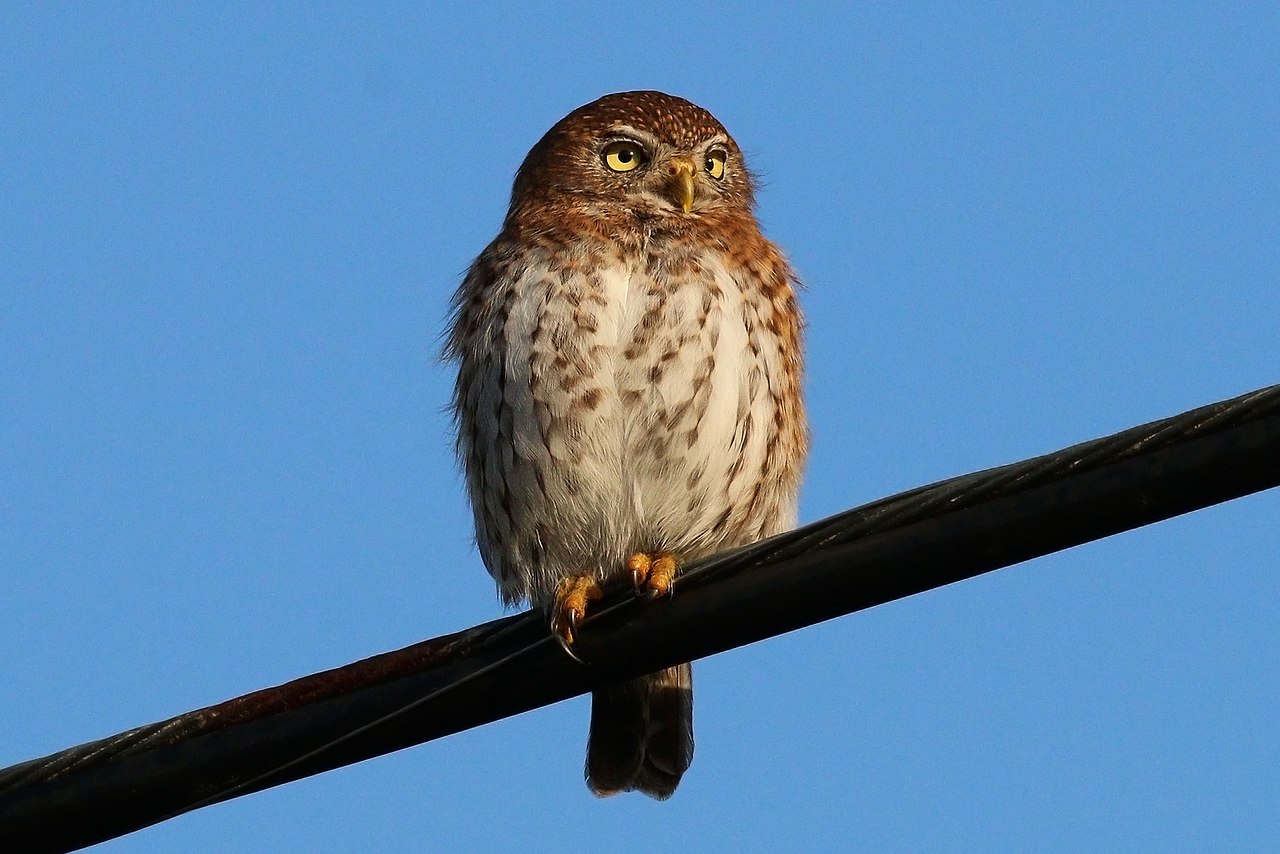
The Cuban pewee or crescent-eyed pewee is a species of bird in the family Tyrannidae, the tyrant flycatchers. It is found in Cuba and the Bahamas.
Region
West Indies
Typical Environment
Found across much of Cuba (including nearby islands) and parts of the Bahamas, where it favors light woodland, forest edges, second-growth, and mangroves. It also uses pine habitats and scrub, as well as gardens and plantations with scattered trees. Birds often perch in the mid to lower canopy, especially along edges and clearings. It is generally a resident species with only local movements tied to food availability.
Altitude Range
Sea level to 1200 m
Climate Zone
Subtropical
Ease of Keeping
Beginner friendly: 1/5
Also called the crescent-eyed pewee, it takes its name from the distinctive pale crescent below the eye. It typically hunts by sallying out from shaded perches to catch flying insects. Its plaintive, whistled song is a familiar sound at dawn in woodlands across Cuba and parts of the Bahamas.


Temperament
quiet and watchful
Flight Pattern
short rapid sallies from a perch
Social Behavior
Usually solitary or in pairs, defending small territories during the breeding season. Nests are neat, shallow cups placed on horizontal branches, often well camouflaged. Clutches are small, and parental care includes frequent feeding trips with captured insects.
Migratory Pattern
Resident
Song Description
The song is a soft, plaintive series of clear whistles, often descending in pitch and repeated at intervals. Calls include thin, sharp notes used during foraging and territorial interactions, with an increase in vocal activity at dawn.
Plumage
Olive-gray to brownish-gray upperparts with paler gray underparts and a slightly duskier breast, grading to whitish belly. Two pale wingbars are usually visible, and the feathering is smooth and fairly plain overall.
Diet
Primarily flying insects such as flies, beetles, moths, and wasps, taken on the wing during short sallies from exposed perches. It also gleans from foliage when insect activity is low. Small berries may be taken opportunistically, especially outside peak insect periods.
Preferred Environment
Forages along forest edges, in second-growth, and in open woodlands where perches are abundant. It also hunts in mangroves, pine habitats, and semi-open rural areas, frequently choosing shaded or dappled light conditions.