

The common eider, also called St. Cuthbert's duck or Cuddy's duck, is a large sea-duck that is distributed over the northern coasts of Europe, North America and eastern Siberia. It breeds in Arctic and some northern temperate regions, but winters somewhat farther south in temperate zones, when it can form large flocks on coastal waters. It can fly at speeds up to 113 km/h (70 mph).
Region
North Atlantic and Arctic coasts
Typical Environment
Breeds along rocky and low-lying coasts, islands, and skerries across the high-latitude North Atlantic and adjacent Arctic seas. It favors nearshore marine habitats with abundant bivalve beds, kelp reefs, and sheltered bays. Nests are placed on coastal islands among grasses, heather, or low shrubs, usually close to water. In winter it moves south to ice-free temperate coasts, often forming large rafts just offshore. It rarely ventures far inland except on large brackish lagoons and estuaries.
Altitude Range
Sea level to 200 m
Climate Zone
Temperate
Ease of Keeping
Beginner friendly: 1/5
The soft eiderdown used in premium bedding is traditionally collected from common eider nests after the birds have left, especially in Iceland, and is considered a highly sustainable practice. Females line their nests with this down to insulate eggs in cold, windy coastal habitats. Ducklings often form crèches guarded by multiple females. Despite its bulk, this sea-duck flies fast and low over waves and can exceed 100 km/h.
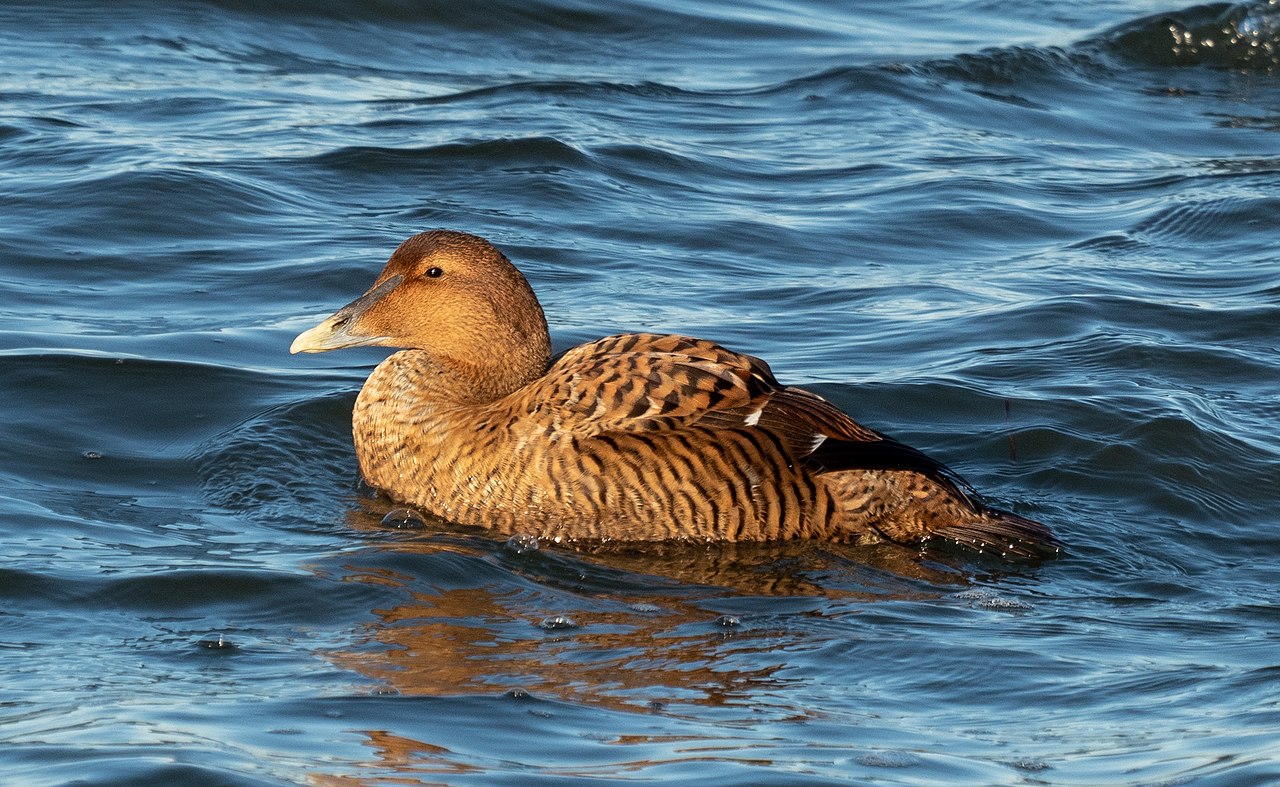


A common eider skull
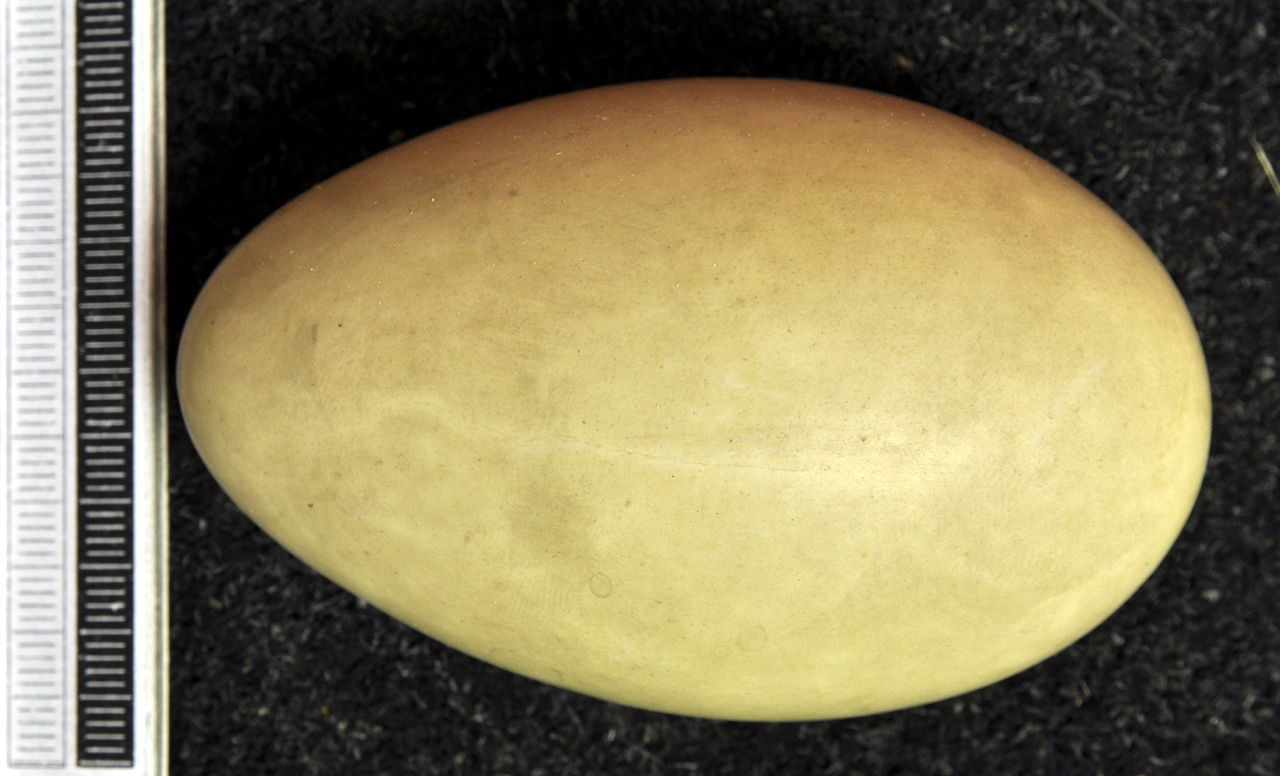
Egg, Collection Museum Wiesbaden





Temperament
social but wary
Flight Pattern
strong flier
Social Behavior
Breeds colonially on coastal islands, with females nesting on the ground and lining nests with eiderdown. Males depart after incubation begins, leaving females to rear the brood. Females often combine broods into crèches for collective defense against predators.
Migratory Pattern
Seasonal migrant
Song Description
Males give mellow, cooing ‘ah-ooo’ notes during courtship, often in series. Females produce rough quacks and grunts, especially when guarding broods.
Plumage
Males are striking with bold black-and-white contrast and a soft green wash on the nape; females are densely barred and mottled brown for excellent camouflage. Both sexes show a distinctive wedge-shaped head profile with a long sloping bill. Plumage is dense and waterproof for cold marine conditions.
Diet
Primarily consumes marine invertebrates, especially blue mussels, cockles, and other bivalves, which it swallows whole and crushes in a powerful gizzard. Also takes crustaceans, sea urchins, and small snails. Ducklings initially eat small crustaceans and insects before shifting to harder-shelled prey.
Preferred Environment
Feeds by diving and dabbling in shallow coastal waters over mussel beds, rocky reefs, eelgrass, and kelp forests. Often forages in tidal channels and sheltered bays, sometimes in large coordinated rafts.


