The common goldeneye or simply goldeneye is a medium-sized sea duck of the genus Bucephala, the goldeneyes. Its closest relative is the similar Barrow's goldeneye. The genus name is derived from the Ancient Greek boukephalos, a reference to the bulbous head shape of the bufflehead. The species name is derived from the Latin clangere.
Region
Holarctic (Northern Eurasia and North America)
Typical Environment
Breeds across boreal forests of Scandinavia, Russia, Alaska, and Canada, favoring clear freshwater lakes, ponds, and slow rivers. Winters widely on large rivers, ice-free lakes, estuaries, and sheltered coastal waters in temperate zones. Often selects habitats with abundant aquatic invertebrates and submerged structure for foraging. Uses mature forest landscapes for nesting due to availability of tree cavities created by woodpeckers or natural decay.
Altitude Range
Sea level to 2000 m
Climate Zone
Continental
Ease of Keeping
Beginner friendly: 1/5
Common goldeneyes are tree-cavity nesters that readily use nest boxes placed near lakes and rivers. Males have a distinctive high-pitched wing whistle in flight, helping birders identify them without seeing the bird. They often return to the same breeding areas annually, and ducklings leap from high nest cavities within a day of hatching.


Bucephala clangula Pair
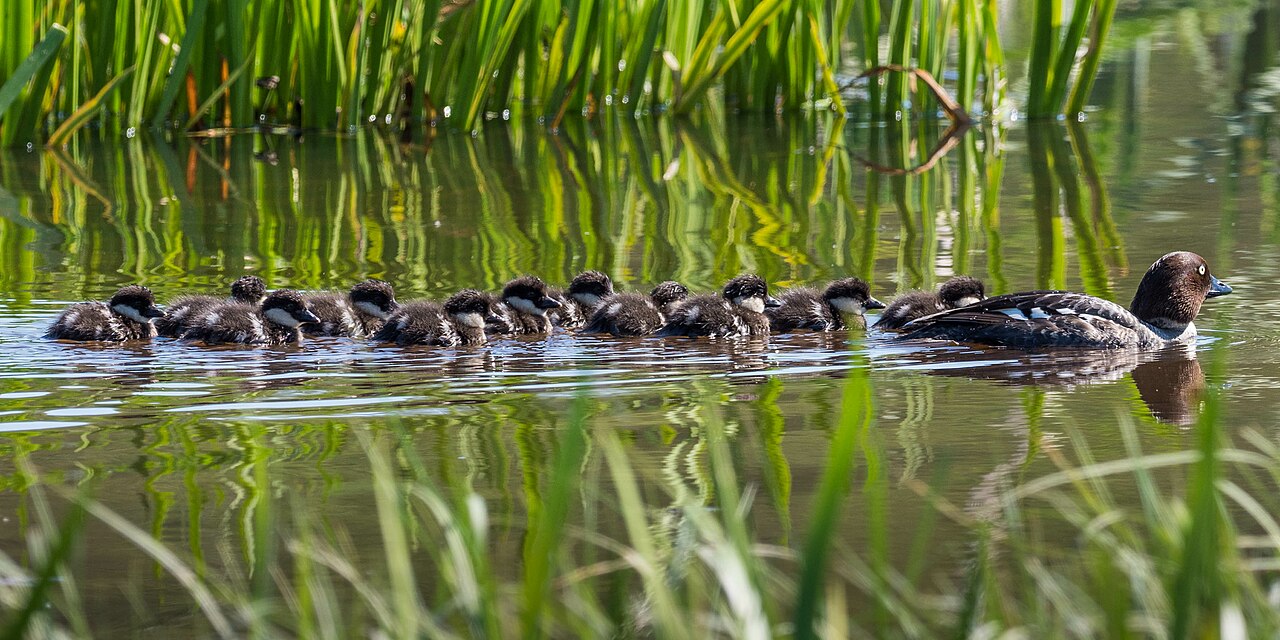
Female goldeneye with chicks

Eggs, Collection Museum Wiesbaden


Temperament
wary and alert
Flight Pattern
fast, direct flight with rapid wingbeats and audible wing whistle
Social Behavior
Outside the breeding season they form small to medium flocks, often mixed with other diving ducks. They nest in tree cavities near water and will accept nest boxes; broods are led to water soon after hatching. Pair bonds form on wintering grounds and are seasonal, with males departing early in the breeding season.
Migratory Pattern
Seasonal migrant
Song Description
Vocalizations are generally soft; males give thin, squeaky notes during courtship. Wingbeats produce a distinctive whistling sound in flight, and females utter harsher quacks and clucks, especially when tending ducklings.
Plumage
Male crisp black-and-white with glossy dark green head and striking white cheek spot; female gray body with rich brown head and paler neck. Both sexes show bold white wing patches and a peaked, angular head profile. Feathers appear sleek and waterproof, adapted for frequent diving.
Diet
Primarily consumes aquatic invertebrates such as insect larvae (mayflies, caddisflies), crustaceans, and mollusks. Will also take small fish and fish eggs when available, and occasionally seeds or plant matter. Ducklings focus heavily on insects for rapid growth.
Preferred Environment
Forages by diving in clear lakes and slow rivers, probing among rocks, logs, and submerged vegetation. In winter, commonly feeds in coastal bays, estuaries, and ice-free river reaches with good visibility and prey density.