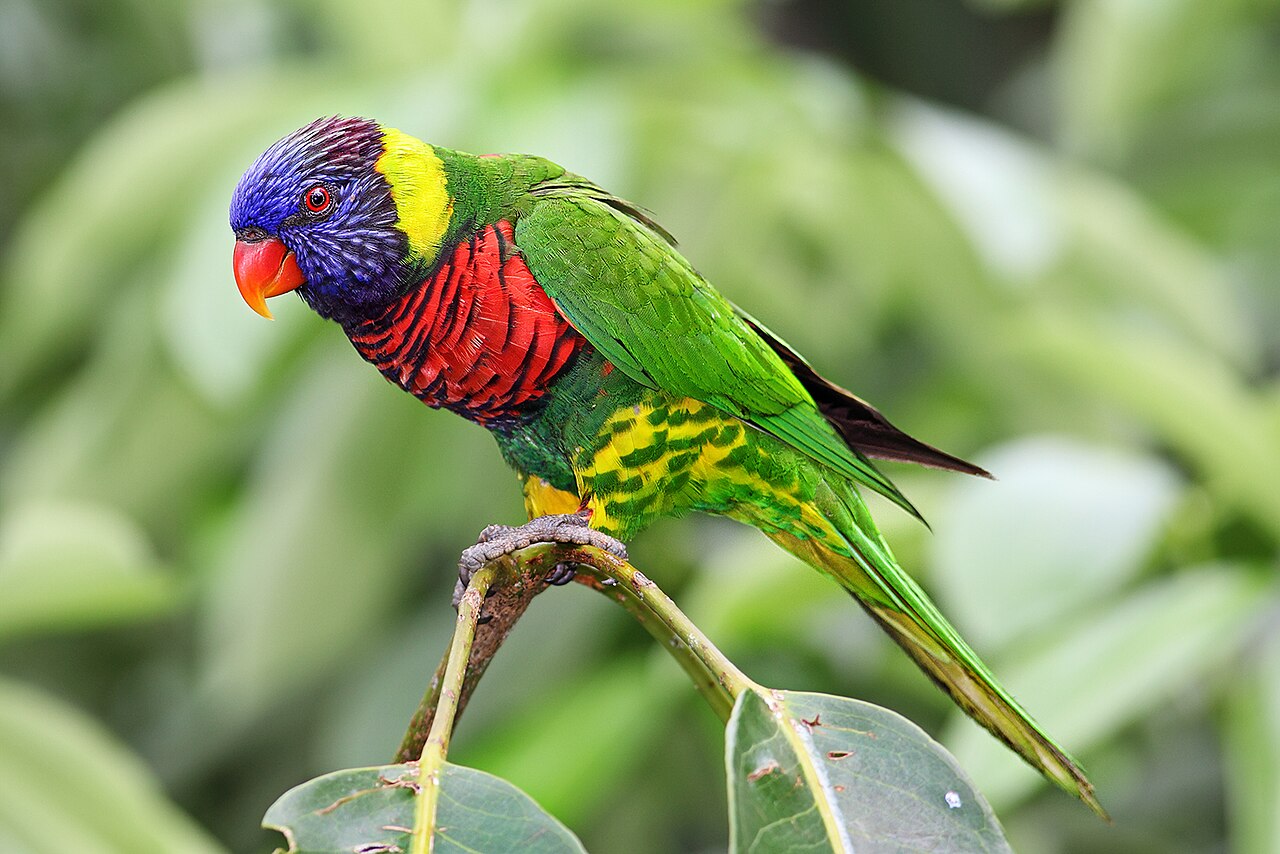
The coconut lorikeet, also known as the green-naped lorikeet, is a parrot in the family Psittaculidae. Seven species of lorikeets now recognised were once lumped together under Trichoglossus haematodus.
Region
New Guinea and Melanesia
Typical Environment
Occurs widely across New Guinea, nearby islands of eastern Indonesia, and parts of the Bismarck Archipelago and Solomon Islands. It frequents coastal and lowland forests, mangroves, woodland edges, and second-growth areas. The species readily uses human-modified habitats including gardens, urban parks, and coconut plantations. It is often abundant where flowering trees are available.
Altitude Range
Sea level to 1800 m
Climate Zone
Tropical
Ease of Keeping
Beginner friendly: 2/5
Also called the green-naped lorikeet, this species is part of the former rainbow lorikeet complex that was split into several species. It has a brush-tipped tongue specialized for sipping nectar and pollen, which makes it a frequent visitor to flowering trees and coconut plantations. Highly mobile and noisy, it often forms energetic flocks that commute between feeding sites.


Trichoglossus haematodus - MHNT


Temperament
social and active
Flight Pattern
short rapid wingbeats
Social Behavior
Usually found in pairs or small to medium flocks that can gather in larger numbers at rich food sources. Monogamous pairs nest in tree cavities, often high in mature trees. They are highly vocal and maintain tight pair bonds year-round.
Migratory Pattern
Resident
Song Description
Calls are loud, piercing screeches and sharp chattering given in flight and while feeding. Softer, buzzy contact notes are used within flocks at close range.
Plumage
Vivid, glossy plumage with green upperparts, blue head, and a green nape; underparts show bright red-orange breast with yellow barring blending to green on the belly.
Diet
Primarily consumes nectar and pollen from flowering trees such as Eucalyptus, Melaleuca, and coconut palms; also takes soft fruits, berries, and occasionally seeds. The brush-tipped tongue allows efficient extraction of nectar. They may visit orchards and gardens, sometimes feeding on cultivated blossoms.
Preferred Environment
Feeds high in the canopy of flowering trees and along forest edges. Also exploits urban and rural plantings, including coconut plantations and ornamental trees.