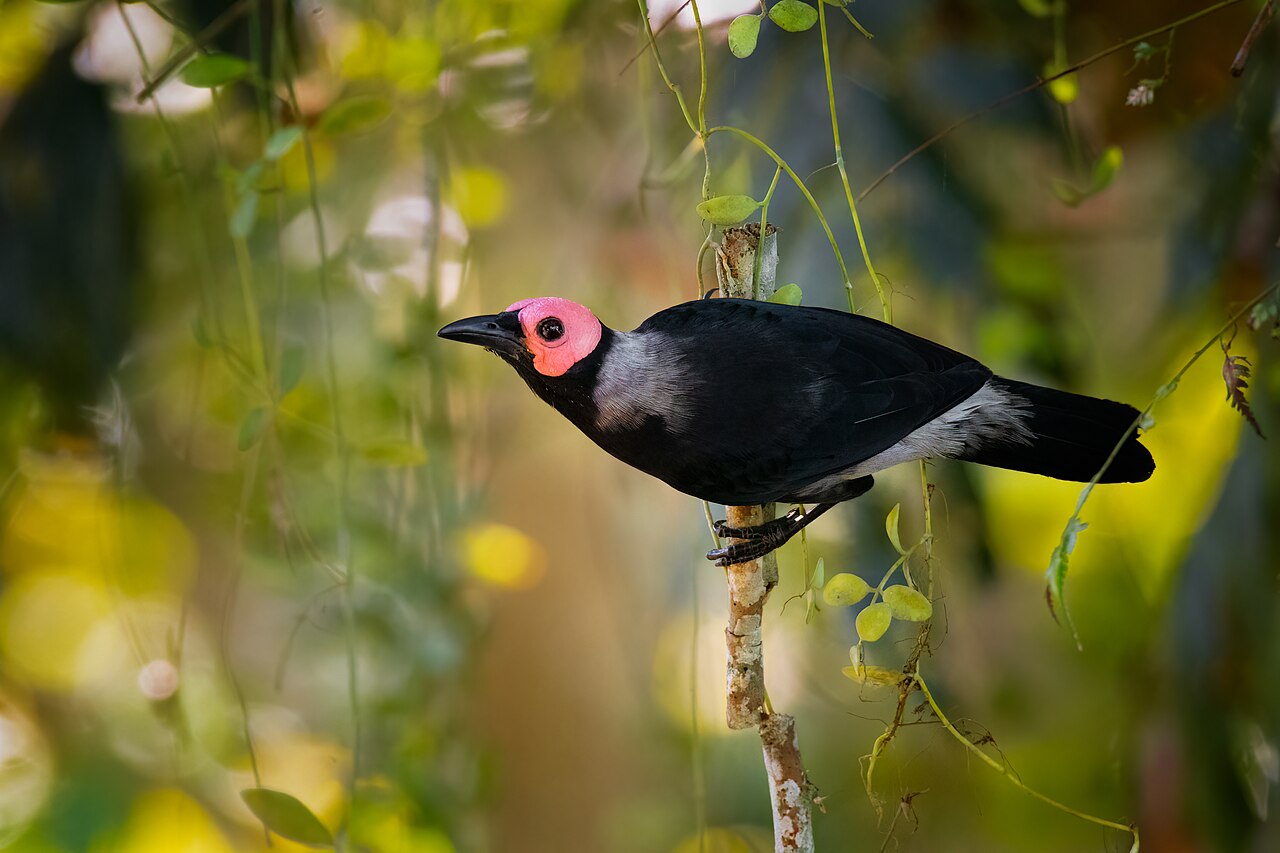
The Cocos finch or Cocos Island finch, is the only one of Darwin's finches not native to the Galápagos Islands, and the only member of the genus Pinaroloxias. Sometimes classified in the family Emberizidae, more recent studies have shown it to belong in the tanager family, Thraupidae. It is endemic to Cocos Island, a Pacific island which is approximately 360 miles (580 km) south of Costa Rica.
Region
Tropical Eastern Pacific (Cocos Island)
Typical Environment
Occurs across the entirety of Cocos Island, from coastal scrub and palm groves to interior evergreen rainforest. It uses forest edges, streamside thickets, and second-growth, as well as open areas near clearings. The species forages from the ground to the canopy, exploiting a wide range of microhabitats. Its presence is tied to the island’s protected habitats within Cocos Island National Park.
Altitude Range
Sea level to 575 m
Climate Zone
Tropical
Ease of Keeping
Beginner friendly: 1/5
The Cocos finch is the only Darwin’s finch found outside the Galápagos and the sole member of its genus. It shows remarkable flexibility in foraging techniques, with individuals specializing on different foods across the island. Males are uniformly black, while females are streaked brown, making the species easily sexually dimorphic. It inhabits all major habitats on Cocos Island and is often confiding around human presence.


Cocos Island viewed from a helicopter
Temperament
social and active
Flight Pattern
short rapid wingbeats
Social Behavior
Often seen in small groups or loose flocks, especially outside the breeding period. Pairs form during breeding and defend a small area around the nest, which is a cup placed in shrubs or trees. Breeding activity is likely associated with periods of higher food availability.
Migratory Pattern
Resident
Song Description
The song is a series of thin, tinkling trills and chips, delivered in short, variable phrases. Calls include sharp metallic ticks and buzzy notes used for contact within groups.
Plumage
Males are uniform and glossy to sooty black; females are brown with heavy streaking on the breast and flanks and paler underparts. Feathers are compact and smooth, giving a neat, streamlined appearance.
Diet
Eats a broad mix of insects and other small arthropods, along with seeds, fruits, and occasionally nectar. It gleans from leaves and branches, probes bark and epiphytes, and picks items from the ground. The species shows individual specialization, with some birds focusing more on insects while others take more plant material.
Preferred Environment
Forages in forest understory, midstory, and canopy, as well as at forest edges and along streams. It also feeds in coastal scrub and open clearings where shrubs and fruiting plants are available.