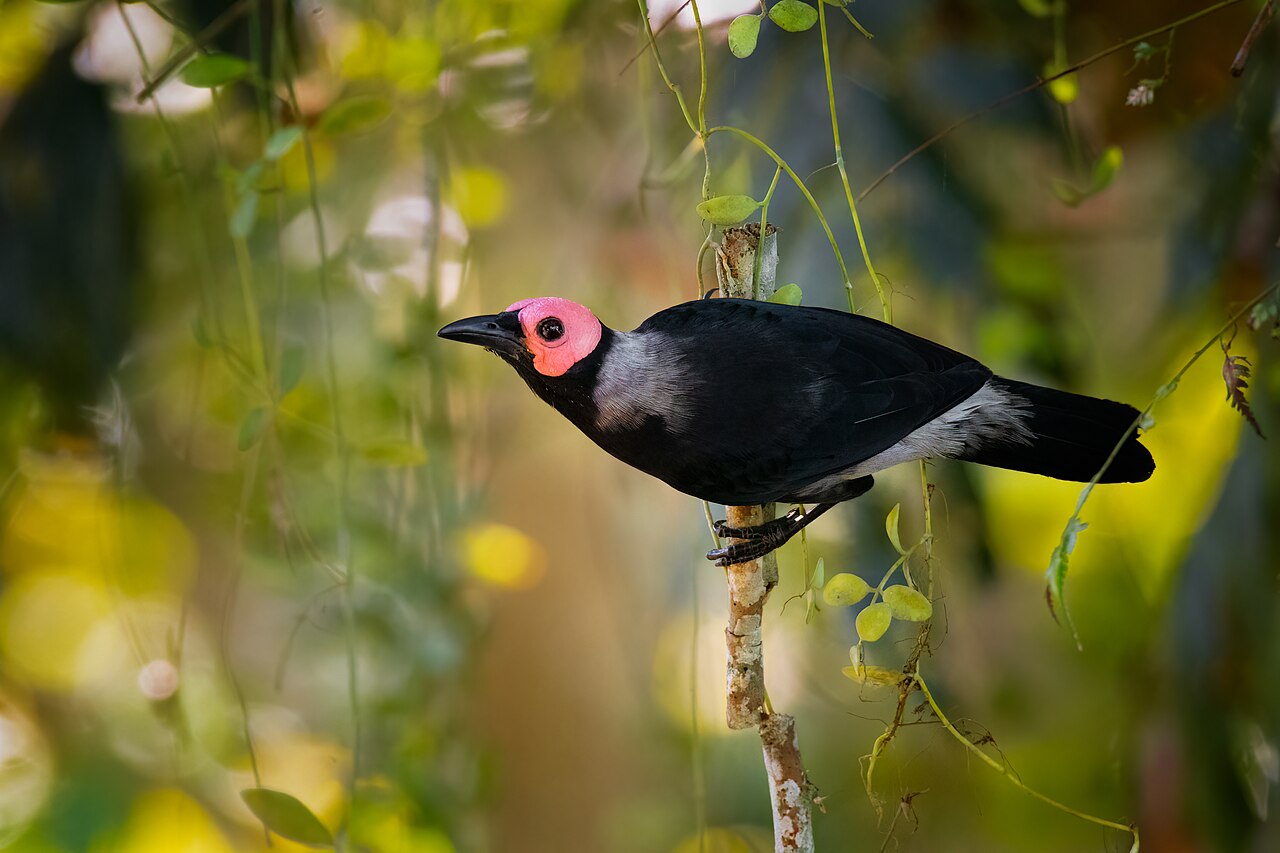
The Coiba spinetail is a member of the family Furnariidae (ovenbirds) that is endemic to Coiba and Ranchería Islands, Panama.
Region
Coiba National Park, Gulf of Chiriquí
Typical Environment
This species occurs only on Coiba and nearby Ranchería Islands, inhabiting mature and secondary tropical forest, forest edges, and dense scrub. It favors tangled vegetation, vine-laden thickets, and understory to midstory layers where it can glean prey from leaves and twigs. It may also use second-growth and semi-open woodland provided there is adequate cover. Mangrove edges and riparian thickets are occasionally used but not core habitat.
Altitude Range
Sea level to 400 m
Climate Zone
Tropical
Ease of Keeping
Beginner friendly: 1/5
The Coiba spinetail is confined to the islands of Coiba and Ranchería off the Pacific coast of Panama, within Coiba National Park. It is an active, foliage-gleaning furnariid that often stays low to mid-levels in dense thickets and vine tangles. Pairs may accompany mixed-species flocks, and they build bulky stick nests with side entrances. Its tiny range makes it conservation-sensitive despite protection of much of its habitat.


Temperament
skulking but active
Flight Pattern
short rapid wingbeats
Social Behavior
Usually seen in pairs or small family groups that keep close contact while foraging. Frequently joins mixed-species flocks moving through the understory and midstory. Nests are bulky structures of sticks and fibers placed in shrubs or small trees, with both parents participating in care.
Migratory Pattern
Resident
Song Description
Song is a quick series of dry, accelerating trills and chips that can sound scolding. Calls include sharp tik and chattering notes given while foraging in dense cover.
Plumage
Overall warm brown upperparts with a rufous-tinged crown and distinctly rufous wings and tail; underparts are buffy to pale with a cleaner whitish throat. Feathers are plain rather than boldly patterned, giving a smooth, uniform look except for the contrasting rufous tail. Tail is long and graduated, often cocked slightly as it forages.
Diet
Primarily small insects and other arthropods gleaned from leaves, stems, and vine tangles. It probes curled leaves and dead foliage for hidden prey and occasionally takes tiny spiders. Opportunistically, it may consume small fruits or seeds, but animal prey dominates its diet.
Preferred Environment
Feeds in dense understory and vine-laden midstory of evergreen and secondary forests. Often works along forest edges, clearings with thick regrowth, and riparian thickets where prey is abundant.