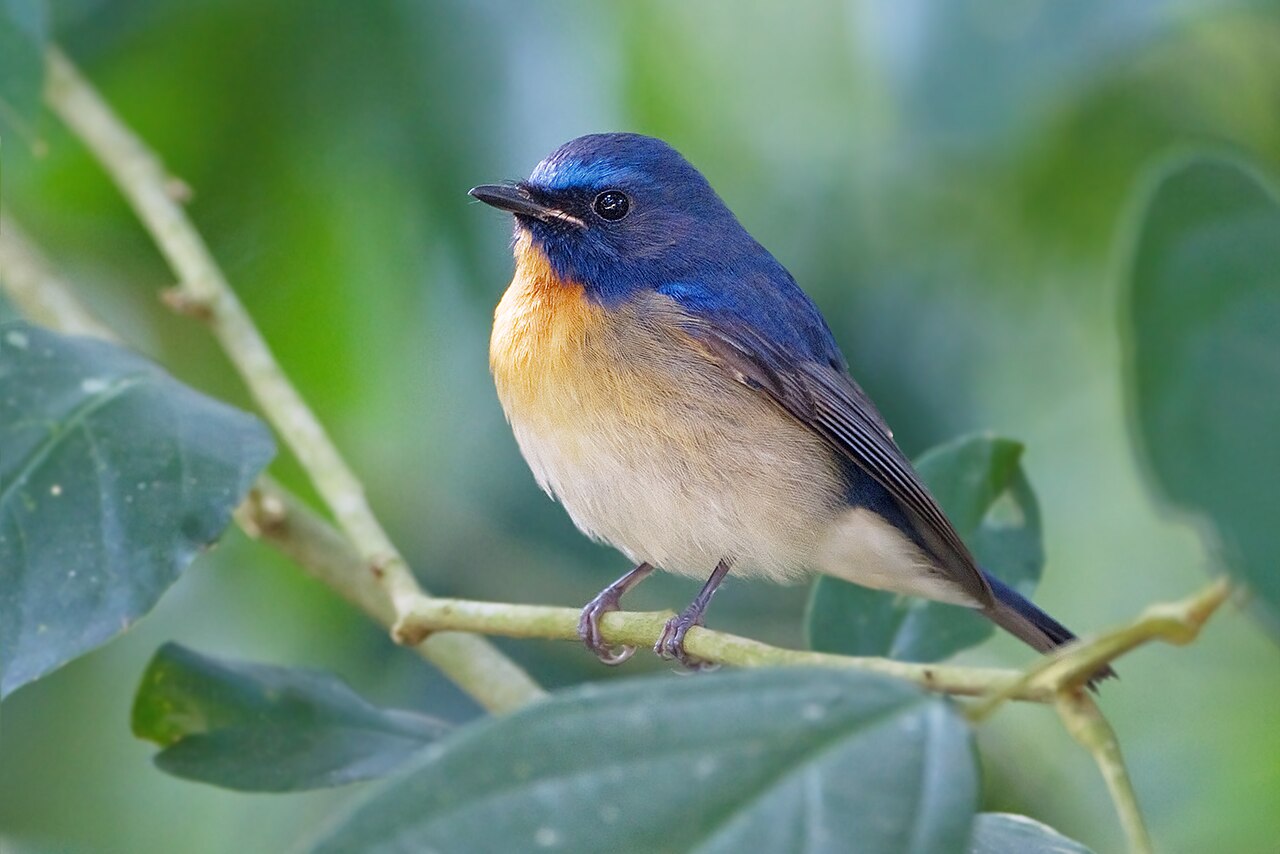
The Chin Hills wren-babbler is a bird species in the family Timaliidae. It was until recently considered a subspecies of the long-tailed wren-babbler; the IUCN for example started recognizing it as distinct species in 2008.
Region
Eastern Himalayas foothills (Chin Hills)
Typical Environment
Occurs in montane evergreen and mixed oak–rhododendron forests with dense bamboo and shrub undergrowth. It favors mossy ravines, stream gullies, and forest edges where leaf litter and tangled roots provide cover. The species keeps close to the ground or perches low within thickets. It is highly localized to the Chin Hills, with records concentrated in intact forest tracts and adjacent secondary growth.
Altitude Range
1500–2600 m
Climate Zone
Highland
Ease of Keeping
Beginner friendly: 1/5
A secretive understory bird of the Chin Hills in western Myanmar, it was long treated as a subspecies of the Long-tailed Wren-babbler before being elevated to species status in 2008. It creeps mouse-like through dense vegetation and is far more often detected by its clear, thin whistles than seen. Its extremely localized range makes it of particular interest to birders and conservationists.

Temperament
skulking and wary
Flight Pattern
short rapid wingbeats; usually makes low, brief flights between cover
Social Behavior
Typically found singly, in pairs, or small family groups. Nests are placed low in dense vegetation or among roots and ferns on steep banks. Breeding behavior involves discreet courtship within thickets, with both adults attending the nest.
Migratory Pattern
Resident
Song Description
Song is a series of clear, thin whistles and short trills, often delivered from concealed perches and repeated in steady phrases. Calls include sharp tik notes and soft scolding chips used to maintain contact in dense cover.
Plumage
Warm brown upperparts with fine dark barring and faint scalloping; buffy to brown underparts with dense dark streaking and scallops. Long, graduated tail often held slightly cocked; feathers appear soft and loosely textured.
Diet
Feeds primarily on small insects and other arthropods gleaned from leaf litter, mossy logs, and low vegetation. It probes among bamboo stems, tangled roots, and damp ground for beetles, ants, spiders, and larvae. Occasionally takes small seeds or berries but remains mainly insectivorous.
Preferred Environment
Forages on or near the forest floor in shaded ravines, bamboo thickets, and dense understory. Often follows natural edges like stream banks and landslip scars where insects are abundant.