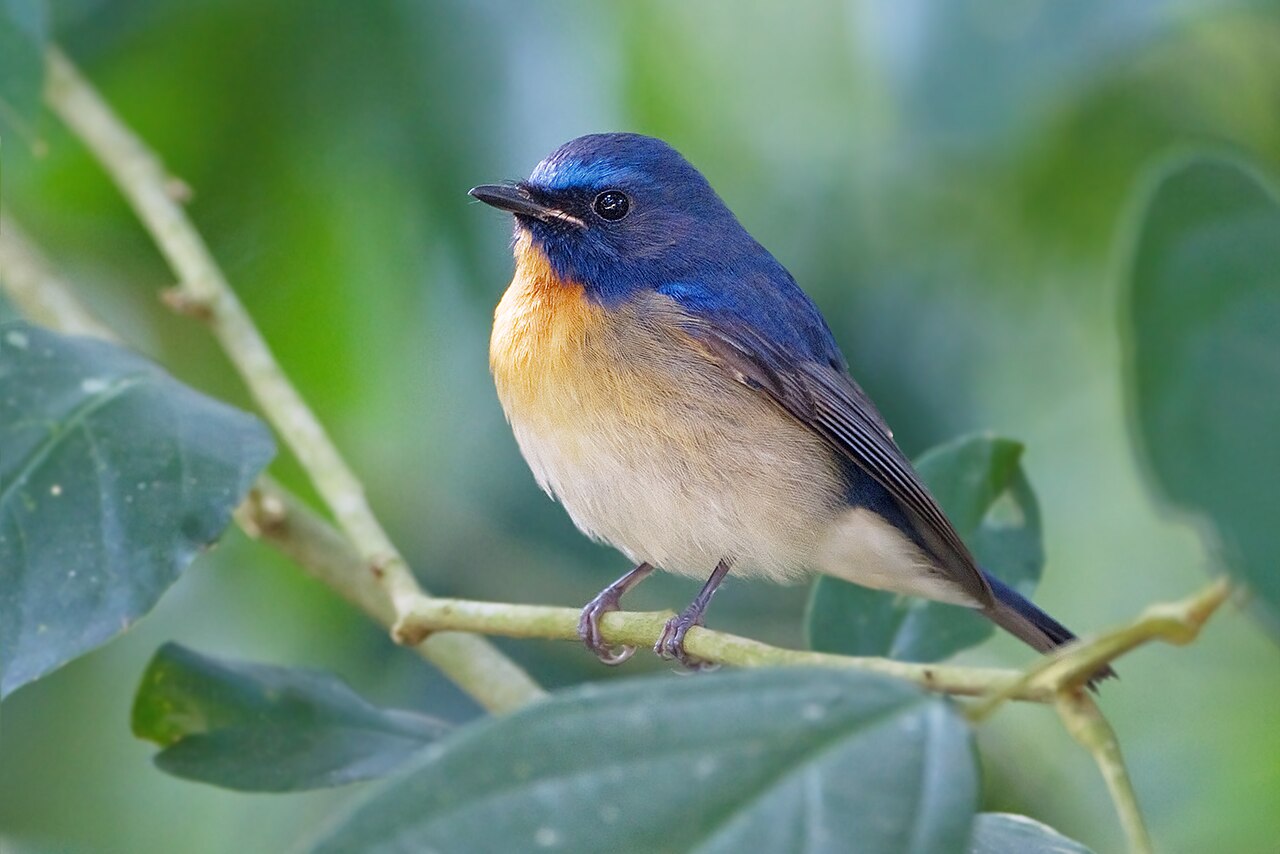
The Chinese barbet is a bird in the family Megalaimidae. The species was first described by Robert Swinhoe in 1870. It is endemic to southern China.
Region
South China
Typical Environment
Occurs in subtropical evergreen and mixed broadleaf forests, forest edges, secondary growth, and wooded parks across provinces such as Fujian, Guangdong, Guangxi, and adjacent areas. It favors areas with mature fruiting trees, especially figs, and can persist in semi-urban landscapes with orchards and groves. The species uses both primary and well-structured secondary forest and often frequents forest edges and clearings. Outside the breeding season it may range more widely where fruit resources are abundant.
Altitude Range
Sea level to 1800 m
Climate Zone
Subtropical
Ease of Keeping
Beginner friendly: 2/5
The Chinese barbet is an Asian barbet in the family Megalaimidae, first described by Robert Swinhoe in 1870. It is endemic to southern China and was formerly treated within a wider barbet complex before being recognized as a distinct species. Its loud, repetitive ‘tuk-tuk’ calls carry far through forests and are often the best way to locate it. By swallowing fruits and later dispersing seeds, it plays a notable role in forest regeneration.

Temperament
generally shy but conspicuous by voice
Flight Pattern
direct flight with short, rapid wingbeats
Social Behavior
Usually encountered singly or in pairs, sometimes loosely associating with mixed-species flocks when fruiting trees are abundant. Both sexes excavate nest cavities in dead wood or soft trunks and share incubation and chick-rearing duties. Clutch size is small, and nesting territories are defended vocally.
Migratory Pattern
Resident
Song Description
A loud, metronomic series of hollow ‘tuk’ or ‘pok’ notes delivered for long periods from a concealed perch. Phrases may accelerate slightly and carry over considerable distances, especially at dawn.
Plumage
Stocky, green-bodied barbet with a thick bill and a brightly colored head; the face shows blue tones with a contrasting yellow throat patch and a small red forehead spot. Upperparts are rich green with minimal streaking; underparts are greenish with a slightly paler belly. The bill is heavy and slightly decurved, adapted for fruit feeding and cavity excavation.
Diet
Primarily eats fruit, especially figs (Ficus), berries, and other soft fruits, swallowing them whole and later regurgitating seeds. It supplements its diet with insects such as beetles, ants, and caterpillars, particularly during the breeding season. Occasionally takes nectar or pecks at flowers. Its fruit-focused diet makes it an effective seed disperser.
Preferred Environment
Forages mainly in the mid to upper canopy of evergreen broadleaf forests and at fruiting trees in orchards, parks, and village groves. Frequently visits fig trees and other seasonally fruiting species and may descend lower when fruit is abundant at edges.