
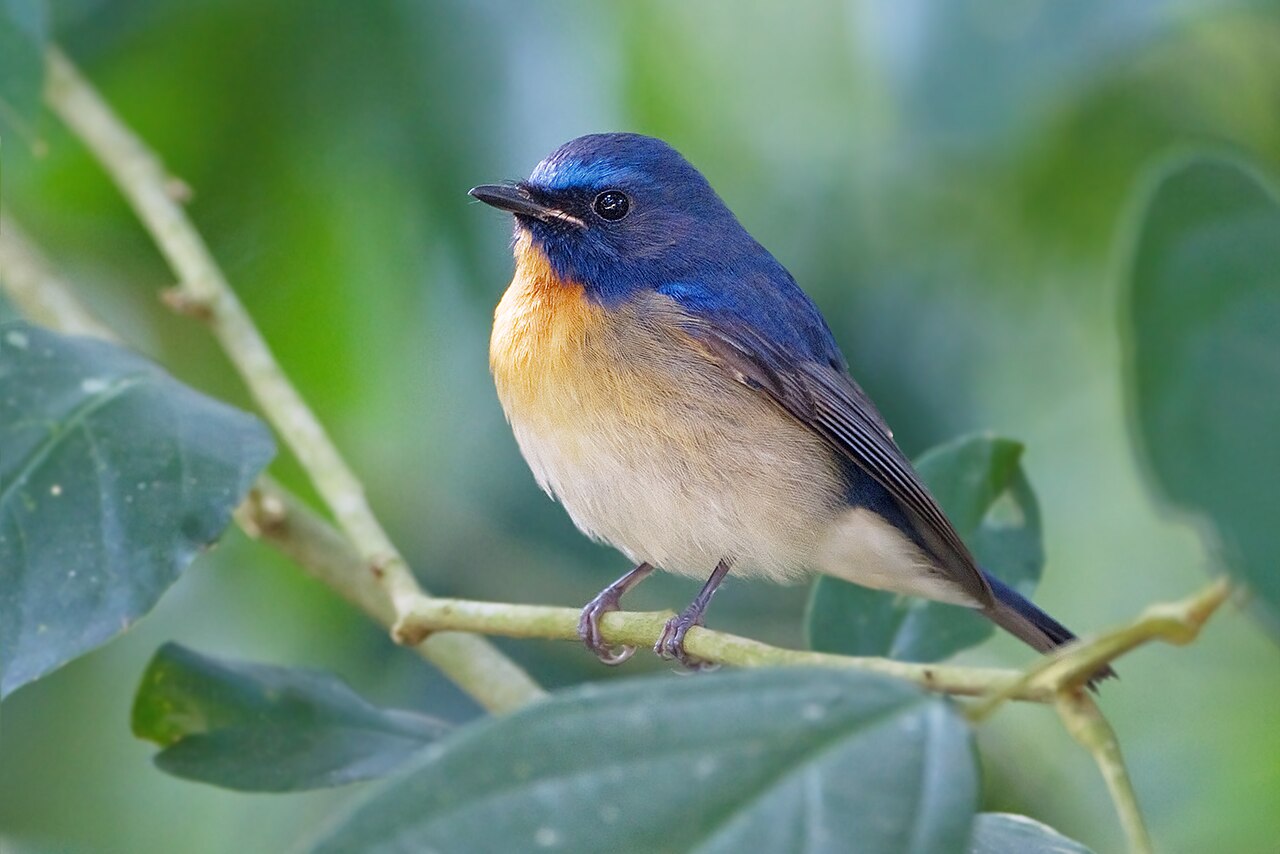
The Chinese blue flycatcher is a small passerine bird in the flycatcher family, Muscicapidae. The Chinese blue flycatcher is native to mid-southern China ; it winters to the Tenasserim Hills and the Malay Peninsula. It previously was considered a subspecies of the blue-throated blue flycatcher.
Region
Southern China and mainland Southeast Asia
Typical Environment
Breeds in subtropical evergreen and mixed forests of southern China, especially in hill and lower montane zones with dense understory. In the nonbreeding season it moves south through Myanmar and Thailand to the Tenasserim Hills and the Malay Peninsula, using similar shaded woodlands. It favors ravines, streamside thickets, bamboo patches, and secondary growth at forest edges. Birds keep low to mid-levels in the canopy, often near clearings where they can sally for insects.
Altitude Range
100–1800 m
Climate Zone
Subtropical
Ease of Keeping
Beginner friendly: 1/5
This small forest flycatcher breeds in southern China and migrates south to winter in mainland Southeast Asia, including the Tenasserim Hills and the Malay Peninsula. It was formerly treated as a subspecies of the Blue-throated Blue Flycatcher but is now recognized as a distinct species based on vocal and plumage differences. Males show striking blue and orange contrast, while females are much duller and more cryptic. It often forages by sallying from shaded perches along forest edges and stream gullies.

Temperament
shy and retiring
Flight Pattern
short rapid wingbeats with quick sallies from a perch
Social Behavior
Typically solitary or in pairs during the breeding season and strongly territorial males sing from low to mid-level perches. Nests are placed in natural cavities, cracks in stumps, or sheltered crevices lined with fine fibers and moss. Clutches are small, and both parents contribute to feeding the young.
Migratory Pattern
Seasonal migrant
Song Description
Song is a clear, sweet series of mellow whistles and short warbling phrases delivered from shaded perches. Calls include thin, high tsee notes and a sharp tik given in alarm.
Plumage
Male with rich cobalt-blue head and upperparts, vivid orange throat and upper breast grading to whitish belly; female brown-olive above with faint bluish tail and wings and buffy underparts.
Diet
Primarily hunts small flying and foliage-dwelling insects such as flies, beetles, moths, and caterpillars. It often launches short sallies from a low perch to catch prey in mid-air, and also gleans from leaves and twigs. Occasional small berries may be taken, especially in the nonbreeding season.
Preferred Environment
Feeds along forest edges, stream corridors, and clearings within dense understory where perches are abundant. Prefers shaded mid-story and lower canopy layers with good visibility for sallying.


