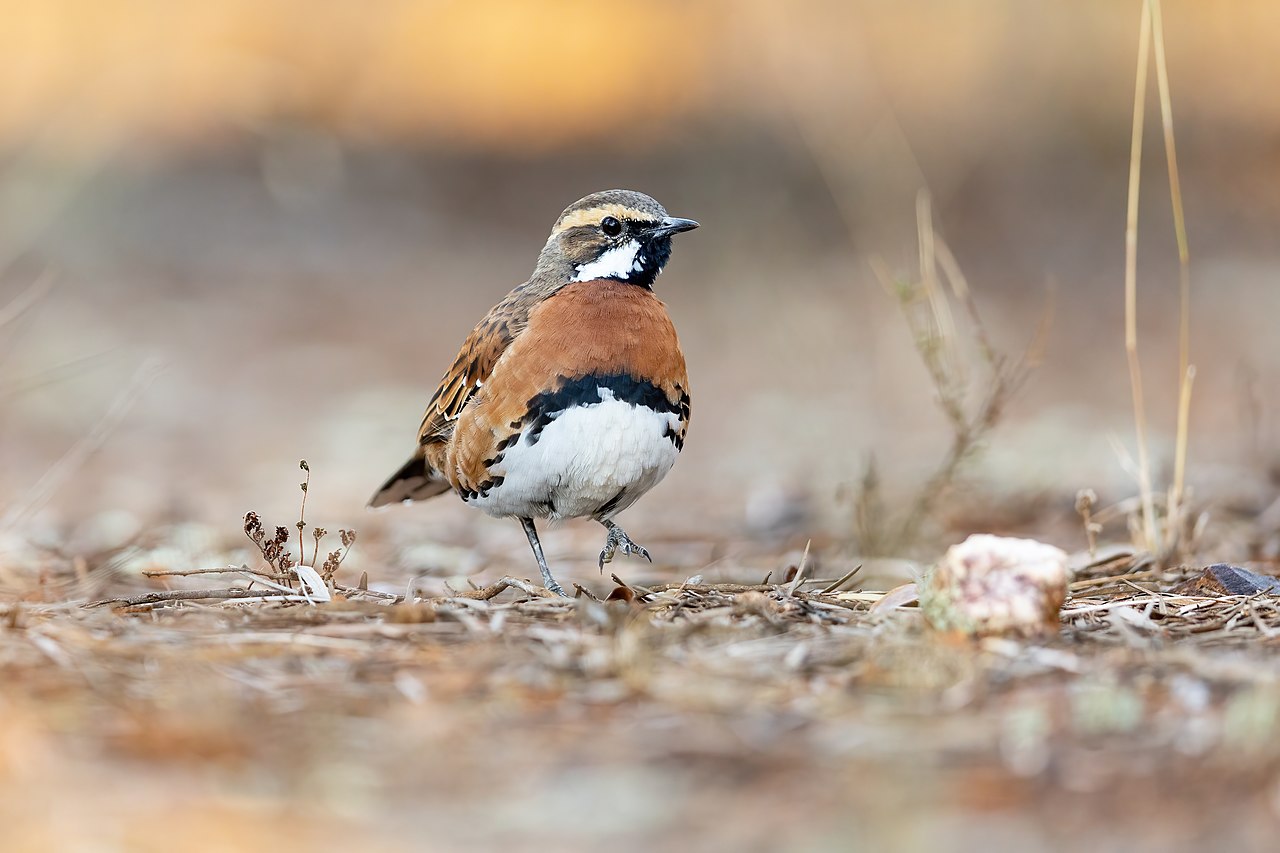
The chestnut-breasted mannikin, also known as the chestnut-breasted munia or bully bird, is a small brown-backed munia with a black face and greyish crown and nape. It has a broad ferruginous breast bar above a white belly. The species is found in Australia, New Caledonia, Indonesia, and Papua New Guinea. This species has also been introduced to French Polynesia.
Region
Australasia and southwest Pacific
Typical Environment
Native to northern and eastern Australia and southern New Guinea, with populations in nearby Indonesian islands such as the Aru and Kai Islands. It frequents wetlands, rank grasslands, reedbeds, mangroves edges, and farmland including rice paddies and cane fields. The species has also been introduced to New Caledonia and parts of French Polynesia. It thrives where tall grasses and sedges provide both seed and cover, often near freshwater.
Altitude Range
Sea level to 1200 m
Climate Zone
Tropical
Ease of Keeping
Beginner friendly: 4/5
Also called the chestnut-breasted munia or bully bird, this estrildid finch forms tight flocks that forage in seeding grasses and agricultural fields. Its bold chestnut breast band and black face make it one of the more striking munias. It adapts well to modified landscapes and can be a minor pest in rice and sorghum. Several subspecies vary subtly in head tone and the extent of chestnut.


Temperament
social and gregarious
Flight Pattern
short rapid wingbeats with low, direct flights between grass stands
Social Behavior
Typically found in flocks, sometimes numbering hundreds in good seed years. Pairs are monogamous, and both sexes build a domed grass nest concealed in dense vegetation. They often nest in loose colonies near water and share incubation and chick-rearing duties.
Migratory Pattern
Resident
Song Description
Soft, twittering trills and thin buzzy notes, delivered from a perch within grass or reeds. Contact calls are sharp chips used to keep flock cohesion.
Plumage
Compact finch with a brown back, greyish crown and nape, black face and throat, and a broad chestnut breast band above a clean white belly. Flanks are buff with fine black barring; tail is dark. Juveniles are duller brown with a pale bill and lack the strong breast band.
Diet
Primarily takes grass and sedge seeds, plucking ripening seedheads and also feeding on fallen grain. It readily exploits cultivated crops such as rice, millet, and sorghum. Small quantities of insects and other invertebrates may be taken, especially when feeding young.
Preferred Environment
Feeds in wet grasslands, reedbeds, flooded margins, rice fields, and along drainage ditches. It often forages in tight groups, moving methodically through seeding patches.