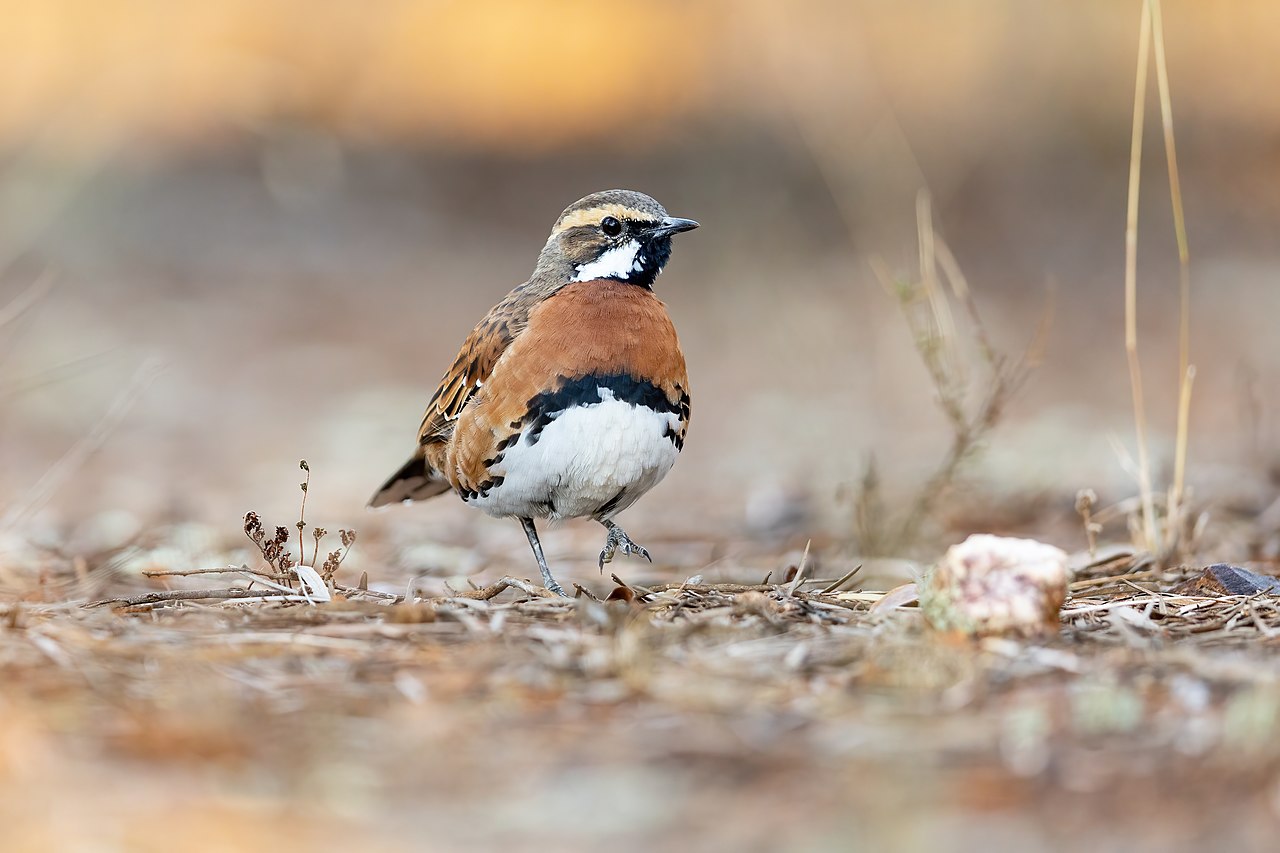
The chestnut-breasted nigrita is a common species of estrildid finch found in Africa. It has an estimated global extent of occurrence of 3,000,000 km2.
Region
West and Central Africa
Typical Environment
Found from the Upper Guinea forests of West Africa through the Congo Basin into parts of Central Africa. It inhabits primary and secondary lowland moist forests, forest edges, swamp forests, and wooded clearings. The species also uses overgrown plantations, riparian thickets, and forest-savanna mosaics where fruiting shrubs are available. It generally stays in the mid-story to canopy and is more often heard than seen.
Altitude Range
0–1500 m
Climate Zone
Tropical
Ease of Keeping
Beginner friendly: 2/5
The chestnut-breasted nigrita is a small estrildid finch of African forests and edges. It often forages quietly in pairs or small groups high in the canopy and may join mixed-species flocks. Its range is broad, with an estimated extent of occurrence around 3,000,000 km², and it is assessed as of Least Concern. Despite its wide range, it can be inconspicuous due to its unobtrusive behavior and soft calls.

Temperament
quiet, somewhat secretive, but tolerant of close flockmates
Flight Pattern
short rapid wingbeats between perches; brief, direct dashes across gaps
Social Behavior
Usually seen in pairs or small family groups, sometimes joining mixed-species foraging flocks in the canopy. Nests are typically built in dense vegetation, often a globular structure with side entrance. Both parents participate in nesting duties, including incubation and feeding. Territoriality is moderate around the nesting site.
Migratory Pattern
Resident
Song Description
Soft, high-pitched twitters and thin sibilant notes delivered from cover. Calls are understated contact chips used to keep in touch while foraging.
Plumage
Compact finch with rich chestnut underparts contrasting with dark dusky to blackish upperparts. Plumage appears smooth and uniform, with little streaking. The bill is stout and pale bluish-gray, typical of estrildids.
Diet
Feeds on small seeds, soft fruits and berries, and supplements with small arthropods such as insects and spiders. It often gleans food from foliage and fruiting clusters high in the canopy. Opportunistic at fruiting shrubs along forest edges and clearings. During breeding, it may increase intake of protein-rich invertebrates for nestlings.
Preferred Environment
Forages in mid-story to canopy of moist forests, especially at fruiting trees and tangled vines. Also uses forest edges, secondary growth, and overgrown plantations where seed heads and berries are abundant.