
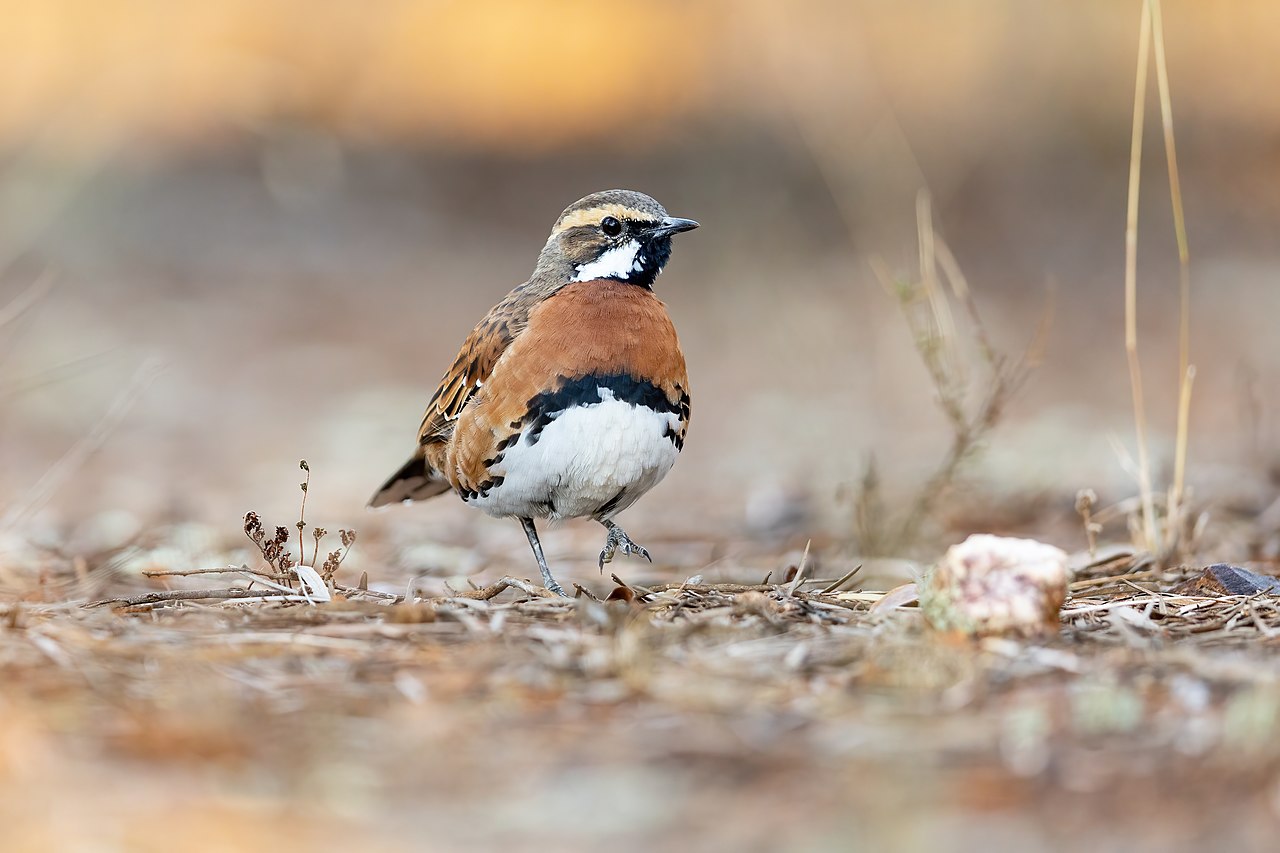
The chestnut-breasted quail-thrush is a small endemic Australian bird which is predominantly found within the semi-arid deserts of New South Wales and Queensland.
Region
Interior eastern Australia
Typical Environment
Found patchily across semi-arid to arid shrublands and stony gibber plains in western Queensland and northwestern New South Wales. It frequents mulga and acacia shrublands, spinifex grasslands, and chenopod flats with scattered cover. The species keeps close to low shrubs and tussocks, moving quietly across open patches to forage. Local occurrence can be strongly influenced by recent rainfall and ground cover.
Altitude Range
0–800 m
Climate Zone
Arid
Ease of Keeping
Beginner friendly: 1/5
The chestnut-breasted quail-thrush is a ground-dwelling, quail-like songbird adapted to Australia’s semi-arid interior. It prefers running to flying and relies on cryptic plumage to remain undetected among stony plains and shrublands. Males typically show richer chestnut coloration on the breast than females, which are duller and more mottled. It nests on the ground, usually a shallow scrape tucked beneath low shrubs.


Temperament
shy and cryptic
Flight Pattern
short rapid wingbeats, low fast flushes
Social Behavior
Usually seen singly, in pairs, or small family groups. Monogamous pairs maintain territories and nest on the ground in a shallow scrape lined with plant material under low cover. Both adults remain close to cover and rely on stillness and camouflage when disturbed.
Migratory Pattern
Resident
Song Description
Song is a series of clear, whistled notes delivered from low perches or the ground, often at dawn or dusk. Calls include soft piping contact notes and sharp alarm chips when flushed.
Plumage
Upperparts are sandy to grey-brown with fine dark mottling, aiding camouflage on stony ground. The throat is pale to whitish, set off by a dark facial mask and a distinct chestnut breast patch (richer in males). Underparts grade to buffy or whitish with darker banding or mottling toward the sides. Tail is relatively long with contrasting white outer tail feathers visible in flight.
Diet
Feeds primarily on ground-dwelling invertebrates such as ants, beetles, spiders, and larvae taken by pecking and gleaning. It may supplement with seeds and small plant matter, especially during dry periods. Foraging is methodical, with short runs and pauses as it inspects leaf litter and soil surface.
Preferred Environment
Forages along the bases of shrubs, in spinifex clumps, and across open stony patches where visibility is good but cover is nearby. It prefers sparsely vegetated semi-arid habitats with patchy ground cover.


