
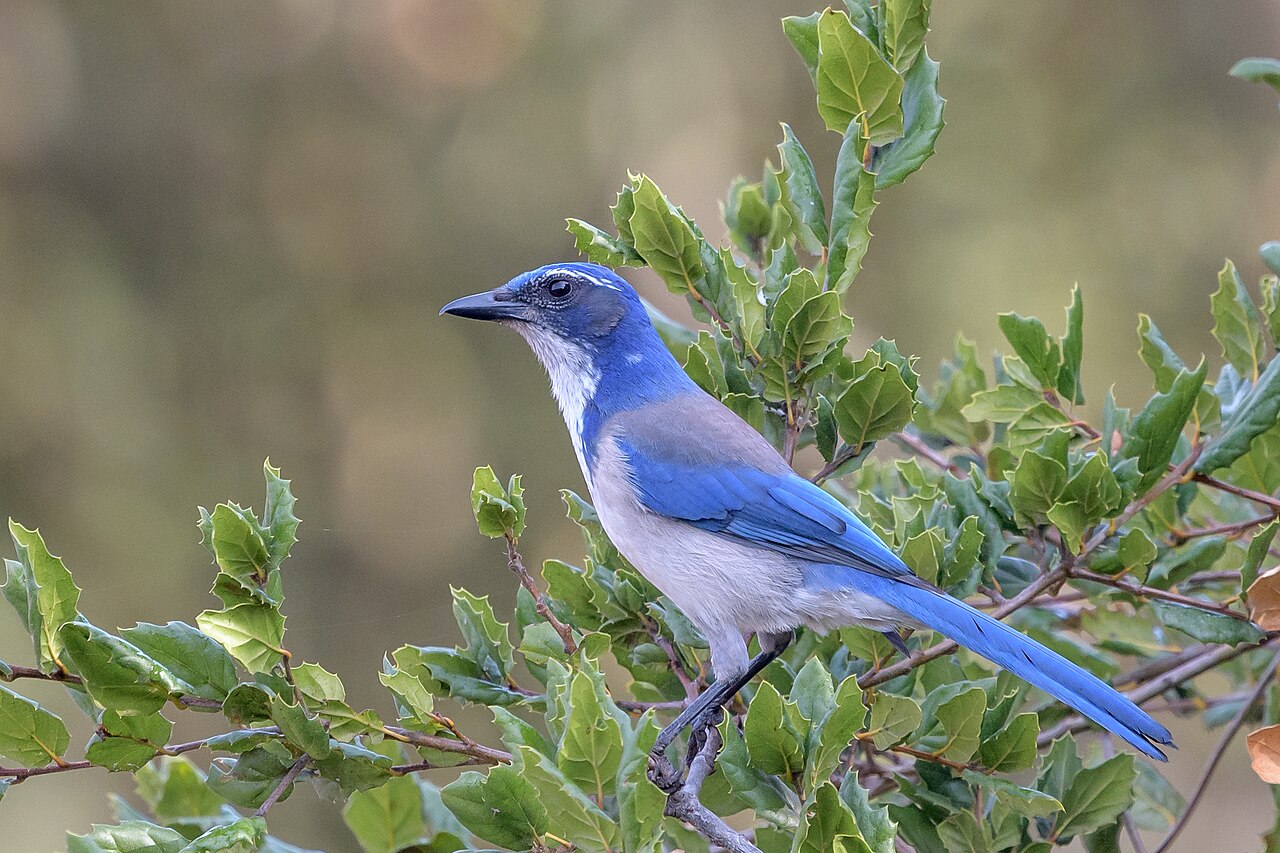
The California scrub jay is a species of scrub jay native to western North America. It ranges from southern British Columbia throughout California and western Nevada near Reno to west of the Sierra Nevada. The California scrub jay was once lumped with Woodhouse's scrub jay and collectively called the western scrub jay. The group was also lumped with the island scrub jay and the Florida scrub jay; the taxon was then called simply scrub jay. The California scrub jay is nonmigratory and can be found in urban areas, where it can become tame and will come to bird feeders. While many refer to scrub jays as "blue jays", the blue jay is a different species of bird entirely.
Region
Western North America
Typical Environment
Occupies coastal scrub, chaparral, oak woodlands, and oak-pine savannas, as well as riparian thickets and suburban parks and yards. It favors open, brushy habitats with nearby trees for nesting and perches. The species is common in urban and suburban landscapes where oaks, ornamental plantings, and feeders provide food. It generally avoids dense, closed-canopy conifer forests and high alpine zones.
Altitude Range
Sea level to 2500 m
Climate Zone
Temperate
Ease of Keeping
Beginner friendly: 1/5
An intelligent corvid, the California scrub-jay is noted for caching acorns and remembering thousands of hiding spots, helping disperse oak forests. Formerly lumped within the 'western scrub-jay', it is now recognized as a separate species from Woodhouse's scrub-jay. Bold and inquisitive, it readily visits backyard feeders and will mob predators cooperatively. Its problem-solving abilities have featured in animal cognition studies.


Juvenile in California, USA

California scrub jay showing the well-marked breast band of the coastal races

Note bright white plume breaking the breast band. Prominent markings in eye region are typical of male birds.

California scrub jay fledgling being fed

California scrub jay in flight

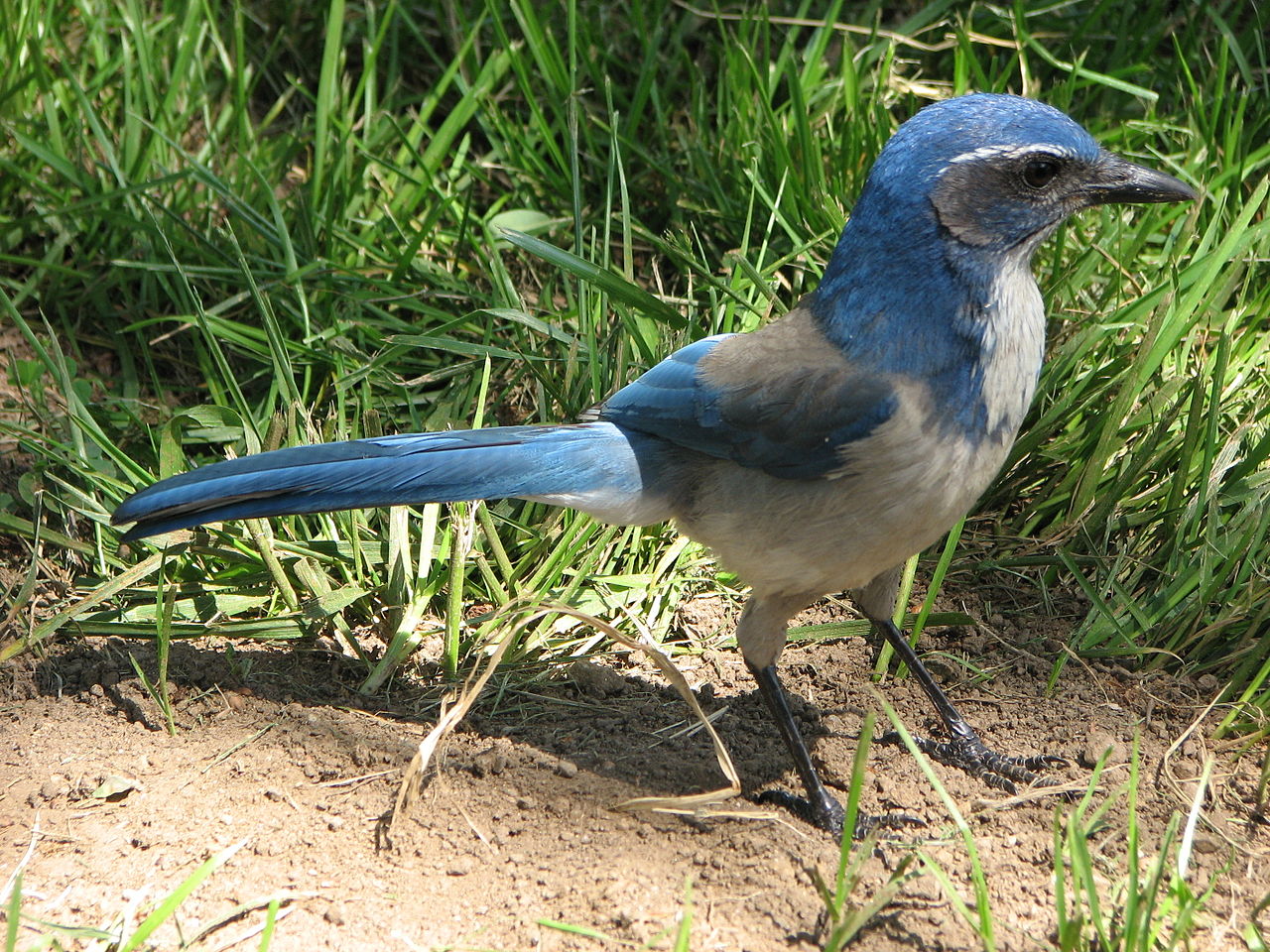


Temperament
bold and inquisitive
Flight Pattern
short rapid wingbeats with direct, low flights between perches
Social Behavior
Usually seen in pairs or small family groups that defend territories year-round. Nests are built in shrubs or small trees; both sexes feed the young. They cache food extensively and may re-hide items to reduce theft by onlookers.
Migratory Pattern
Resident
Song Description
Vocalizations are loud and varied, dominated by harsh, scolding shreep and check notes. Also gives softer warbles and whistles during social interactions and at the nest.
Plumage
Bright blue head, wings, and tail contrasting with a gray-brown back and pale gray underparts; crisp white throat with a blue 'necklace' across the breast.
Diet
Eats acorns, seeds, nuts, berries, and insects, along with spiders and other invertebrates. Will take small vertebrates, bird eggs, and carrion opportunistically, and readily accepts peanuts and suet at feeders. Practices scatter-hoarding, burying acorns and other foods and retrieving them later using excellent spatial memory.
Preferred Environment
Forages on the ground and in low shrubs within oak woodlands, chaparral, and suburban yards. Frequently visits feeders, lawns, and edges where cover and open space are interspersed.


