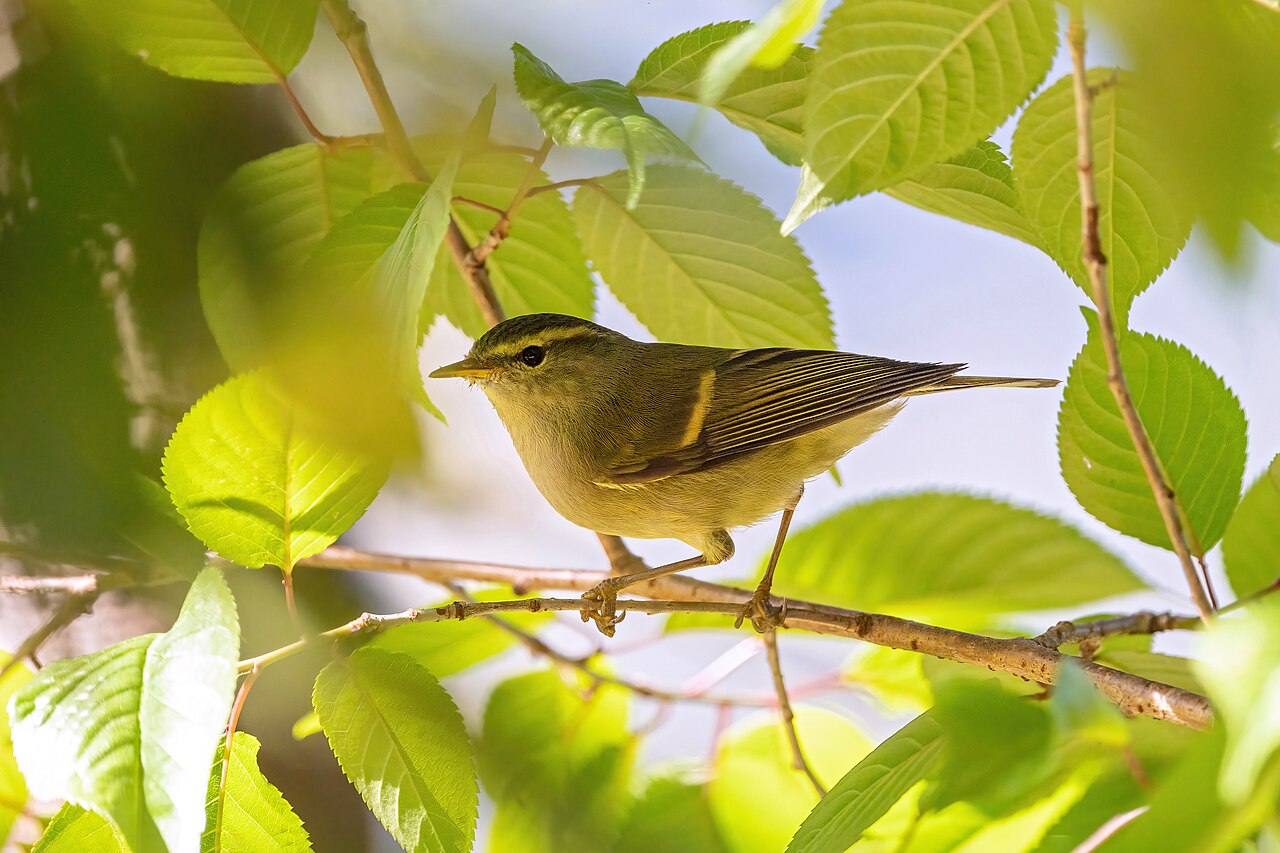
The buff-banded thicketbird or buff-banded bushbird, is a species of Old World warbler in the family Locustellidae. It is found on Timor island.
Region
Lesser Sunda Islands
Typical Environment
Endemic to Timor Island, occurring in both Timor-Leste and Indonesian West Timor. It favors dense understory in monsoon woodland, riverine thickets, bamboo, and secondary scrub. The species also uses forest edges, overgrown clearings, and degraded brush near cultivation where cover remains. It generally avoids open grassland and prefers tangled vegetation where it can move low and unseen.
Altitude Range
0–1500 m
Climate Zone
Tropical
Ease of Keeping
Beginner friendly: 1/5
A secretive skulk of dense undergrowth, the buff-banded thicketbird is more often heard than seen, giving insect-like trills from cover. It has a distinctive buff band across the upper breast that helps separate it from other drab warblers. Taxonomy has been debated, and it has been placed in several genera within the Locustellidae. It persists in both natural thickets and secondary scrub on Timor.
Temperament
skulking and secretive
Flight Pattern
short rapid wingbeats, low and direct between cover
Social Behavior
Typically solitary or in pairs, moving mouse-like through dense vegetation. Likely monogamous, with nests placed low in thick cover or grass tussocks. Both adults are thought to share in provisioning the young, as in many Locustellidae.
Migratory Pattern
Resident
Song Description
Song is a sustained, insect-like trill or reeling sequence delivered from hidden perches, often at dawn and dusk. Calls include sharp ticks and soft churrs that can be hard to locate in dense thickets.
Plumage
Warm brown upperparts with fine darker streaking and paler fringes, contrasting with a buff band across the upper breast and paler buffy underparts. Tail relatively long and often held cocked, with subtle dusky barring. A pale supercilium and slightly streaked crown add to the cryptic patterning.
Diet
Primarily feeds on small insects and other arthropods such as beetles, ants, caterpillars, and spiders. It gleans prey from leaf litter, low foliage, and stems, and will snatch items from the ground. Occasional ingestion of small seeds or berries may occur but is not a major component.
Preferred Environment
Forages within dense understory, vine tangles, bamboo patches, and overgrown scrub. Frequently keeps within a meter or two of the ground, probing leaf litter and lower strata where cover is thickest.