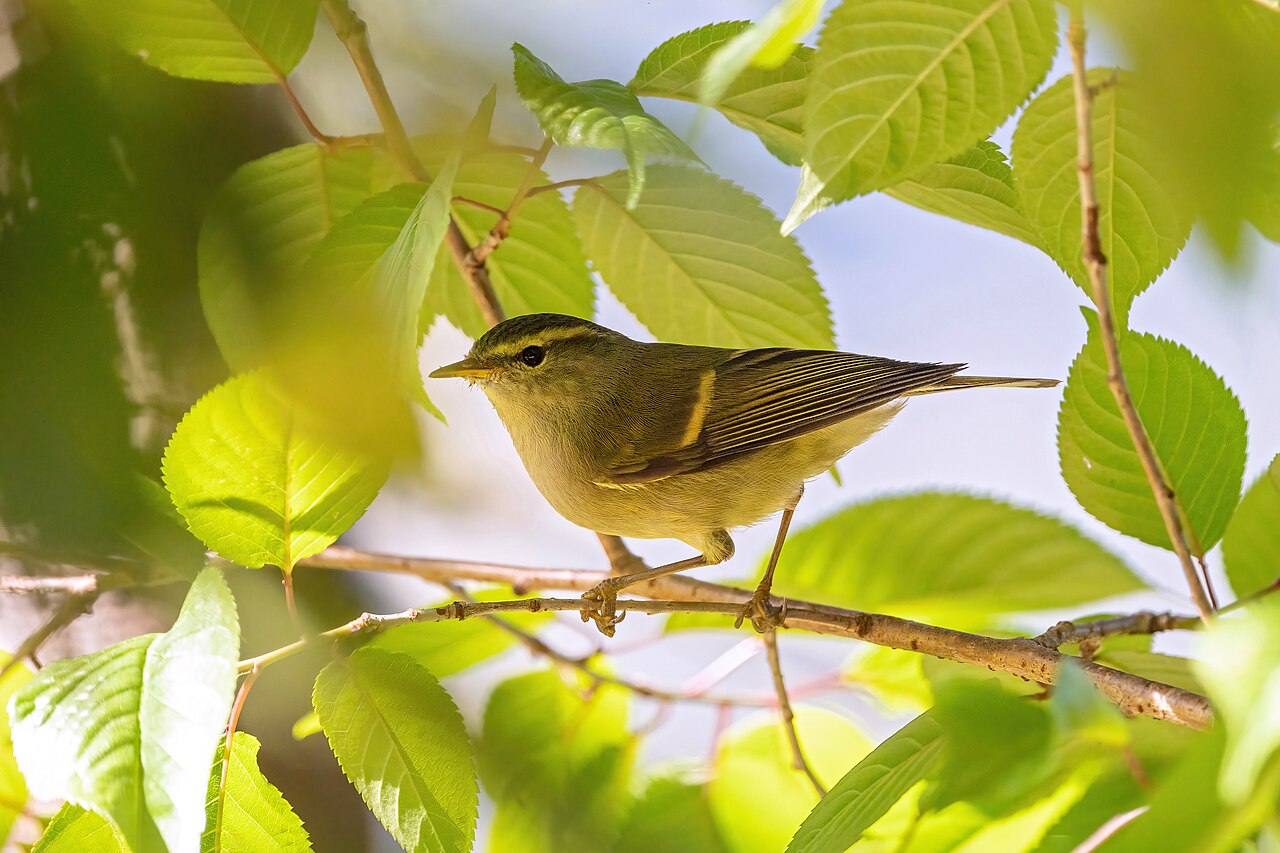
The buff-banded tyrannulet is a species of bird in subfamily Elaeniinae of family Tyrannidae, the tyrant flycatchers. It is found in Argentina, Bolivia, and Peru.
Region
Andes Mountains
Typical Environment
Occurs along the eastern and central Andes of Peru, Bolivia, and northwestern Argentina, favoring humid montane (cloud) forests and their edges. It frequents forest borders, second-growth scrub, and semi-open patches with scattered trees. The species often uses mid to upper canopy strata but will drop to lower levels along edges and ravines. It tolerates moderate disturbance better than many cloud-forest specialists and may persist in Polylepis fragments and adjacent shrublands.
Altitude Range
1800–3500 m
Climate Zone
Highland
Ease of Keeping
Beginner friendly: 1/5
This small Andean flycatcher is named for the distinctive buff band across its wings, which helps separate it from similar tyrannulets. It is frequently found in mixed-species flocks, where its high, thin calls often give away its presence before it is seen. Like many tyrant flycatchers, it captures tiny insects by quick sallies and foliage-gleaning in the canopy. It is generally inconspicuous but locally common within suitable montane forests.


Temperament
active and wary
Flight Pattern
short rapid wingbeats with quick sallies
Social Behavior
Usually found singly, in pairs, or small family parties, and commonly joins mixed-species flocks in the canopy. Pairs defend small breeding territories during the nesting season. Nest is a small cup placed on a branch fork or suspended among dense foliage, with typically two eggs.
Migratory Pattern
Resident
Song Description
Gives thin, high-pitched tseet and tsee notes, often delivered in short series. Song can include a rapid, delicate trill or a descending sequence that carries through the canopy. Calls are sharp and contact-like when moving with mixed flocks.
Plumage
Olive to yellow-olive upperparts with paler yellowish underparts and a clean, neat appearance. Shows a prominent buff to tawny wing band formed by the wing coverts and a faint pale supercilium. Flight feathers are darker with contrasting buffy edges; tail slightly notched. Overall texture is smooth, with minimal streaking.
Diet
Feeds primarily on small insects and other arthropods, including flies, beetles, and caterpillars. Captures prey by short sallies from perches and by gleaning from leaves and twigs. Occasionally hovers briefly to pick items from foliage. May take minute spiders and insect eggs when available.
Preferred Environment
Forages in the mid to upper canopy along forest edges, gaps, and sunny perches within cloud forest. Also uses secondary growth, ravines, and Polylepis patches where insects concentrate.