
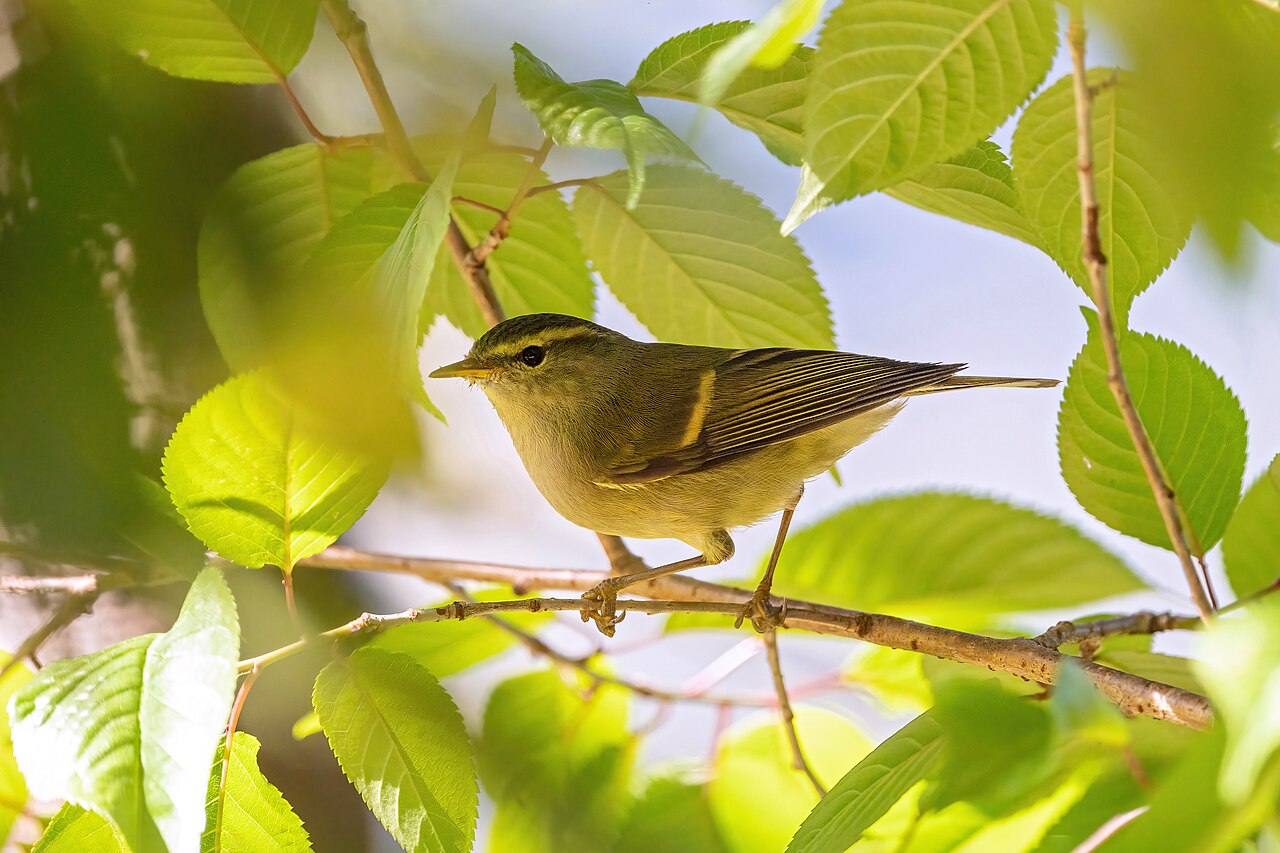
The buff-barred warbler is a species of leaf warbler. It was formerly included in the "Old World warbler" assemblage.
Region
Himalayas and southern China to mainland Southeast Asia
Typical Environment
Breeds in the central and eastern Himalayas from Nepal and Bhutan through northeast India and northern Myanmar into southwestern and south-central China (e.g., Yunnan and Sichuan). In the non-breeding season it disperses south and southeast to northern Thailand, Laos, and Vietnam. Occupies montane broadleaf, mixed, and conifer forests with rhododendron and bamboo understory. Frequently uses forest edges, clearings, and secondary growth in winter. Often forages in the mid to upper canopy and joins mixed-species flocks.
Altitude Range
1200–3600 m
Climate Zone
Highland
Ease of Keeping
Beginner friendly: 1/5
A small, active leaf warbler, it is readily recognized by its two warm buff wingbars and prominent buffy supercilium. It often joins mixed-species flocks in montane forests and can be confused with Ashy-throated Warbler, but shows richer buff tones and cleaner wing bars. Its thin, high-pitched song can be hard to locate in dense foliage. Seasonal movements take it from Himalayan breeding areas to wintering grounds in mainland Southeast Asia.

Temperament
social and active
Flight Pattern
short rapid wingbeats with brief hovering
Social Behavior
Often joins mixed-species foraging parties, moving restlessly through foliage. Pairs form in the breeding season and defend small territories. Nests are typically domed or cup-shaped and placed low in dense shrubs, grass tussocks, or banks. Clutches are small and both parents participate in care.
Migratory Pattern
Seasonal migrant
Song Description
A high, thin series of sibilant notes and short trills, often delivered from within cover. Calls include sharp tsee or tzip contact notes that can be easily overlooked amid forest sounds.
Plumage
Olive-green upperparts with warmer tones, clean whitish to buff underparts, and two distinct buff wingbars; fine, neat feathering typical of leaf warblers.
Diet
Feeds primarily on small insects and other arthropods, including caterpillars, aphids, and spiders. Gleans from leaves and twigs, occasionally hover-gleaning from the tips of branches. Will sally short distances to snatch prey flushed by flock mates. In winter it may take tiny berries opportunistically but remains chiefly insectivorous.
Preferred Environment
Forages in mid to upper canopy of montane broadleaf and mixed forests, especially in rhododendron and oak. Frequently uses forest edges, trails, and secondary growth where prey is abundant. Joins mixed-species flocks to exploit disturbed insects and reduce predation risk.


