The brant or brent goose is a small goose of the genus Branta. There are three subspecies, all of which winter along temperate-zone sea-coasts and breed on the high-Arctic tundra.
Region
Circumpolar Arctic and temperate North Atlantic–North Pacific coasts
Typical Environment
Breeds on high Arctic tundra near coastal wetlands, river deltas, and ponds. Winters along sheltered sea coasts, especially estuaries, bays, mudflats, and saltmarshes. Prefers intertidal zones rich in eelgrass and sea lettuce, as well as coastal meadows. During migration it stages at key coastal stopovers where extensive tidal flats are available.
Altitude Range
Sea level to 300 m
Climate Zone
Temperate
Ease of Keeping
Beginner friendly: 1/5
Also called the brent goose in Europe, the brant is a small, sea-coast goose with three main subspecies that vary in belly darkness. It breeds on the high Arctic tundra and winters along temperate marine coasts, often forming tight, vocal flocks. Its fortunes historically tracked the abundance of eelgrass, a key winter food. Long-distance migrants, families often travel together in V-formations along traditional flyways.


Wintering at the Wadden Sea, Germany

Feeding in Long Island Sound, Connecticut

Eggs, Collection Museum Wiesbaden
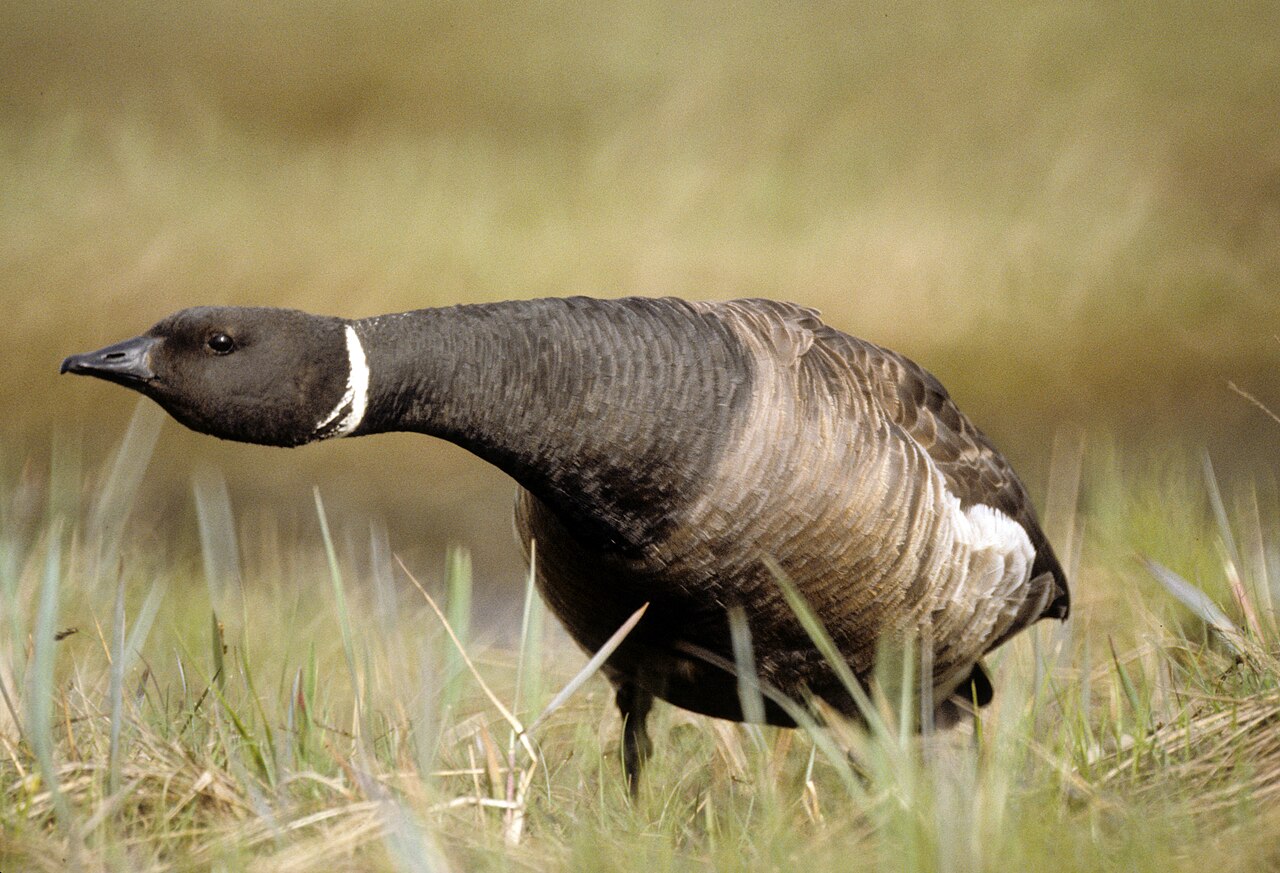
In a defensive position
Temperament
social and wary
Flight Pattern
strong flier with rapid, direct wingbeats; often in tight V-formations
Social Behavior
Gregarious outside the breeding season, forming dense flocks on tidal flats and saltmarshes. Monogamous pairs nest on the ground in Arctic tundra, often near water. Family groups remain together through migration and early winter. Flocks coordinate movements with tides to feed efficiently.
Migratory Pattern
Seasonal migrant
Song Description
Vocal flocks give rapid, rolling, nasal calls and soft, conversational chatter. Typical notes are short, rasping rattles and guttural ‘rrrrot’ or ‘crronk’ sounds, exchanged constantly in flight and while feeding.
Plumage
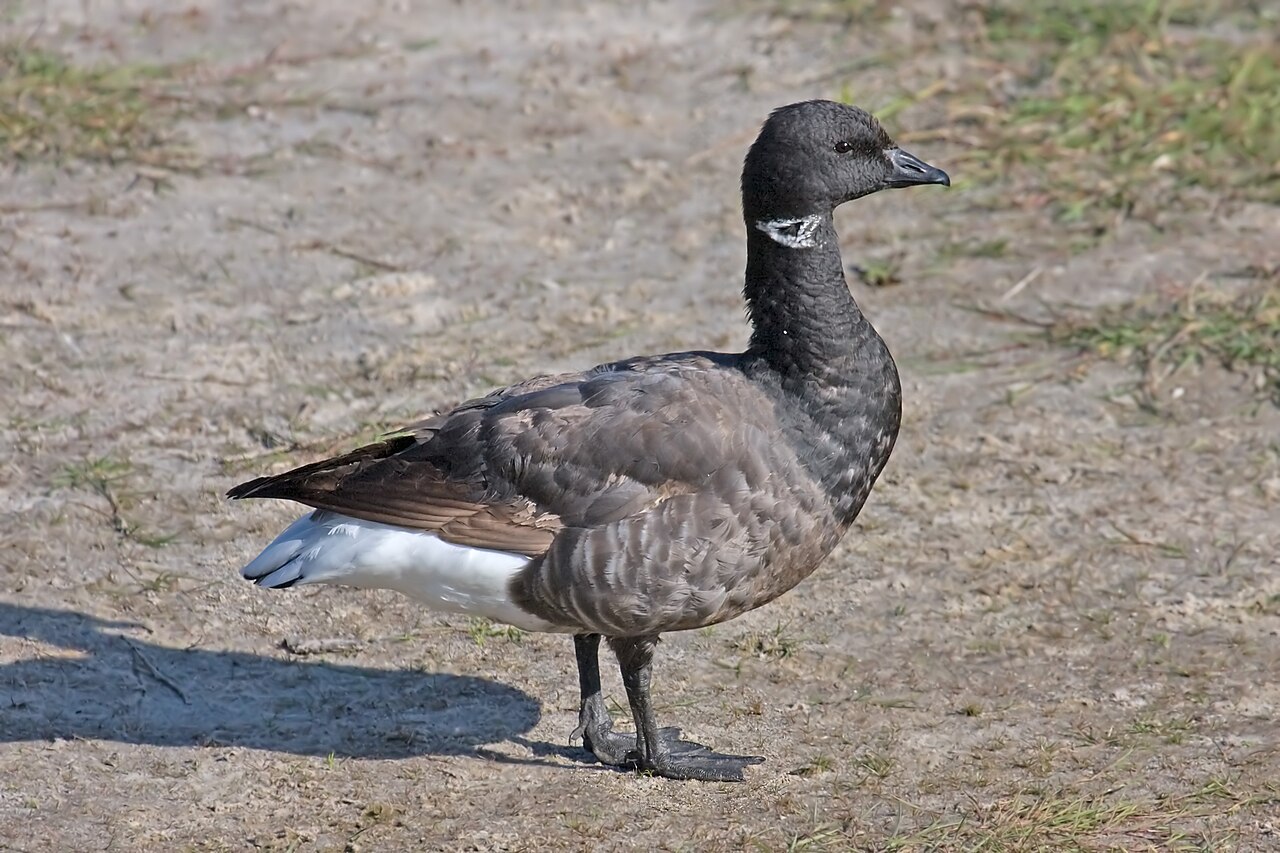
Compact goose with dark, sooty to chocolate-brown body, black head and neck, and paler, finely barred flanks. Subspecies vary from very dark-bellied to lighter-bellied forms.
Diet
Primarily grazes marine plants such as eelgrass (Zostera) and sea lettuce (Ulva). Also takes saltmarsh grasses, sedges, and other coastal herbs, and in the Arctic consumes tundra grasses and mosses. Will forage on agricultural pasture or winter cereals when coastal foods are scarce. Animal matter is incidental and minimal.
Preferred Environment
Intertidal mudflats, estuarine marshes, shallow bays, and coastal lagoons where submerged vegetation is abundant. In winter, often feeds on exposed eelgrass beds at low tide and nearby saltmarsh edges.