
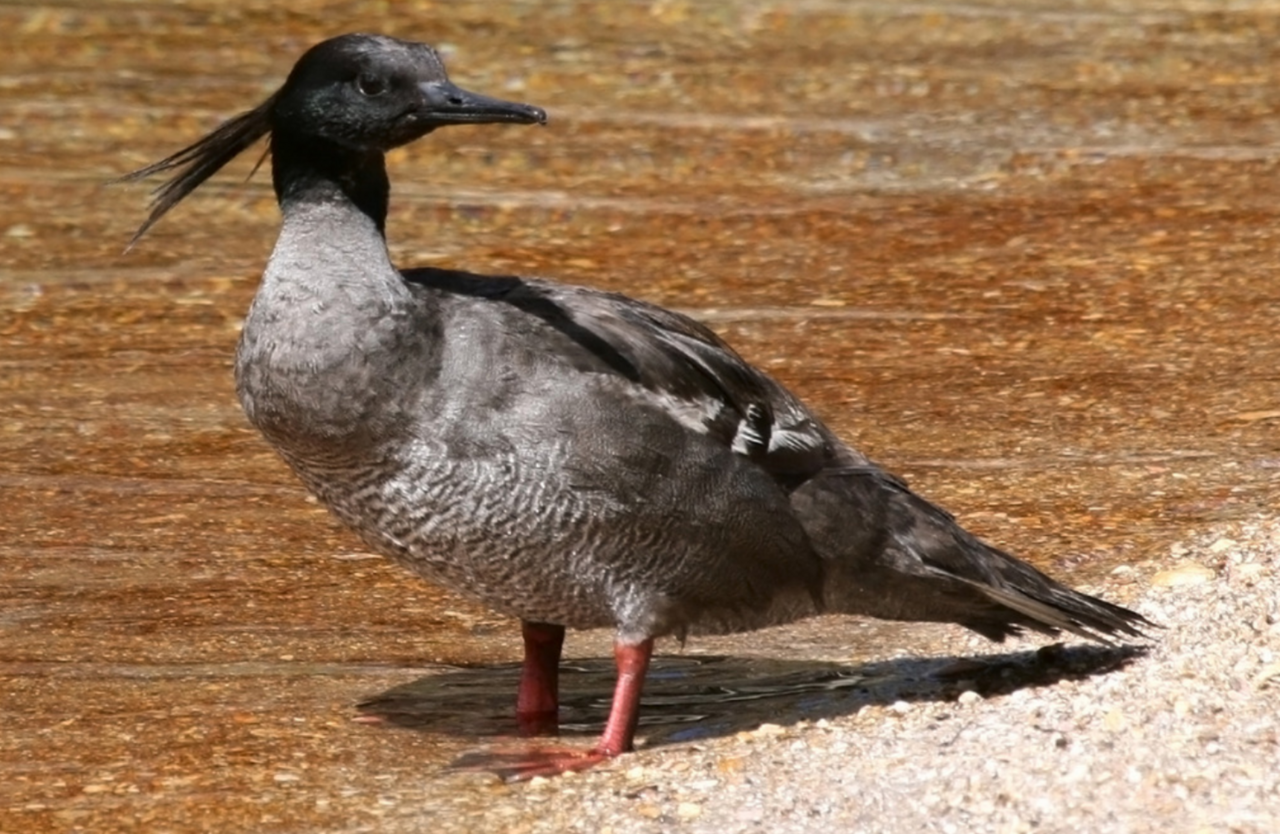
The Brazilian merganser is a South American diving duck in the Mergus genus. It is one of the most threatened waterfowl species in the world, with possibly fewer than 250 birds in the wild and a small number kept in captivity in Brazil and Czechia. It has a long, sharp-edged beak with a great number of tooth-like edges.
Region
Central and southeastern Brazil
Typical Environment
Occurs along clear, fast-flowing, rocky rivers set in forested or savanna-woodland headwaters. Prefers stretches with alternating riffles and pools, overhanging vegetation, and abundant submerged boulders for cover. Requires high water clarity for underwater pursuit hunting and is sensitive to disturbance, turbidity, and bank alteration. Often occupies long river territories with minimal human activity.
Altitude Range
200–1500 m
Climate Zone
Highland
Ease of Keeping
Beginner friendly: 1/5
A highly specialized river duck, the Brazilian merganser lives on clear, fast-flowing streams and hunts fish with its long, saw-edged bill. It is among the world’s most threatened waterfowl, with a tiny, fragmented population. Habitat loss from dams, siltation, and water pollution are the main threats. Conservation focuses on protecting pristine headwater rivers and maintaining continuous riparian corridors.


Brazilian merganser in Prague Zoo
Temperament
wary and territorial
Flight Pattern
fast, low over water with rapid wingbeats
Social Behavior
Usually found in pairs or small family groups that defend extended river stretches. Monogamous pairs maintain multi-kilometer territories. Nests in cavities such as tree holes, rock crevices, or riverbank hollows near water, with both adults caring for the brood.
Migratory Pattern
Resident
Song Description
Generally quiet, but gives sharp, high-pitched whistles and harsh rasping calls, especially in alarm or during pair contact. Vocalizations carry over running water and are used to maintain contact along the territory.
Plumage
Dark, glossy greenish-black head with a long shaggy crest; grey-brown, finely vermiculated body with paler underparts and a bold white wing patch visible in flight.
Diet
Primarily piscivorous, taking small fishes captured by underwater pursuit in clear pools and riffles. Also consumes aquatic insects, crustaceans, and occasionally amphibians. Uses the serrated bill to grasp slippery prey and swallows fish headfirst.
Preferred Environment
Feeds in clear, oxygen-rich, fast-flowing streams with rocky substrates and good visibility. Often hunts along pool margins, behind boulders, and in eddies where prey concentrates.


