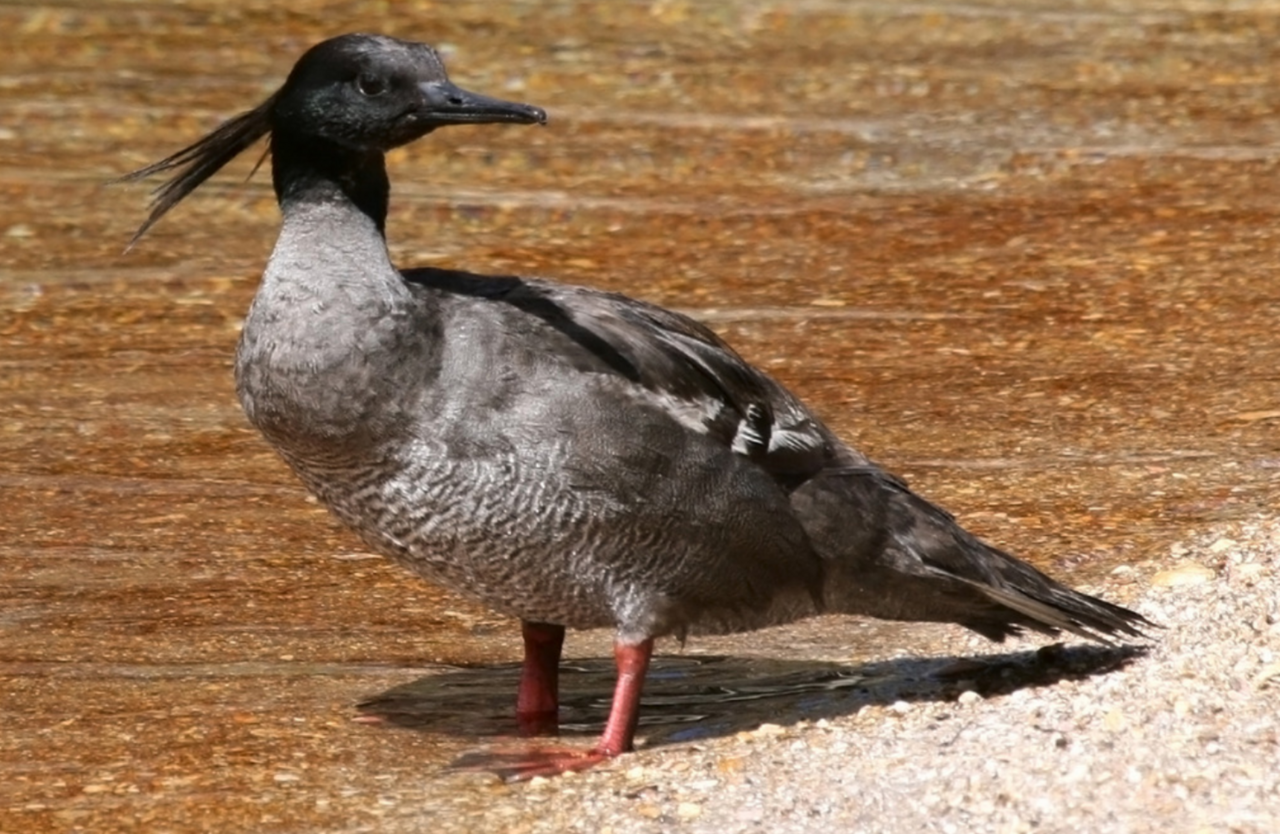
The Brasília tapaculo is a species of bird in the family Rhinocryptidae. It is endemic to southern Brazil.
Region
Central Brazil (Cerrado)
Typical Environment
Occurs in riparian gallery forests and swampy thickets embedded within the Cerrado savanna mosaic, primarily in the Federal District and adjacent Goiás and Minas Gerais. It favors dense, humid undergrowth along streams, seepages, and wet ravines. Birds keep close to the ground, moving through tangles of roots, ferns, and leaf litter. Local distribution is highly patchy, tied to continuous strips of moist forest and undisturbed stream margins.
Altitude Range
700–1300 m
Climate Zone
Tropical
Ease of Keeping
Beginner friendly: 1/5
The Brasília tapaculo is a secretive understory bird restricted to the gallery forests of Brazil’s Cerrado near the nation’s capital. It was described only in the late 20th century and remains poorly known due to its skulking habits. Habitat loss from agriculture, damming, and urban expansion has been the main threat to its survival.


Temperament
skulking and territorial
Flight Pattern
short rapid wingbeats; low, brief flights between cover
Social Behavior
Usually seen singly or in pairs, maintaining small territories along stream margins. Nests are placed close to the ground, often in cavities or dense vegetation, with both members of the pair involved in care. It spends much of its time on or near the ground, slipping through tangled understory.
Migratory Pattern
Resident
Song Description
Song is a rapid, evenly spaced series of high-pitched notes that may accelerate into a trilled sequence. Calls are sharp ticks or chips given from concealed perches, often in response to intrusion.
Plumage
Compact, round-bodied tapaculo with mostly slaty to dark gray plumage and a short, cocked tail. The lower back and tail can show a brownish wash, while the flanks are rufous-brown with fine dusky barring. Overall appearance is uniform and shadowy, adapted for dense cover.
Diet
Feeds primarily on small arthropods such as insects, larvae, and spiders. It gleans and probes in leaf litter, among roots, and around damp logs. Foraging is methodical and close to the ground, often accompanied by short dashes between cover.
Preferred Environment
Dense, humid understory along streams, seeps, and swampy thickets within gallery forests. Frequently forages in shaded ravines and along muddy banks where invertebrate prey is abundant.