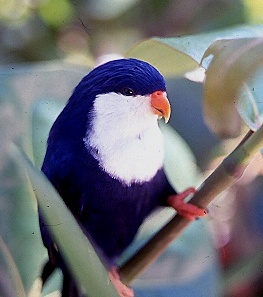
The blue finch or yellow-billed blue finch is a species of small bird. Although it was long classified in the bunting family Emberizidae, or the cardinal family Cardinalidae, more recent molecular studies have shown it fits comfortably in the Thraupini tribe within the family Thraupidae.
Region
Brazilian Cerrado and adjacent Chiquitania
Typical Environment
Occurs patchily across the Cerrado of central and eastern Brazil, especially in rocky grasslands and shrublands (campos rupestres) of the Espinhaço Range. Disjunct populations also occur in drier savanna-woodland mosaics toward the Bolivia–Paraguay region. Prefers open, stony slopes with scattered shrubs and tussock grasses. It uses edges of gallery forest and rocky outcrops but avoids dense rainforest. Local abundance varies widely, and it can be absent from seemingly suitable areas.
Altitude Range
200–1600 m
Climate Zone
Tropical
Ease of Keeping
Beginner friendly: 1/5
Despite its common name, the blue finch is now placed among tanagers (family Thraupidae) based on molecular studies. Males are striking cobalt-blue with a contrasting yellow bill, while females are plain brownish and easily overlooked. It favors rocky savannas and campos rupestres, where it can be quite local and patchily distributed. Habitat loss in the Cerrado likely affects some populations.


Temperament
wary and territorial
Flight Pattern
short rapid wingbeats
Social Behavior
Typically seen singly or in pairs during the breeding season, defending small territories among rocky slopes and shrubs. Outside breeding, small loose groups may form, sometimes associating with mixed-species flocks in open habitats. The nest is a small cup placed low in a shrub or grass clump. Both parents participate in care.
Migratory Pattern
Resident
Song Description
Song is a bright, tinkling series of clear whistles and trills delivered from exposed perches. Calls include sharp metallic chips and short buzzes, often given in quick sequences.
Plumage
Male with uniform deep cobalt-blue plumage and clean contrasts; female dull brown to olive-buff with subtle streaking and paler underparts. Feathers appear smooth and even, with slightly darker wings and tail in males. Both sexes show a conspicuous yellow bill.
Diet
Feeds primarily on grass and herb seeds, gleaned from the ground and seedheads. Supplements diet with small insects and other arthropods, especially during the breeding season. May take small berries when available. Forages methodically, often dropping to the ground from low perches.
Preferred Environment
Most often feeds in rocky savannas, open scrub, and grassy slopes with scattered shrubs. Uses ecotones near gallery forests and along rocky outcrops where seed resources are concentrated. Frequently forages at the base of shrubs and among tussock grasses.