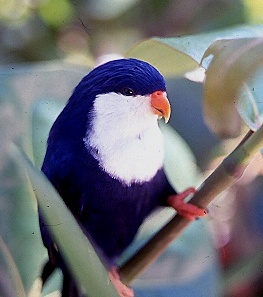
The blue grosbeak, is a medium-sized North American passerine bird in the cardinal family Cardinalidae. It is mainly migratory, wintering in Central America and breeding in northern Mexico and the southern United States. The male is blue with two brown wing bars. The female is mainly brown with scattered blue feathers on the upperparts and two brown wing bars.
Region
North and Central America
Typical Environment
Breeds widely across the southern and central United States into northern Mexico, favoring brushy fields, hedgerows, woodland edges, and riparian corridors. During migration it passes through the southern U.S., Mexico, and the Caribbean. Winters mainly in Mexico and Central America, reaching as far as Panama. It thrives in early successional and second-growth habitats and often uses roadside and agricultural edges.
Altitude Range
Sea level to 2400 m
Climate Zone
Temperate
Ease of Keeping
Beginner friendly: 1/5
Blue grosbeaks favor shrubby edges, riparian thickets, and overgrown fields, often singing from prominent perches despite otherwise secretive habits. They have expanded their breeding range northward in recent decades, benefiting from brushy second-growth habitats. Males are striking cobalt-blue with chestnut wing bars, while females are warm brown with subtle bluish tones.


Temperament
solitary and territorial
Flight Pattern
strong flier with rapid, direct wingbeats
Social Behavior
Typically monogamous during the breeding season, with pairs defending territories in dense shrubbery. The female builds a cup nest low in shrubs or vines and incubates, while the male often sings from exposed perches. They may raise two broods where conditions allow.
Migratory Pattern
Seasonal migrant
Song Description
A rich, mellow warble composed of varied phrases, often delivered from a high perch. Calls include a sharp, metallic chink note that carries well through dense vegetation.
Plumage
Male is deep cobalt-blue with two chestnut wing bars and a slightly darker mask around the face; female is warm brown with scattered bluish feathers on the upperparts and two brown wing bars. Both sexes have a massive, pale, conical bill typical of grosbeaks. Juveniles resemble females, gradually acquiring adult coloration.
Diet
Consumes a mix of insects and plant matter, including grasshoppers, beetles, caterpillars, seeds, grains, and wild fruits. Insects dominate during the breeding season to fuel nesting and chick growth, with seeds and grains forming a larger share outside of breeding. It gleans prey from foliage and the ground and occasionally hawks flying insects.
Preferred Environment
Forages along brushy edges, riparian thickets, overgrown fields, and roadside hedgerows. Often feeds low in vegetation or on the ground, using dense cover for safety.