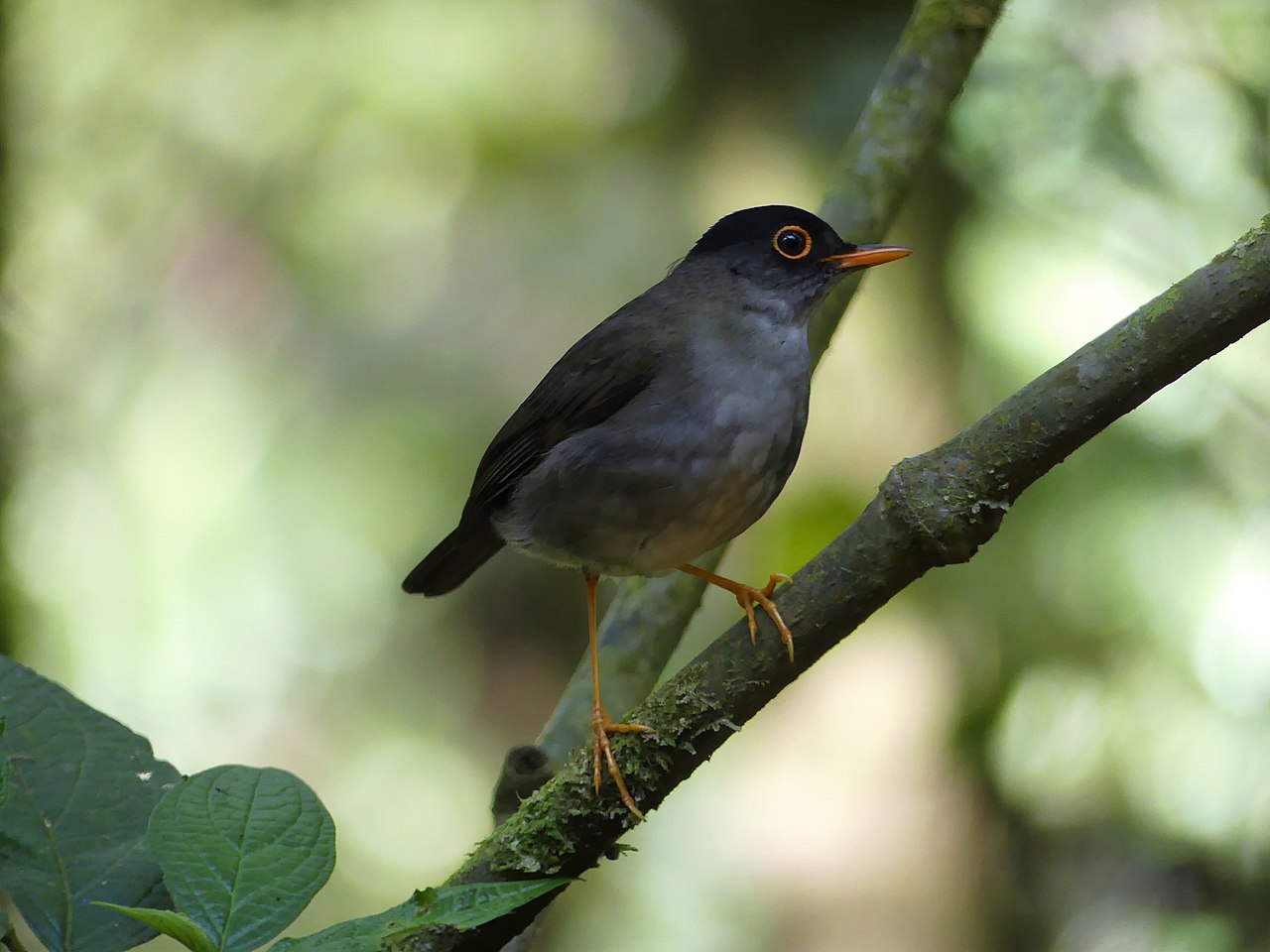
The black sunbird is a species of bird in the family Nectariniidae. It is found in eastern Indonesia and New Guinea. Its natural habitats are subtropical or tropical moist lowland forest and subtropical or tropical mangrove forest.
Region
New Guinea and eastern Indonesia
Typical Environment
Occurs across lowland and coastal zones of New Guinea and adjacent islands, extending west through the Maluku (Moluccan) Islands and nearby archipelagos of eastern Indonesia. It favors forest edges, secondary growth, mangroves, plantations, and flowering gardens near villages. The species readily uses coastal scrub and riverine woodland where nectar sources are abundant. It is largely non-migratory within its range and can be locally common where suitable flowers are present.
Altitude Range
Sea level to 1200 m
Climate Zone
Tropical
Ease of Keeping
Beginner friendly: 1/5
The black sunbird is a small, energetic nectar-feeder whose long, decurved bill and brush-tipped tongue are adapted for sipping from flowers. Males are strikingly glossy black with metallic blue-purple sheen, while females are olive above and yellowish below. They often perch to feed rather than hover continuously, and will supplement nectar with small insects for protein. Their suspended, fibrous nests are intricately bound with spider silk.


A black sunbird female at Tomohon, North Sulawesi


Temperament
active and territorial
Flight Pattern
short rapid wingbeats with direct, darting flight
Social Behavior
Often seen singly or in pairs, with males defending rich nectar sources from rivals. The nest is a pendant, purse-like structure of plant fibers and cobwebs, typically built by the female and suspended from branches or palm fronds. Clutches are small, and adults may continue to forage nearby while guarding the nest.
Migratory Pattern
Resident
Song Description
Vocalizations are high, thin twitters and rapid, squeaky tseep series delivered from exposed perches. Calls include sharp chips and buzzy trills used in territory advertisement and contact.
Plumage
Male is glossy black with metallic blue to purplish iridescence on head, throat, and upperparts; plumage appears sleek and uniform in low light. Female is olive-brown above with yellowish underparts and a paler throat, often with a faint pale supercilium.
Diet
Feeds primarily on nectar from a variety of flowering trees, shrubs, and coastal plants. It also takes small insects and spiders gleaned from foliage or snatched in short sallies, especially when feeding young. The species occasionally pierces the base of flowers to access nectar and will visit cultivated ornamentals.
Preferred Environment
Forages along forest edges, mangrove margins, gardens, and plantations where flowering plants are concentrated. Often uses mid-canopy to canopy levels but will descend to shrubs and garden flowers.