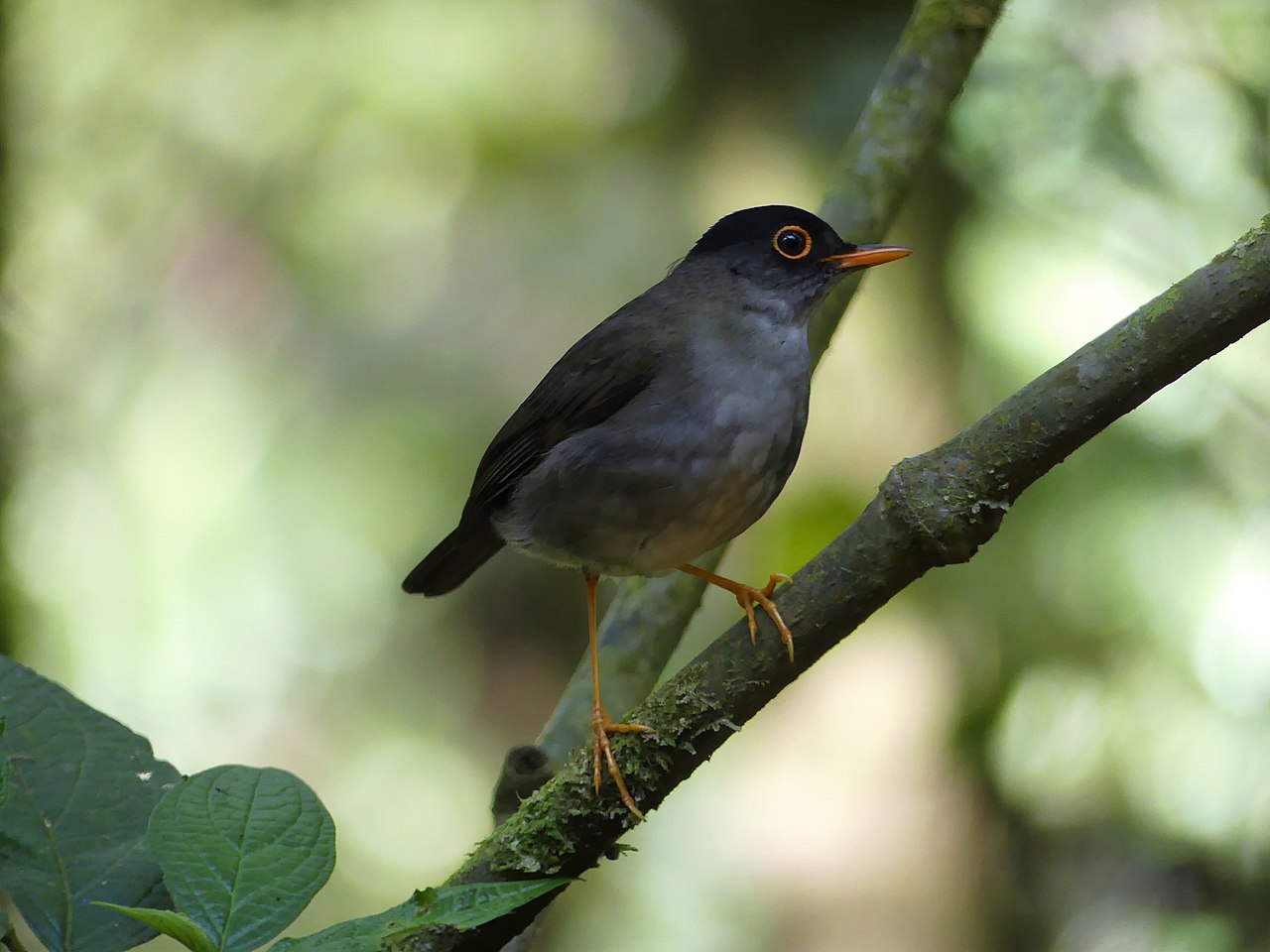
The black thicket fantail is a species of bird in the family Rhipiduridae. It is found in the Aru Islands and New Guinea. This species is one of 47 in the genus Rhipidura.
Region
New Guinea and Aru Islands
Typical Environment
Occupies dense lowland rainforest, secondary growth, and swampy thickets, where visibility is limited by vines and underbrush. It favors edges of sago palm swamps, streamside tangles, and forest fallows with heavy understory. The species typically forages from near ground level up to the lower midstory. It tends to avoid open forest and cleared areas, remaining within shaded, humid microhabitats.
Altitude Range
0–800 m
Climate Zone
Tropical
Ease of Keeping
Beginner friendly: 1/5
The Black thicket fantail is a secretive understory bird of dense lowland forests in New Guinea and the Aru Islands. Like other fantails, it often flicks and fans its tail to flush insects from foliage. It keeps close to tangled vegetation and is more often heard than seen. Nests are typically neat, cup-shaped structures placed low in saplings or vine tangles.


Temperament
solitary and territorial
Flight Pattern
short rapid wingbeats
Social Behavior
Typically encountered singly or in pairs within dense cover. Pairs maintain small territories and communicate with soft calls from hidden perches. Nest is a small, neatly woven cup attached to a low fork; clutch size is usually two eggs and both parents attend the young.
Migratory Pattern
Resident
Song Description
Song is a series of soft, thin whistles and sibilant notes delivered from inside thickets. Calls include sharp tiks and scolding chatter when disturbed, often given while flicking the tail.
Plumage
Mostly sooty-black to blackish plumage with a soft, matte appearance; tail frequently fanned, showing broad, rounded feathers.
Diet
Feeds primarily on small insects and other arthropods gleaned from leaves, twigs, and vine tangles. It flushes prey by flicking and fanning the tail, then darts to capture items by short sallies. Occasional hover-gleaning and brief ground foraging occur in dense leaf litter. It rarely ventures into open spaces while feeding.
Preferred Environment
Understory and near-ground layers of dense rainforest, swamp edges, and thick second growth. Often close to streams, sago stands, and vine-laden thickets where insect abundance is high.