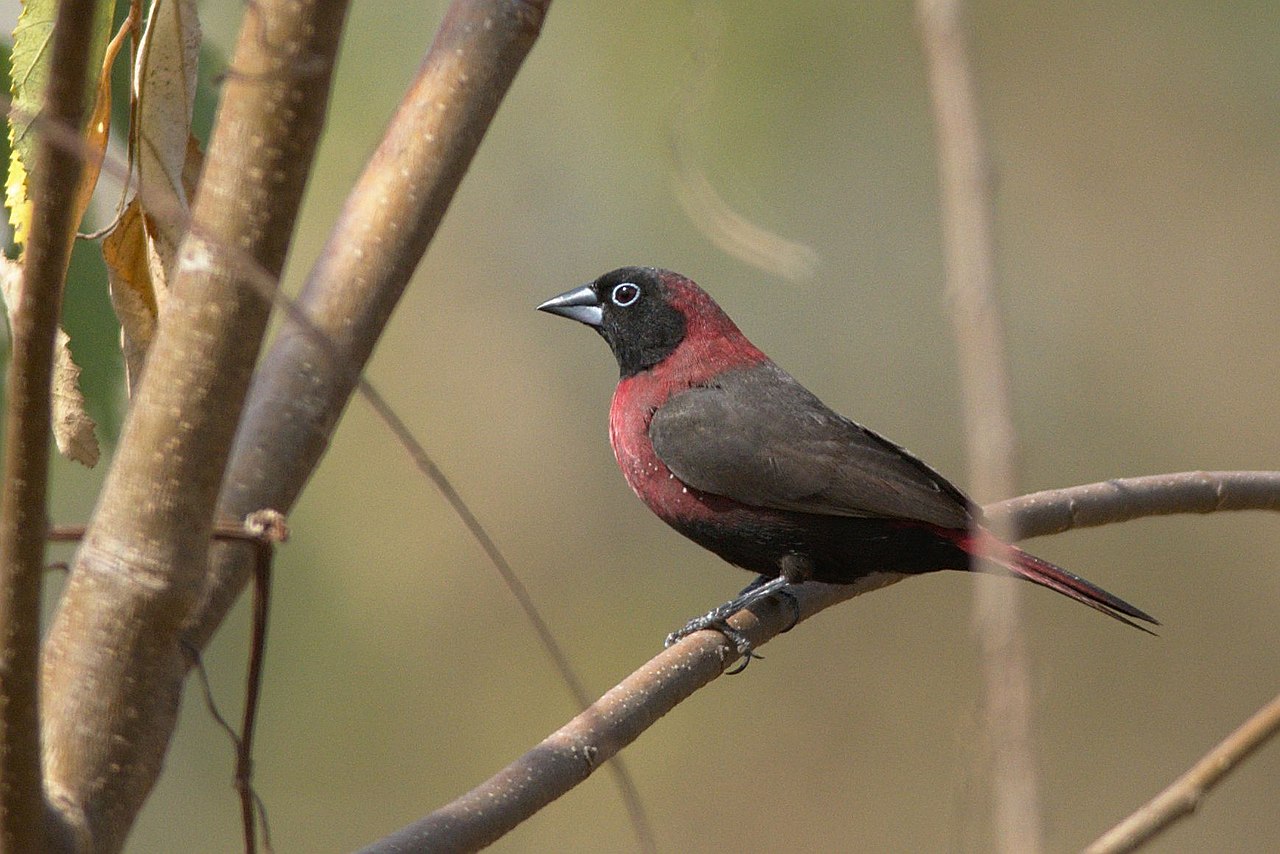
The black-faced cotinga is a species of bird in the family Cotingidae. It is found in Bolivia, Brazil, and Peru.
Region
Western Amazon Basin
Typical Environment
Occurs in lowland Amazonia of northeastern Peru, northwestern Bolivia (Pando), and adjacent western Brazil (Acre and western Amazonas). It favors riverine and seasonally flooded várzea forests, edges of terra firme, and tall secondary growth near major white-water rivers. Birds are most often seen in the canopy or emergent layer, moving between fruiting trees. They sometimes join mixed-species canopy flocks and may use river islands and oxbow lake margins.
Altitude Range
Sea level to 600 m
Climate Zone
Tropical
Ease of Keeping
Beginner friendly: 1/5
The black-faced cotinga is a canopy-dwelling cotinga of western Amazonia and the sole member of its genus. It is often quiet and easily overlooked as it perches high in the treetops, frequenting fruiting trees along major rivers. Much of its breeding biology remains poorly known, but it is regularly detected by its thin, whistled notes.


Temperament
quiet, canopy-dwelling and somewhat secretive
Flight Pattern
short, direct flights between canopy perches
Social Behavior
Usually seen singly or in pairs high in the canopy, occasionally accompanying mixed-species flocks at fruiting trees. Territorial displays are subtle; birds spend long periods perched. Nesting behavior is poorly documented, but like many cotingas it likely builds a small, exposed cup high above ground.
Migratory Pattern
Resident
Song Description
Gives thin, clear whistles and soft notes delivered from high perches, often spaced out in simple phrases. Vocalizations carry modestly through the canopy and help reveal its presence in otherwise quiet forests.
Plumage
Male is largely pale gray with a contrasting black facial mask and throat, clean whitish underparts, and subtly darker wings; female is olive-brown above with paler, slightly streaked underparts and a duskier face.
Diet
Primarily consumes small fruits and berries, swallowing them whole and later regurgitating seeds. It supplements with occasional insects, caught by short sallies from a perch. Foraging is focused at fruiting trees along river edges and in flooded forest. Seed dispersal likely makes it an important frugivore in riverine ecosystems.
Preferred Environment
Feeds high in the canopy and subcanopy of várzea and riverine forest, especially at forest edges and along oxbows. Will use tall secondary growth when fruit is abundant.