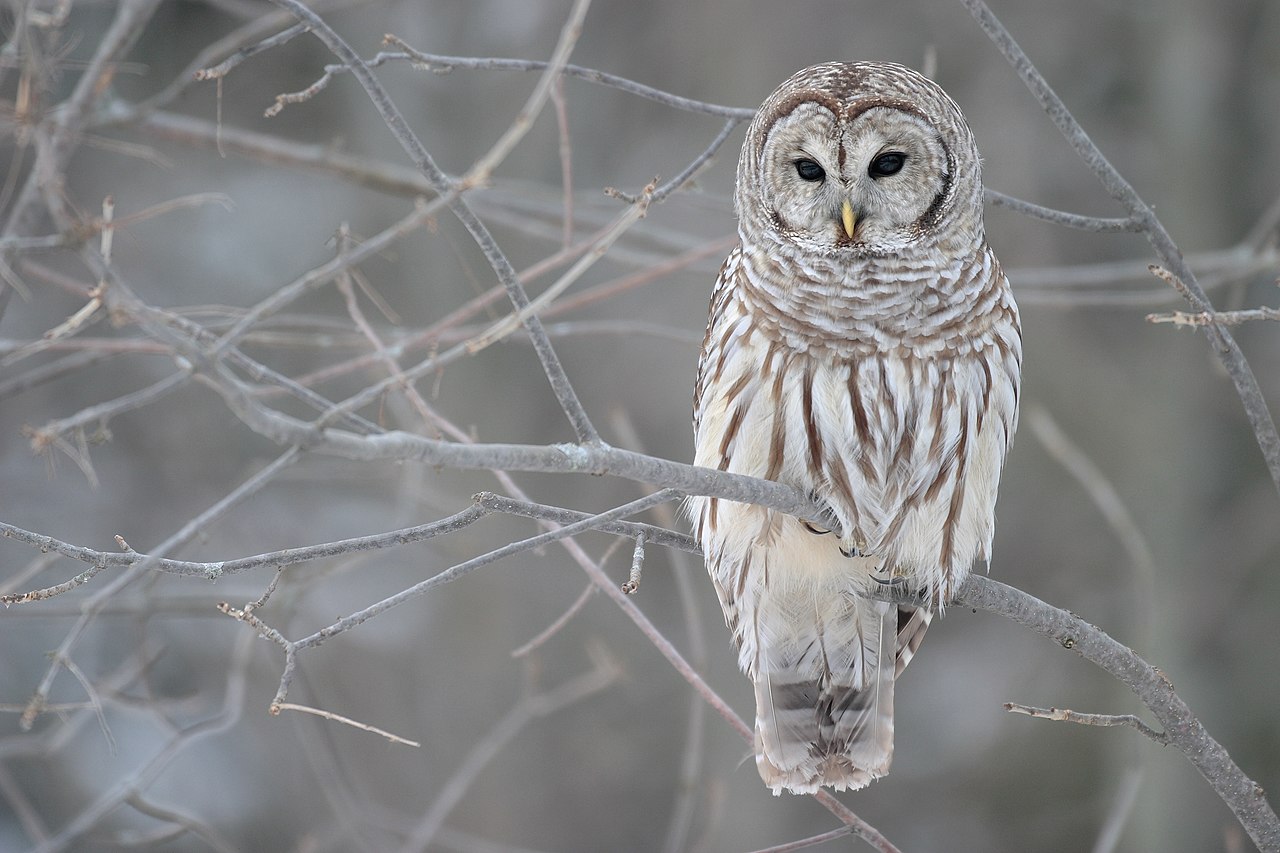
The barred fruiteater is a species of bird in the family Cotingidae, the cotingas. It is found in Bolivia, Colombia, Ecuador, Peru, and Venezuela.
Region
Andes Mountains
Typical Environment
Occurs along the Andes from western Venezuela through Colombia and Ecuador to Peru and Bolivia, mainly in humid montane and cloud forests. Favors forest interiors, edges, and mossy, stunted elfin forests with abundant fruiting shrubs and trees. It also uses secondary growth and forest borders when fruit is plentiful. Often remains unobtrusive within dense mid-canopy foliage, moving between fruiting trees over short distances.
Altitude Range
1800–3300 m
Climate Zone
Highland
Ease of Keeping
Beginner friendly: 1/5
A high-Andean cotinga, the barred fruiteater spends long periods perched quietly in the mid- to upper canopy near fruiting trees. Its heavy black barring on the underparts gives the species its name. By swallowing small fruits and later regurgitating seeds, it plays an important role in forest regeneration. It is usually seen singly or in pairs and may join mixed-species flocks.


Illustration by Joseph Smit

Temperament
shy and unobtrusive
Flight Pattern
short rapid wingbeats between perches
Social Behavior
Usually solitary or in pairs, occasionally accompanying mixed-species flocks when fruiting trees draw many birds. Courtship is discreet; pairs remain within a small territory during the breeding season. The nest is typically a small, mossy cup placed on a branch in dense montane foliage.
Migratory Pattern
Resident
Song Description
A soft, thin series of high whistles and sibilant notes, often given from concealed perches. Calls are low-volume and easily overlooked amid cloud forest ambient sounds.
Plumage
Plump, mostly green upperparts with strongly barred underparts; the breast and belly show bold dark barring over yellowish to whitish ground color. Throat and chest often paler, with the barring becoming heavier toward the flanks and belly. Wings and tail are dusky with greenish edges, giving a soft, mossy appearance.
Diet
Primarily small fruits and berries plucked from branches and swallowed whole. It may supplement with small arthropods, especially when feeding young. By dispersing seeds, it contributes importantly to the dynamics of montane forest plant communities.
Preferred Environment
Mid- to upper canopy of humid montane forest, especially at fruiting trees and along forest edges. Also forages in second growth and along clearings where fruiting shrubs are abundant.