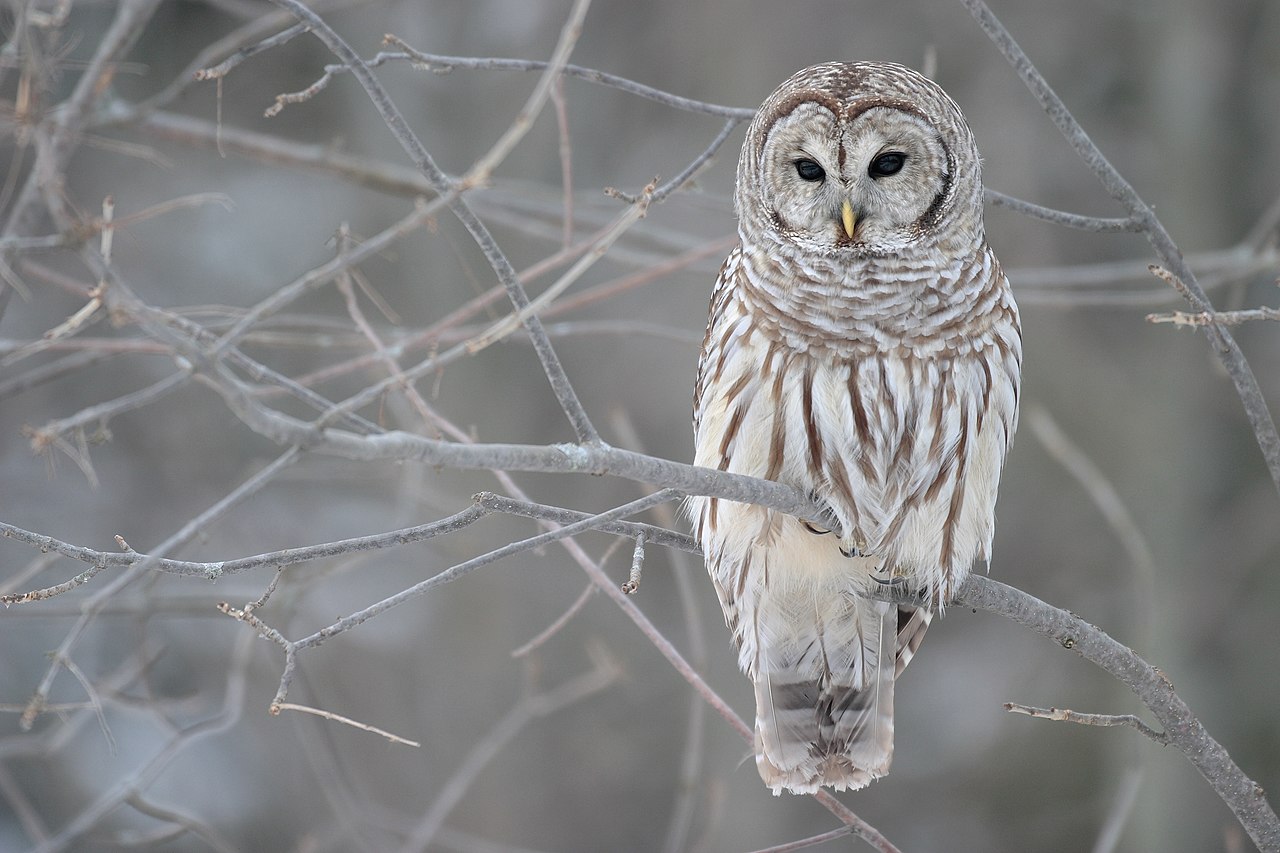
The barred hawk is a species of bird of prey in the family Accipitridae. It has also been known as the black-chested hawk.
Region
Central America to Northwestern South America
Typical Environment
Occurs from southern Central America (Costa Rica and western Panama) south through the Chocó and Andean foothills of western Colombia into western Ecuador. It favors humid montane and foothill evergreen forests, especially cloud forest with tall, closed canopies. Often uses forest edges, ravines, and riparian corridors to hunt. Typically remains under or just above the canopy but will soar on thermals over ridges.
Altitude Range
300–2400 m
Climate Zone
Tropical
Ease of Keeping
Beginner friendly: 1/5
The barred hawk is a forest-dwelling raptor of Central America and the northwestern Andes, often seen soaring over cloud forests after rain. It is sometimes called the black-chested hawk due to its dark upper breast contrasting with finely barred underparts. Secretive when perched, it hunts within dense canopy and along forested streams.


Barred hawk
Temperament
solitary and secretive
Flight Pattern
soaring glider with occasional deep wingbeats
Social Behavior
Generally encountered alone or in pairs, maintaining territories in mature forest. Pairs build a stick nest high in large trees and are presumed to be monogamous. Clutch size is small, often one or two eggs, with both adults involved in nesting duties.
Migratory Pattern
Resident
Song Description
Gives clear, high-pitched whistles and piping calls, often delivered while soaring over ridges. Vocalizations can be repeated in series and carry well across valleys after rainfall.
Plumage
Broad-winged, blackish above with boldly barred black-and-white underparts and a contrasting darker upper chest. Tail shows broad black and white bands; underwings show strong barring. The overall effect is strikingly banded below with a dusky chest.
Diet
Primarily preys on small vertebrates such as reptiles (snakes and lizards), amphibians, small mammals, and birds. It also takes large insects and occasionally other invertebrates. Hunting is typically from a concealed perch with short, direct strikes through the subcanopy or along stream edges.
Preferred Environment
Hunts within dense, humid forest interiors, along shaded trails, and riparian corridors. It sometimes forages at forest edges and clearings where prey is more easily detected, especially after rain when amphibians are active.