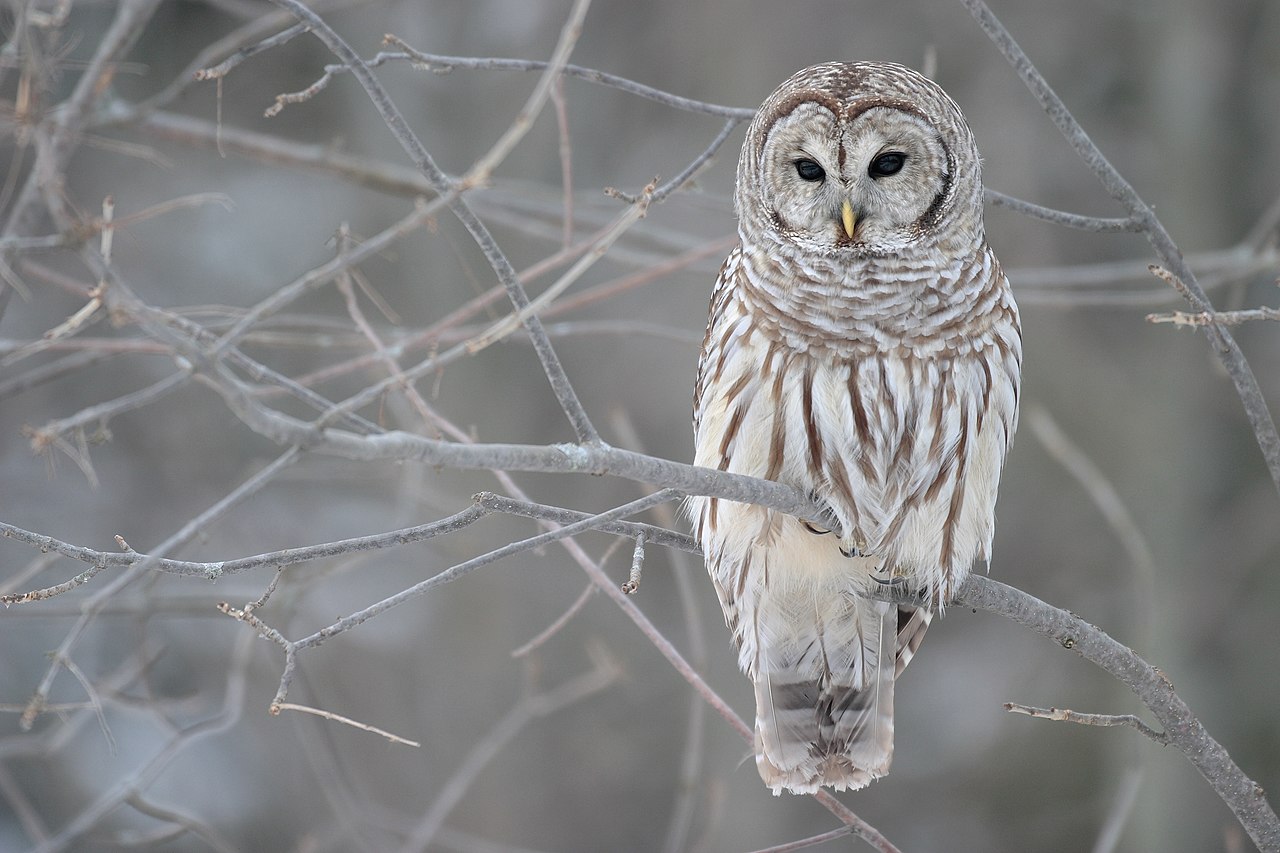
The barred honeyeater is a species of bird in the family Meliphagidae. It is endemic to New Caledonia.
Region
New Caledonia (Southwest Pacific)
Typical Environment
Occurs across the main island (Grande Terre) and nearby islands where suitable habitat exists. It uses forest edges, maquis shrubland, secondary growth, and gardens, frequently near flowering trees and shrubs. The species adapts well to semi-open habitats and human-modified areas with abundant nectar sources. It also forages within mature forest, especially along tracks, clearings, and canopy gaps.
Altitude Range
Sea level to 1500 m
Climate Zone
Subtropical
Ease of Keeping
Beginner friendly: 1/5
The barred honeyeater is a small, active nectar-feeder found only in New Caledonia. Its fine dark barring on pale underparts makes it distinctive among local honeyeaters. It is an important pollinator, frequently visiting a wide variety of native flowering shrubs and trees. Bold around favored blooms, it often chases other nectar-feeders from its feeding spots.

Temperament
active and assertive
Flight Pattern
short rapid wingbeats with quick, darting flights
Social Behavior
Usually seen singly or in pairs, it defends rich nectar sources and may chase other birds. Breeding pairs build a small cup nest suspended in foliage. Both adults tend the young, and family groups may persist briefly post-fledging.
Migratory Pattern
Resident
Song Description
A mix of thin, metallic tinkling notes and sharp chips delivered from exposed perches. Calls become more persistent around flowering trees and during territorial disputes.
Plumage
Pale underparts densely and finely barred with dark brown to blackish lines; upperparts gray-brown to olive-brown with subtle streaking. Throat and breast show the most distinct barring. Feathers appear sleek, with a slightly glossy tone on the head.
Diet
Feeds primarily on nectar from a range of native and introduced flowering plants. Supplements nectar with small insects and spiders gleaned from foliage and bark, especially when feeding young. Will also take sugary exudates and occasionally soft fruits.
Preferred Environment
Most often at flowering trees and shrubs along forest edges, maquis, gardens, and scrubby hillsides. It also forages within forest clearings and along tracks where blossoms are concentrated.