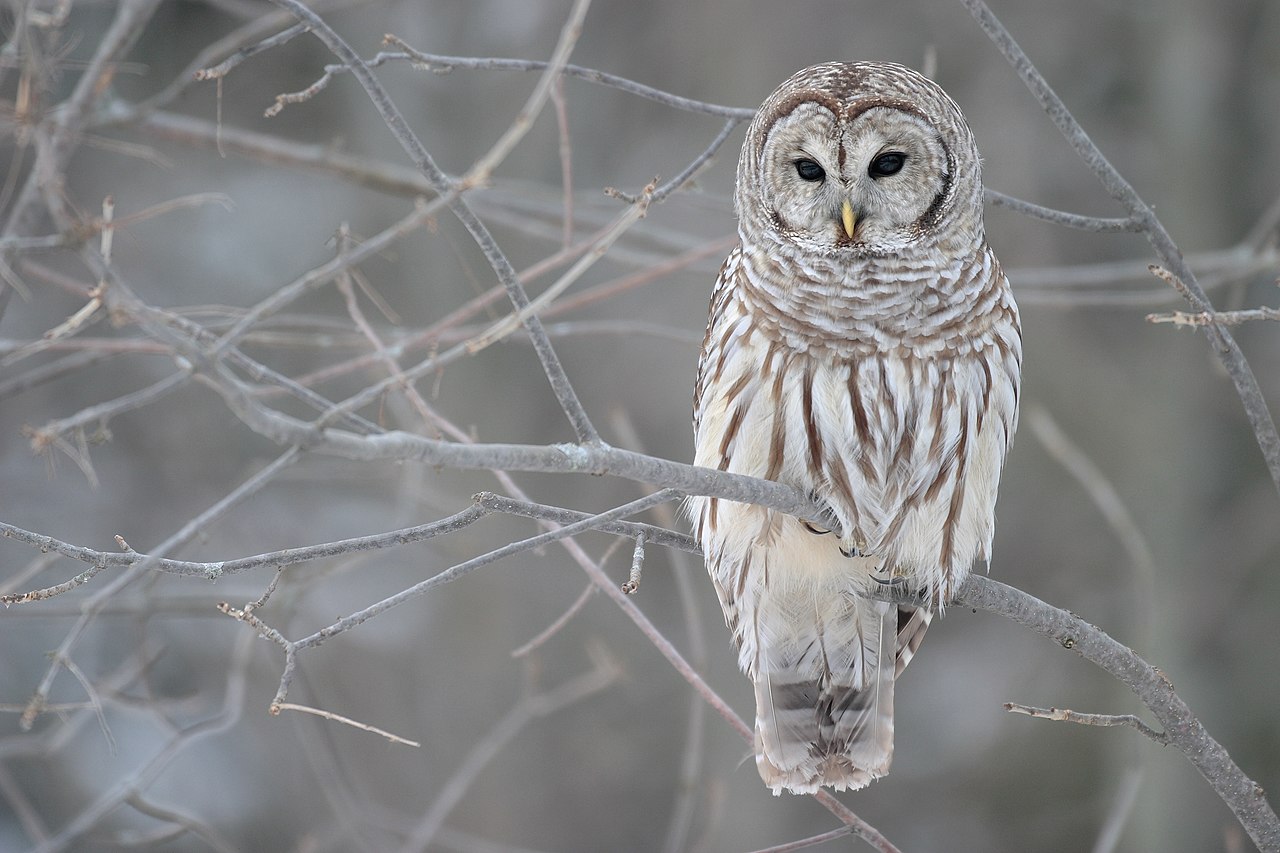
The barred laughingthrush is a passerine bird in the family Leiothrichidae. It is endemic to central China where its natural habitat is temperate forests.
Region
Central China
Typical Environment
Occurs in montane temperate forests with dense shrub layers, including mixed broadleaf–conifer woodland, rhododendron thickets, and bamboo understorey. Prefers forest edges, scrubby slopes, and ravines where cover is abundant. It forages close to or on the ground, moving through tangled vegetation. Secondary growth and lightly disturbed forests are also used, provided sufficient understory remains.
Altitude Range
1800–3600 m
Climate Zone
Temperate
Ease of Keeping
Beginner friendly: 2/5
The barred laughingthrush is a shy, ground-oriented songbird often heard before it is seen, its rich whistles and chuckles carrying through mountain forests. It is endemic to central China and favors dense undergrowth where it forages in pairs or small parties. In winter it may join mixed-species flocks and make short elevational movements. Its distinctive barring on the underparts helps separate it from other brown laughingthrushes.

Temperament
secretive yet vocal
Flight Pattern
short, low flights with rapid wingbeats through dense cover
Social Behavior
Usually found in pairs or small family groups, keeping to dense shrubs and bamboo. Nests are cup-shaped and placed low in thickets or small trees. Breeding pairs are territorial, while in the non-breeding season they may associate loosely with mixed-species flocks.
Migratory Pattern
Resident
Song Description
A rich series of mellow whistles, chuckles, and liquid notes delivered in phrases, often antiphonal between pair members. Calls include harsh scolds and rapid chatter when alarmed.
Plumage
Warm brown upperparts with finely barred black-and-buff underparts; tail often rufous-tinged with a darker subterminal band. Face shows a pale buff supercilium offset by darker lores and moustachial area. Feathers appear soft and loosely textured, aiding a sleek, rounded profile in dense vegetation.
Diet
Omnivorous, taking insects, spiders, and other small invertebrates gleaned from leaf litter and low foliage. Also consumes berries, seeds, and soft fruits, especially outside the breeding season. Will probe moss and bark crevices and flip leaves while foraging.
Preferred Environment
Feeds on or near the ground in dense undergrowth, bamboo, and shrub tangles along forest edges and ravines. Uses fallen logs, leaf litter, and low branches to search for prey under cover.