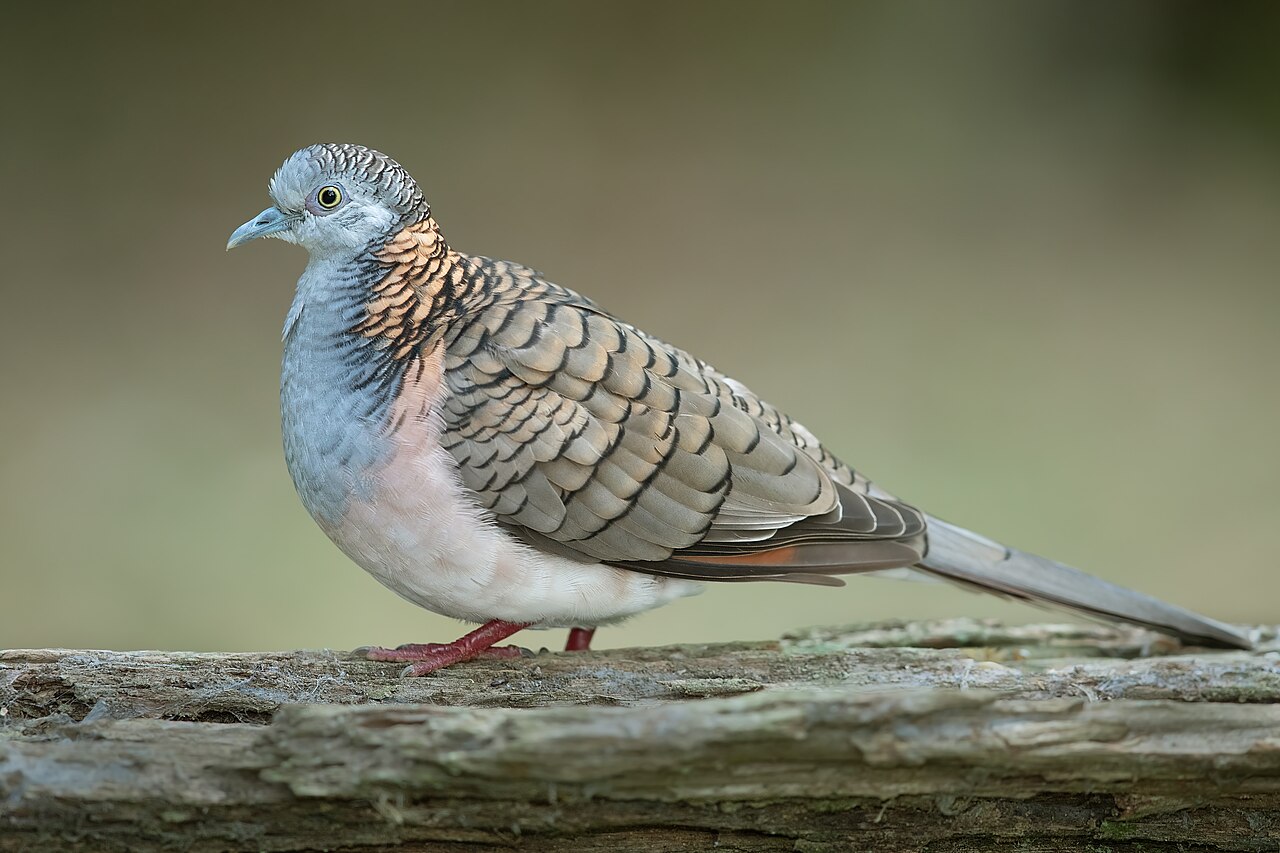
The bar-bellied woodpecker is a species of bird in subfamily Picinae of the woodpecker family Picidae. It is found in Bolivia, Colombia, Ecuador, and Peru.
Region
Andes Mountains
Typical Environment
Occurs along the Andean slopes of Colombia, Ecuador, Peru, and Bolivia, primarily on the east (humid) slope but entering inter-Andean valleys locally. It inhabits humid to wet montane and cloud forests, mature secondary woodland, forest edges, and sometimes wooded plantations. Birds often use mossy trunks, dead snags, and large branches for foraging and nesting. It tolerates some habitat alteration where large trees remain.
Altitude Range
500–3000 m
Climate Zone
Highland
Ease of Keeping
Beginner friendly: 1/5
A small Andean woodpecker, the bar-bellied woodpecker forages quietly along trunks and larger branches, often in pairs. Males show a red crown patch that females lack. It communicates with sharp calls and a short, rattling drum rather than long rolls. Taxonomically, it has been placed in both Veniliornis and Dryobates by different authorities.


Temperament
solitary and territorial
Flight Pattern
undulating with short rapid wingbeats
Social Behavior
Usually found singly or in pairs and sometimes joins mixed-species flocks in montane forest. Pairs excavate nest cavities in dead or decaying wood and share incubation and chick-rearing duties. Territorial drumming and display flights are used during the breeding season.
Migratory Pattern
Resident
Song Description
Vocalizations are sharp, metallic 'pik' or 'kik' notes given singly or in short series. Drumming is a brief, rattling burst rather than a long roll, used for territory advertisement and pair contact.
Plumage
Fine black-and-buff barring across the underparts gives the characteristic 'bar-bellied' look; upperparts are also barred or mottled. The head is dark with pale streaking on the face; males have a red crown patch while females do not. Tail is dark with pale spotting; wings show barred panels.
Diet
Feeds mainly on wood-boring beetle larvae, ants, termites, and other small arthropods extracted from bark and decaying wood. It gleans, pecks, and probes, with occasional light hammering to expose galleries. It may supplement its diet with small fruits or sap seasonally, but animal prey dominates.
Preferred Environment
Forages on trunks, snags, and larger branches in humid montane forest and edges. Often uses mossy, lichen-covered substrates and rotten stubs where insect larvae are accessible.