The bar-headed goose is a goose that breeds in Central Asia in colonies of thousands near mountain lakes and winters in South Asia, as far south as peninsular India. It lays three to eight eggs at a time in a ground nest. It is known for the extreme altitudes it reaches when migrating across the Himalayas.
Region
Central and South Asia
Typical Environment
Breeds in Central Asia, especially on the Tibetan Plateau and adjacent regions of China, Mongolia, and Kyrgyzstan, nesting near high-altitude lakes and marshes. In winter it moves south to the plains and wetlands of northern and peninsular India, Nepal’s lowlands, Bangladesh, and Myanmar, with smaller numbers in Pakistan. It frequents reservoirs, floodplains, large river valleys, and agricultural fields during migration and winter. Vagrants occasionally reach Southeast Asia and the Middle East.
Altitude Range
Sea level to 5200 m
Climate Zone
Highland
Ease of Keeping
Beginner friendly: 2/5
Famed for crossing the Himalayas, bar-headed geese have specialized physiology including high‑affinity hemoglobin and exceptionally efficient breathing to cope with low oxygen. They often migrate at night and exploit tailwinds and mountain passes to conserve energy. Pairs form strong bonds and often return to the same breeding sites near high‑altitude lakes.


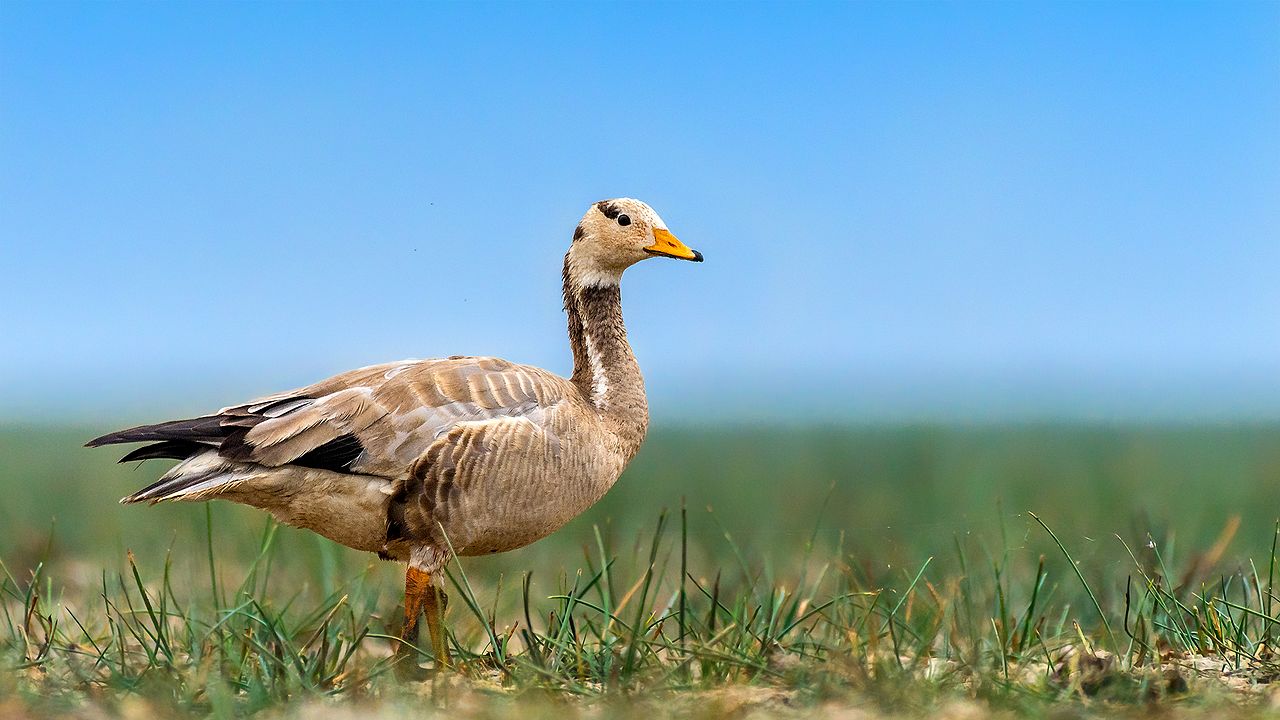
At Chilika Lake, Odisha, India

Bar-headed goose wing flapping in Hadinaru lake, Mysore, India

With glossy ibis Plegadis falcinellus at Keoladeo National Park, Bharatpur, Rajasthan, India.


Temperament
social and alert
Flight Pattern
strong flier with steady wingbeats; capable of sustained high-altitude flight
Social Behavior
Breeds colonially near lakes, nesting on the ground with plant material and down. Generally monogamous with long-term pair bonds. Forms large flocks during migration and in winter, often mingling in open fields and wetlands.
Migratory Pattern
Seasonal migrant
Song Description
Loud, nasal honking and cackling calls, especially when in flight. Vocalizations carry over long distances and help maintain flock cohesion.
Plumage
Pale grey body with darker flight feathers and clean white head and neck accented by bold dark bars.
Diet
Primarily grazes on grasses, sedges, and other herbaceous plants. Also takes seeds and gleaned cereal grains in agricultural fields during winter. Will consume aquatic vegetation along shorelines and occasionally tender shoots in high meadows.
Preferred Environment
Feeds in open grasslands, high-altitude meadows, lake margins, and sandbars. In winter it commonly forages in cultivated fields, stubble, and along river floodplains.