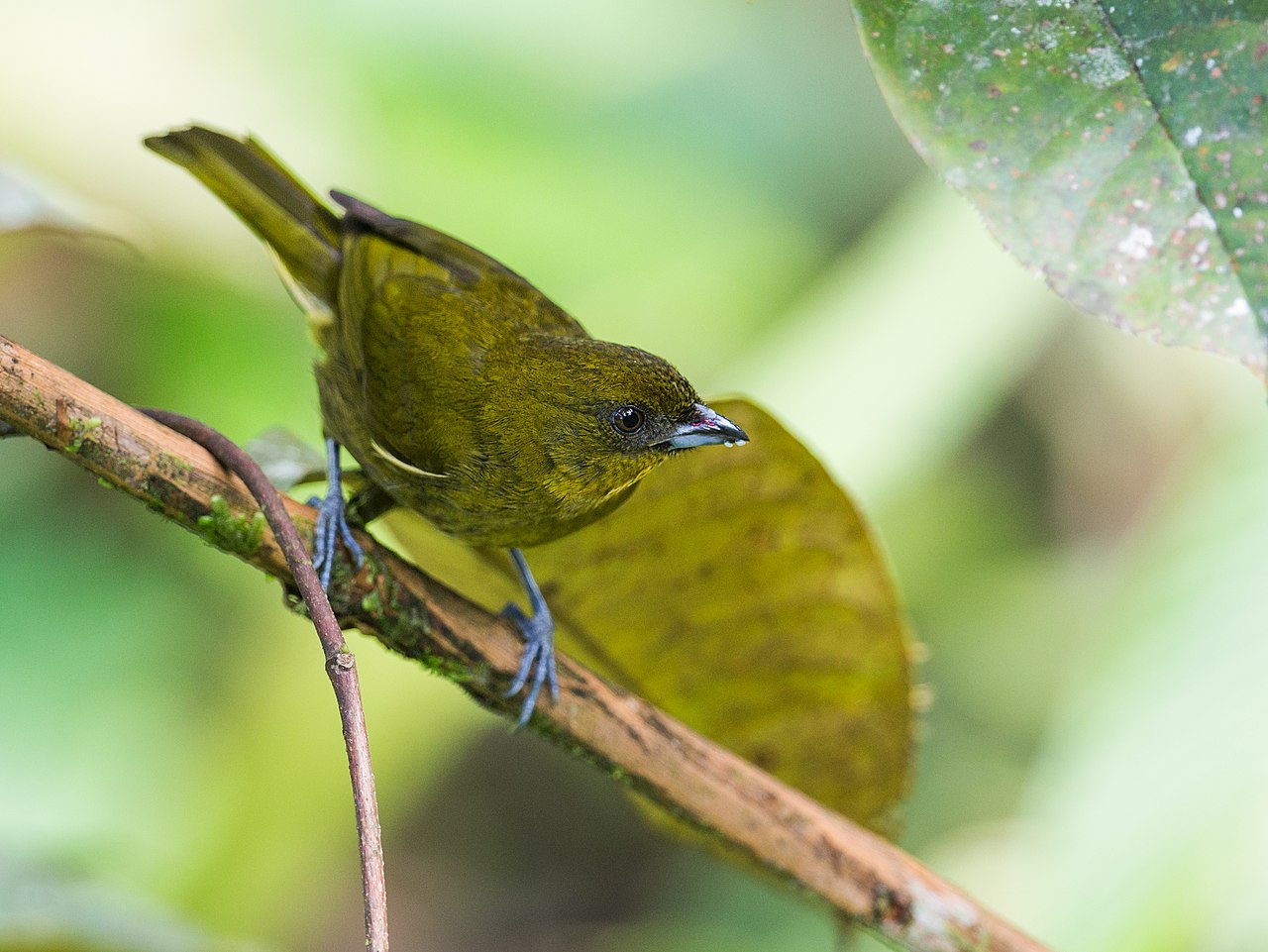
The yellow-gaped honeyeater is a species of bird in the family Meliphagidae. It is found throughout New Guinea. Its natural habitats are subtropical or tropical moist lowland forests and subtropical or tropical moist montane forests.
Region
New Guinea
Typical Environment
Occurs widely across the island of New Guinea, from lowland rainforests to lower montane forests. It uses primary and secondary forest, forest edges, swamp forest, and disturbed habitats with flowering trees. The species ranges through understory, midstory, and canopy as it follows nectar sources and arthropod prey. It often persists in human-modified landscapes such as village gardens and roadside forest strips where suitable blossoms are available.
Altitude Range
0–2400 m
Climate Zone
Tropical
Ease of Keeping
Beginner friendly: 1/5
This New Guinea honeyeater is named for the distinctive yellow gape that is often visible even when the bill is closed. It forages actively from understory to canopy and frequently joins mixed-species feeding flocks. Its subtle olive tones make it inconspicuous, so its sharp calls are often the best clue to its presence. It is generally common across a wide elevational range.

Temperament
active and somewhat skulking
Flight Pattern
short rapid wingbeats between perches
Social Behavior
Often seen singly, in pairs, or as part of mixed-species flocks moving through flowering trees. Likely monogamous, building a small cup nest suspended from foliage or branch forks. Both parents typically participate in rearing young.
Migratory Pattern
Resident
Song Description
Calls are sharp, piping notes and chipping contact calls that carry through the forest. Song consists of simple, repeated whistles and chatters delivered from mid-canopy perches. Vocalizations are useful to distinguish it from similar olive-toned honeyeaters.
Plumage
Mostly dull olive-green above with slightly paler, gray-olive head and a paler olive-washed underbody. Throat and breast are lighter with subtle streaking or wash, giving a slightly contrasty face. Feathers are smooth and close, lacking bold patterning.
Diet
Feeds on nectar from a variety of native flowering trees and shrubs, supplementing with small arthropods gleaned from leaves, bark, and twigs. It will hawk short distances for flying insects and occasionally takes soft fruits. Diet composition shifts with seasonal flowering and insect abundance.
Preferred Environment
Forages in forest edges, secondary growth, gardens, and along streams where blossoms are abundant. Uses all forest strata but frequently visits mid-canopy flowering trees and understory shrubs.