The yellow-eyed penguin, known also as hoiho, is a species of penguin endemic to New Zealand. It is the sole extant species in the genus Megadyptes, from Ancient Greek μέγας (mégas), meaning "large", and δύπτης (dúptes), meaning "diver".
Region
New Zealand and Subantarctic Islands
Typical Environment
Breeding occurs along the southeast coast of New Zealand’s South Island (Otago and the Catlins), on Stewart Island/Rakiura, and on the subantarctic Auckland and Campbell Islands. They nest inland from quiet beaches in dense coastal scrub or remnant forest that provides visual seclusion. Foraging is typically over the continental shelf in nearshore and shelf-edge waters. Birds commute daily between nesting sites and offshore feeding grounds, using rocky shorelines and kelp-lined bays.
Altitude Range
Sea level to 150 m
Climate Zone
Temperate
Ease of Keeping
Beginner friendly: 1/5
The yellow-eyed penguin, or hoiho, is the sole extant member of the genus Megadyptes and one of the rarest penguins in the world. Its Māori name means “noise shouter,” referencing its piercing calls. Unlike many penguins, it nests in secluded coastal forest or scrub rather than in dense colonies. Populations are threatened by habitat loss, introduced predators, disease, and fisheries bycatch.


Molting yellow-eyed penguin at Oamaru, New Zealand
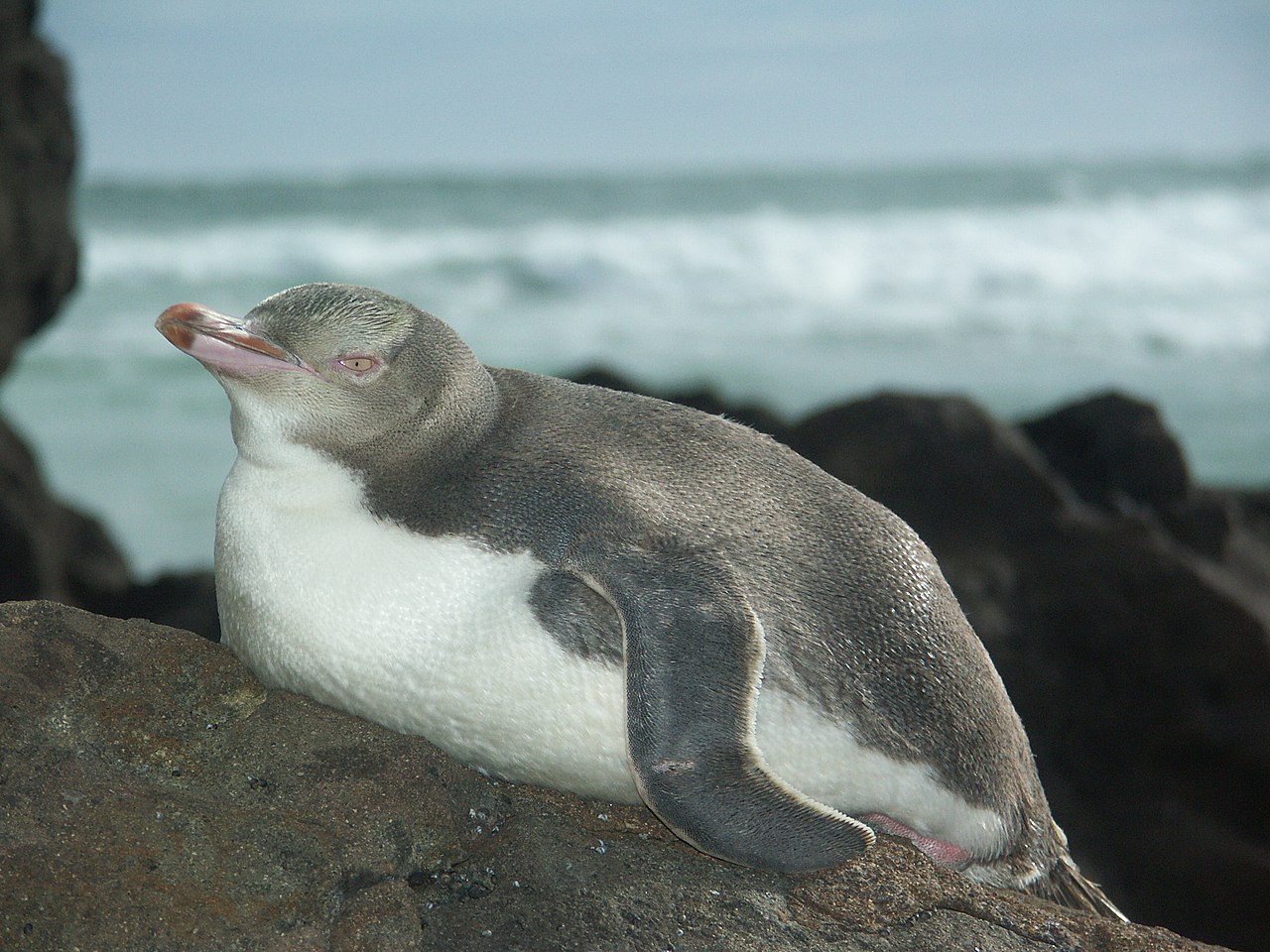
Juvenile in The Catlins, New Zealand

A family of yellow-eyed penguin at the Penguin Place Lodge at Otago Peninsula, Dunedin, New Zealand

Yellow-eyed penguins on Otago Peninsula

Penguin calling at Curio Bay, New Zealand
Temperament
solitary and territorial
Flight Pattern
flightless; powerful underwater swimmer using rapid flipper strokes
Social Behavior
More solitary than most penguins, pairs nest out of sight of each other in dense vegetation. Generally monogamous with long-term pair bonds, though re-pairing occurs if partners fail or disappear. Both sexes share incubation of two eggs and chick rearing.
Migratory Pattern
Resident
Song Description
A loud, piercing contact and territorial call that carries far over surf, accompanied by braying and trumpeting displays. Softer grunts and hisses occur at nests and during pair interactions.
Plumage
Slate-blue to bluish-grey upperparts with a clean white underbelly; head and nape washed pale yellow with a paler band of feathers encircling the eyes and crown.
Diet
Feeds mainly on small to medium fish such as red cod, sprats, and blue cod, along with cephalopods like squid. Foraging trips are typically within tens of kilometers of the colony but may extend farther when prey is scarce. Dives are usually 40–120 m, with methodical benthic and midwater hunting. Prey is swallowed underwater or brought to the surface for repositioning.
Preferred Environment
Forages over sandy or muddy continental shelf habitats, around kelp forests, and near reef edges. Prefers relatively clear, cool waters with reliable fish schools and squid concentrations near the seabed.