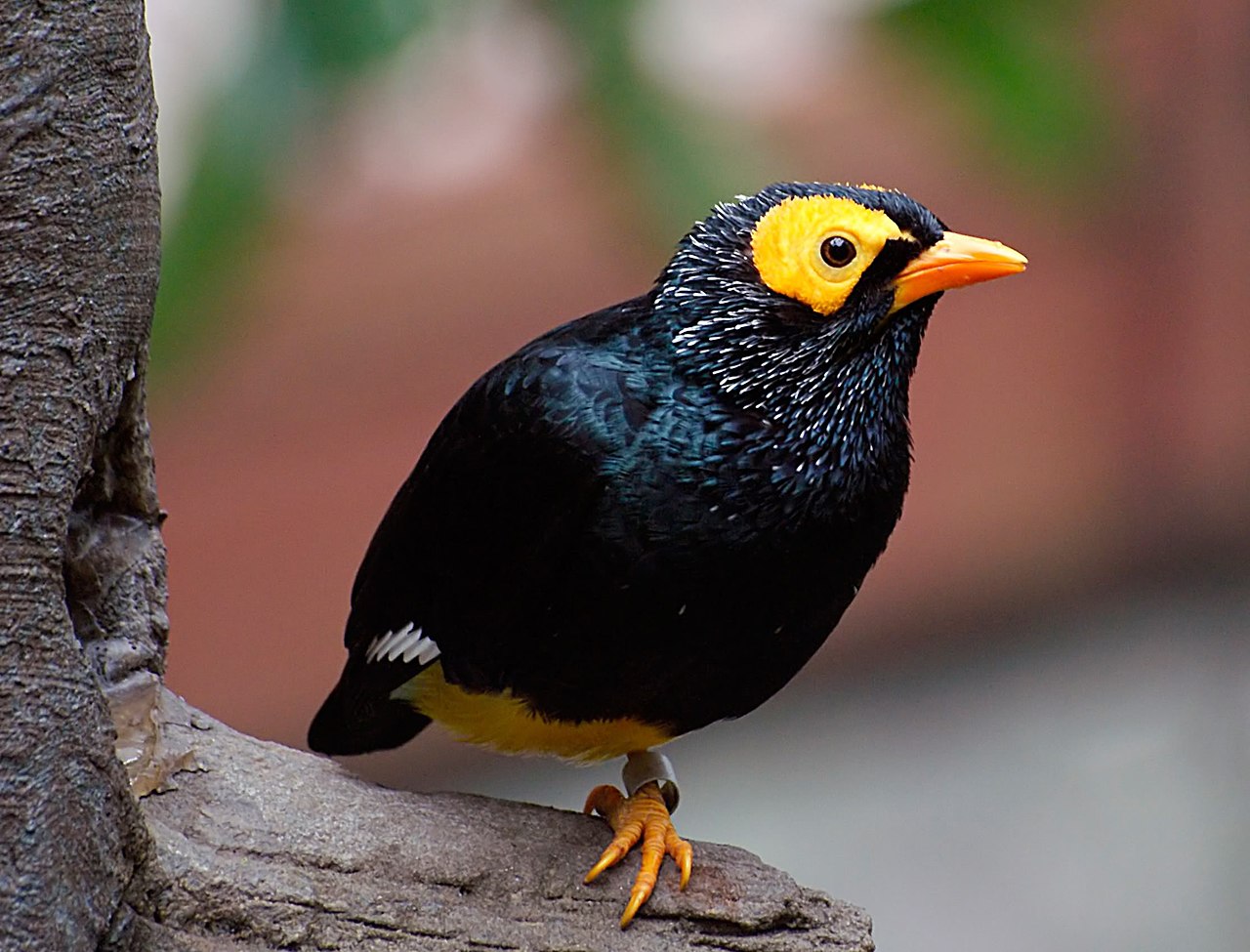
The yellow-eyed starling is a species of starling in the family Sturnidae. It is found in Indonesia and Papua New Guinea. Its natural habitat is subtropical or tropical moist lowland forests. It is threatened by habitat loss.
Region
New Guinea and nearby islands (Melanesia)
Typical Environment
Occurs in Indonesia (West Papua and nearby islands) and Papua New Guinea, primarily in lowland evergreen and semi-evergreen forests. It favors mature forest but will use secondary growth and forest edges when fruiting trees are present. Birds typically remain high in the canopy and along riverine corridors. It may appear locally common where figs and other fruiting trees are abundant. Conversion of lowland forest to agriculture reduces suitable habitat.
Altitude Range
0–800 m
Climate Zone
Tropical
Ease of Keeping
Beginner friendly: 1/5
A canopy-dwelling starling of New Guinea’s lowland forests, it is often detected by its bright yellow iris and harsh calls. It forages at fruiting trees and will join mixed-species flocks when resources are abundant. Habitat loss from logging and agricultural expansion is the primary threat.

Temperament
social and active
Flight Pattern
direct flight with short rapid wingbeats
Social Behavior
Often seen in small groups or loose flocks, especially at fruiting trees. Likely nests in tree cavities or similar sheltered sites, as with many Aplonis starlings. Forms mixed-species foraging assemblages when food is concentrated. Territoriality is modest outside the breeding season.
Migratory Pattern
Resident
Song Description
Vocalizations include sharp, metallic chips and chattering calls delivered from high perches. The song is a series of varied whistles and rasps, often given in short bouts and interspersed with chatter.
Plumage
Glossy dark plumage with a greenish to purplish sheen, especially on the head and upperparts; overall smooth, sleek feathering typical of starlings.
Diet
Takes a variety of soft fruits and berries, including figs, complemented by insects and other small arthropods. Will glean from foliage and branches and may sally after flying insects. Opportunistic at seasonal food sources and fruiting events. Occasionally visits edges and secondary growth when fruit is abundant.
Preferred Environment
Feeds high in the canopy of primary and secondary lowland forest, especially at fruiting trees. Also uses river edges, forest clearings, and tall secondary growth where fruiting resources are concentrated.