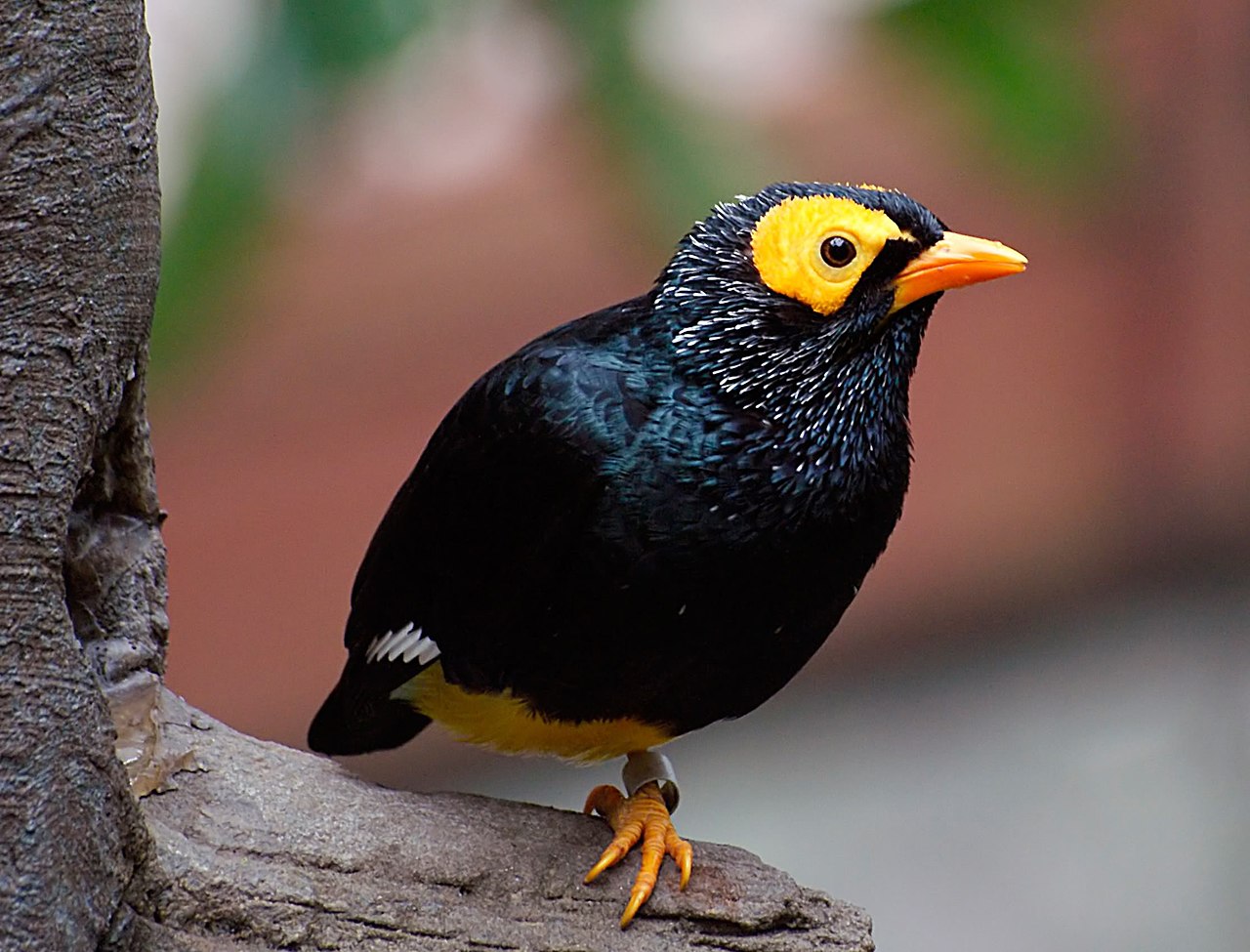
The yellow-faced grassquit is a passerine bird in the tanager family Thraupidae and is the only member of the genus Tiaris. It is native to Central America, South America, and the Caribbean.
Region
Caribbean Basin and Central America
Typical Environment
Found widely from Mexico and Central America through much of the Caribbean and into northern South America. Prefers open grassy areas, weedy fields, scrubby edges, savannas, and agricultural lands including pastures and cane fields. Often occurs along roadsides and in gardens where seeding grasses are abundant. Uses low shrubs and tall grasses for cover and nesting, and regularly ventures onto bare ground to forage.
Altitude Range
Sea level to 2000 m
Climate Zone
Tropical
Ease of Keeping
Beginner friendly: 2/5
A small seed-eating tanager, the yellow-faced grassquit is currently the sole member of the genus Tiaris. Males perform a fluttery, butterfly-like display flight while delivering a buzzy trill from exposed perches. It thrives in weedy fields, roadsides, and other human-altered habitats. Nests are domed structures of grass placed low in shrubs or tall grass.


Immature male, Panama
Temperament
social and active
Flight Pattern
short rapid wingbeats with low, fluttering flights
Social Behavior
Often forages in small loose groups outside the breeding season and forms monogamous pairs when nesting. The nest is a domed ball of grasses placed low in vegetation, with a side entrance. Clutches are typically 2–3 eggs, and both parents participate in feeding the young.
Migratory Pattern
Resident
Song Description
Male song is a buzzy, insect-like trill interspersed with thin high notes, delivered from exposed perches. Calls include sharp tseep notes and soft trills given during foraging and social interactions.
Plumage
Compact, short-tailed finch-like bird with smooth, olive upperparts and plain underparts; males show a striking face pattern.
Diet
Primarily consumes grass seeds and other small seeds plucked from seedheads or the ground. Supplements diet with small insects and other arthropods, especially during the breeding season. Occasionally takes soft fruits or visits feeders offering small seeds.
Preferred Environment
Forages in open grassy patches, weedy lots, road verges, and the edges of fields and scrub. Frequently feeds low to the ground or on seedheads of tall grasses, moving into nearby shrubs for cover.