

The yellow-bellied sapsucker is a medium-sized woodpecker that breeds in Canada and the northeastern United States.
Region
North America and Central America
Typical Environment
Breeds across Canada and the northeastern to north-central United States, favoring young deciduous or mixed forests with aspen, birch, and maple. In winter it moves to the southeastern United States, Mexico, the Caribbean, and parts of Central America. It frequents forest edges, riparian corridors, orchards, parks, and suburban trees. Sap-producing trees are key, and it often returns to productive trees year after year. The species adapts well to second-growth habitats.
Altitude Range
Sea level to 3000 m
Climate Zone
Temperate
Ease of Keeping
Beginner friendly: 1/5
This medium-sized woodpecker drills neat rows of sap wells that feed not only itself but also hummingbirds, warblers, and insects. Its uneven, stuttering drum pattern is a hallmark in spring. Though their drilling can superficially damage trees, healthy trees typically recover.



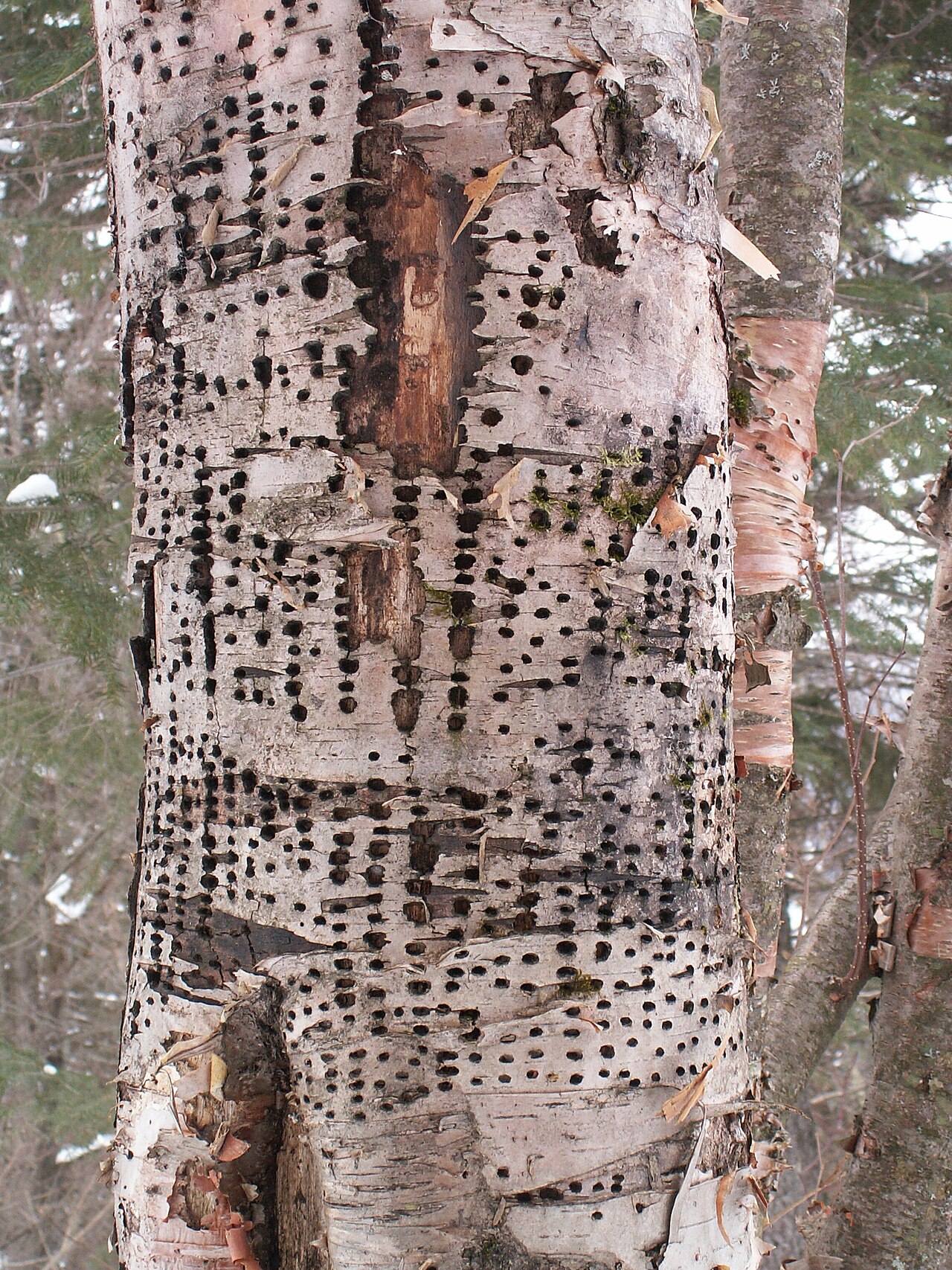
Holes in a dying white birch, Jacques-Cartier National Park

Yellow-bellied sapsucker girdling a holly tree


Temperament
solitary and territorial
Flight Pattern
undulating with rapid bursts and short glides
Social Behavior
Typically solitary outside the breeding season, defending productive sap trees vigorously. Pairs form in spring and excavate a nest cavity in live or dead trees, often in aspen or birch. Both sexes incubate and feed the young, and they may reuse territories across years.
Migratory Pattern
Seasonal migrant
Song Description
Vocalizations include a nasal, cat-like mew and harsh calls. Drumming is distinctive: an irregular, stuttering series that starts quickly and tapers off, unlike the steady rolls of many other woodpeckers.
Plumage
Black-and-white barred upperparts with a prominent white wing patch, pale underparts washed yellow, and a black bib. Head shows bold black-and-white striping; males have a red throat, females usually white-throated. Both sexes have a red forehead.
Diet
Feeds primarily on tree sap and the soft tissues around sap wells, supplementing with insects such as ants, flies, and beetles that are attracted to the sap. Also takes fruits and buds, especially outside the breeding season. It creates horizontal rows of shallow holes and revisits them to keep sap flowing.
Preferred Environment
Forages on trunks and main branches of living trees, especially birch, maple, and aspen. Common around forest edges, orchards, and parks where suitable sap trees are available.


